
Business
Eskom’s Battery Rollout: Why South Africa’s Big Backup Plan Is Still Delayed
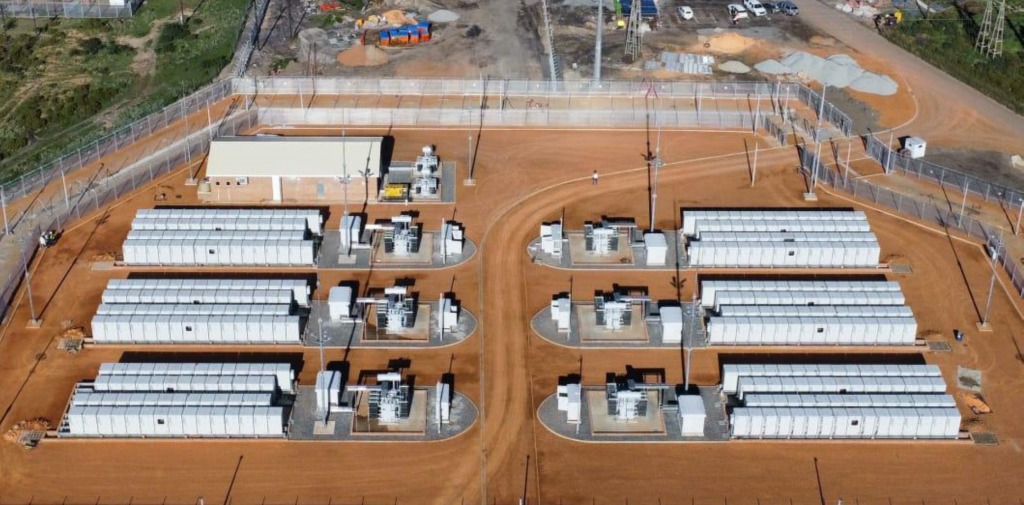
South Africans have learned to celebrate small energy wins, so when a megaproject promises to ease pressure on the grid, the reaction is always a mix of hope and side-eyed caution. Eskom’s long-running battery energy storage system project has become one of those drawn-out national sagas, unfolding at the same pace as a Joburg traffic jam in peak hour.
The utility now says the first phase of the project will finally be completed by the end of December 2025. If that feels late, that is because it is five years behind the original schedule.
A plan that never landed on time
When Eskom first announced its battery rollout in October 2018, it framed the idea as a cutting-edge leap into South Africa’s renewable future. The country would get a large, distributed network of battery stations able to store energy for four hours at a time. The promise was ambitious. The initial target was 360 megawatts of output and 1,440 megawatt hours of storage by the end of 2021.
None of that materialised.
The first phase was supposed to contribute almost 200 megawatts by December 2020. Yet the winning bidders were only appointed in 2022. Projects were pushed back. Deadlines were rewritten. Treasury’s conditions tied to Eskom’s debt relief package blocked new borrowing, which slowed everything further.
By the end of 2023, only two of the eight promised sites had been commissioned. By June 2025, that number was three. They offered just 68 megawatts and 192 megawatt hours of storage, barely a fraction of what had been envisioned.
Even so, Eskom still insists that all remaining facilities for phase one will be operating by the end of 2025, including the sites that have not yet been awarded.
The updated roadmap to 2027
The latest Integrated Resource Plan for 2025 lays out Eskom’s adjusted timeline. It confirms that phase one should close off this year and that phase two, which had been deferred, is expected to reach completion in 2026.
Once both phases are wrapped, the utility wants to add an extra 150 megawatts of battery output in 2027. If the same minimum runtime applies, that extra addition should translate to roughly 900 megawatt hours of storage.
By 2027, Eskom hopes to hold 493 megawatts of battery output with almost 3,000 megawatt hours of storage. In theory, this positions the utility as a national stabiliser that can release power quickly when solar and wind underdeliver.
Private developers are already miles ahead
While Eskom has been stuck in development purgatory, private power producers have moved at a completely different speed. The most striking example is Scatec’s Kenhardt hybrid solar and battery farm in the Northern Cape. The project secured its tender in September 2021 and broke ground in July 2022. By December 2023, it was fully operational.
The scale alone is eye-catching. The site holds a 225-megawatt battery system with more than 1,100 megawatt hours of storage, paired with 540-megawatt peak solar generation. That is more storage than Eskom currently has across the entire BESS rollout.
The IRP notes that independent producers will contribute over 500 megawatts of battery capacity before the end of 2025. Over the next decade, private players intend to add more than 8,000 megawatts of battery storage to the national pool. Their builds will play a massive role in filling the gaps created by the uneven production patterns of solar and wind.
Why this matters for ordinary households
South Africa’s energy future rests on the growth of flexible storage that can release power exactly when the country needs it. Load shedding has taught households that timing is just as important as generation. No one benefits from abundant solar at midday if the grid sinks after sunset.
The rapid rise of privately built storage plants will help reshape the grid into something more reliable. Eskom’s slower progress, while frustrating, still adds essential backup capacity that reduces strain on the system as renewable energy expands.
For now, the national mood remains cautious. People want to see action, not promises. Yet the mix of public and private investment in storage suggests that South Africa could, over time, build a far more resilient energy network than the one we are used to.
Also read: Olympus Sandton Breaks Ground as Johannesburg’s Next Luxury Landmark
Follow Joburg ETC on Facebook, Twitter, TikT
For more News in Johannesburg, visit joburgetc.com
Source: MyBroadband
Featured Image: Eskom


