News
Why BRICS May Need Its Own Security Council: Quiet Diplomacy Is No Longer Enough
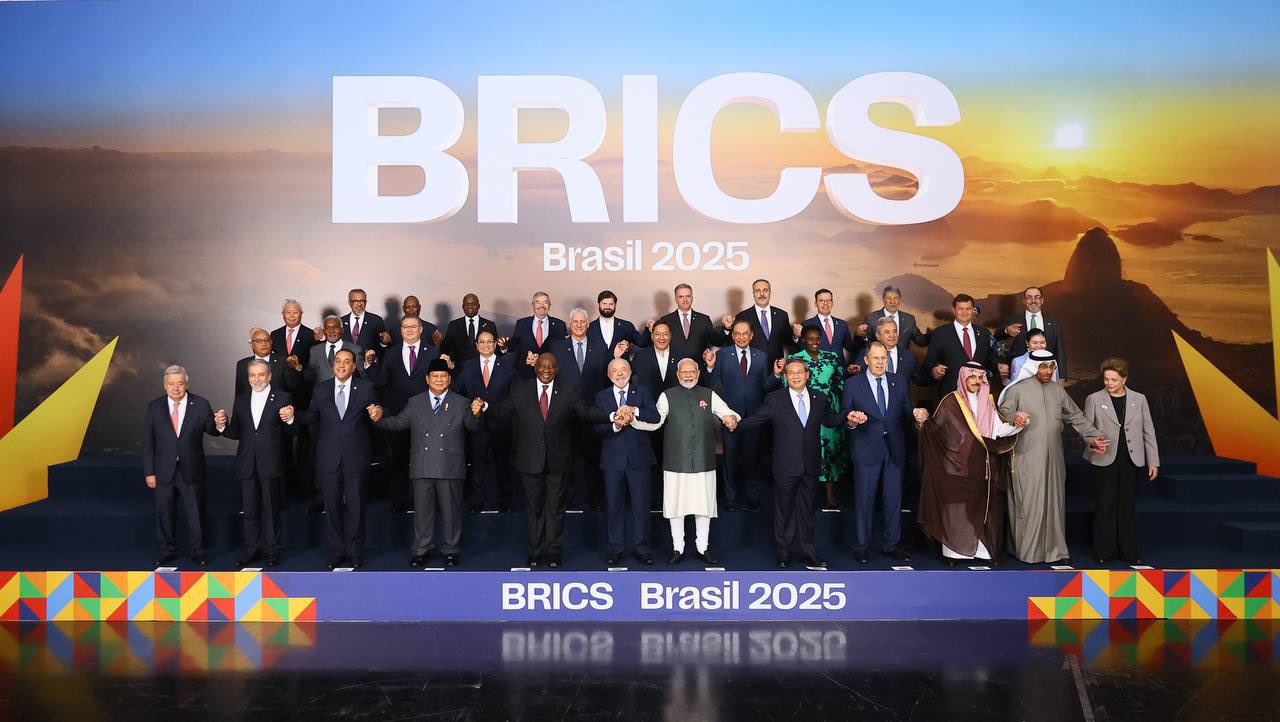
BRICS at a Crossroads: Why the Bloc May Need Its Own Security Council
Quiet diplomacy has run its course and the cost of staying silent is rising.
For years, BRICS projected itself as the polite disruptor of global politics, a loose, diplomacy-first club that promised a gentler path to multipolarity. But 2025 is revealing what insiders have quietly admitted for some time: soft-spoken diplomacy is no match for a world defined by hybrid warfare, structural power plays, and a global system built to restrain, not recognise, emerging powers.
The bloc’s dramatic expansion BRICS+, has only sharpened the contradiction. The group now represents a vast slice of the Global South, yet its members continue operating within a ruleset largely written by Western powers who no longer conceal their intention to contain rising states rather than cooperate with them.
And so the question is now unavoidable: Can BRICS truly pursue sovereign realignment without building its own collective security architecture?
The End of “Be Quiet and Play Nice” Diplomacy
For more than a decade, Russia and China attempted a careful balancing act: avoid provoking the West while nurturing Global South partnerships behind the scenes. The assumption was that patience and restraint would shield the bloc from retaliation.
Instead, it did the opposite.
Outside powers have grown increasingly comfortable shaping the internal political, digital and media landscapes of BRICS members. What was meant to be “quiet diplomacy” has instead become a gap through which pressure can be applied, sometimes subtly, sometimes not.
As one South African diplomat recently told me:
“We’re playing checkers in a chess match.”
A World Defined by Pressure, Not Peace
What BRICS faces today is not traditional conflict but a nonstop, hybrid pressure environment sanctions, financial chokepoints, lawfare, cyber disruption, and narrative warfare. This aligns closely with Susan Strange’s theory of structural power: the real power lies not in military might, but in the institutions, banks, payment systems and information channels that define how states must operate.
And in these spaces, Western influence remains overwhelming.
But the pressure isn’t evenly spread:
-
Russia, China, Iran → direct containment
-
South Africa & Brazil → vulnerable to donor-driven media and civil society pressure
-
India → squeezed by competitive alignment dynamics
-
Middle Eastern & African BRICS members → targeted through volatile regional environments
This uneven vulnerability makes the bloc easy to disrupt. One weak link becomes everyone’s problem.
A Trigger Moment: The MK Training Controversy
For South Africans, the recent uproar over MK Party security personnel training in Russia revealed an uncomfortable truth: BRICS lacks clear internal rules for defence cooperation.
A perfectly ordinary training exchange, the kind countries conduct every day was framed in Western and local donor-funded media as something covert or illegal. With no formal BRICS mechanism to authorise, record or communicate such cooperation, ambiguity became a weapon.
This incident has become a case study in why the bloc may need its own BRICS Security Council a structure that formalises:
-
cross-border training approvals
-
registries of personnel
-
joint vetting procedures
-
coordinated diplomatic protection
Not to militarise the bloc, but to prevent misinterpretation from becoming destabilisation.
The Information War Comes Inside the House
In South Africa, we’re living through one of the clearest examples of information warfare as a political instrument. Foreign-funded narratives frequently shape domestic debates around BRICS alignment, Russia relations, and foreign policy choices.
You see it in:
-
sudden parliamentary “scandals”
-
NGO-driven legal interventions
-
investigative pieces timed to strategic moments
-
social media pile-ons that look suspiciously choreographed
It echoes Frantz Fanon’s warning that control is not only exercised through force, but through narrative domination, through shaping what a society thinks is normal, legitimate, or dangerous.
SA’s experience shows a brutal truth:
A country can lose sovereignty long before it loses a single soldier.
Which is why many argue BRICS will need not just a Security Council, but a shared information-defence ecosystem, including:
-
independent think tanks
-
alternative media networks
-
research institutions free from donor influence
Not to produce propaganda but to produce sovereign analysis.
When Countries Fight Alone, They Pay Alone
Venezuela is the clearest example. For nearly a decade it endured everything from sanctions to attempted military splintering. It survived partly because Russia stepped in, but at enormous cost.
If BRICS had possessed a shared protection framework, that burden could have been distributed. Retaliation thresholds would have changed. Destabilisation could have been mitigated.
South Africa faces the opposite vulnerability: not sanctions, but internal political turbulence triggered by external influence whenever it strengthens ties with BRICS. Donor-funded outlets and NGOs, factional elites, and geopolitical actors know exactly which pressure points to push and when.
In 2025, Russia and the MK Party have become particularly frequent targets of such campaigns.
A BRICS Security Council could provide coordinated intelligence, stabilisation support, and political protection creating a collective shield rather than leaving each member to face the storm alone.
The Future of BRICS Might Depend on This
BRICS+ is now at a strategic crossroads.
Option 1:
Remain a symbolic bloc, powerful on paper but easily disrupted in practice.
Option 2:
Build the institutions needed for real multipolar stability, starting with a BRICS Bloc Security Council that protects sovereign choices, regulates cooperation, and reduces the vulnerability of individual members.
In a world defined by hybrid warfare and structural dominance, symbolism is no longer enough.
The question is no longer whether BRICS wants such a body, but whether it can survive the next decade without it.
{Source: IOL}
Follow Joburg ETC on Facebook, Twitter , TikTok and Instagram
For more News in Johannesburg, visit joburgetc.com