News
A Carrier Group, a Closed Sky, and a $50 Million Bounty
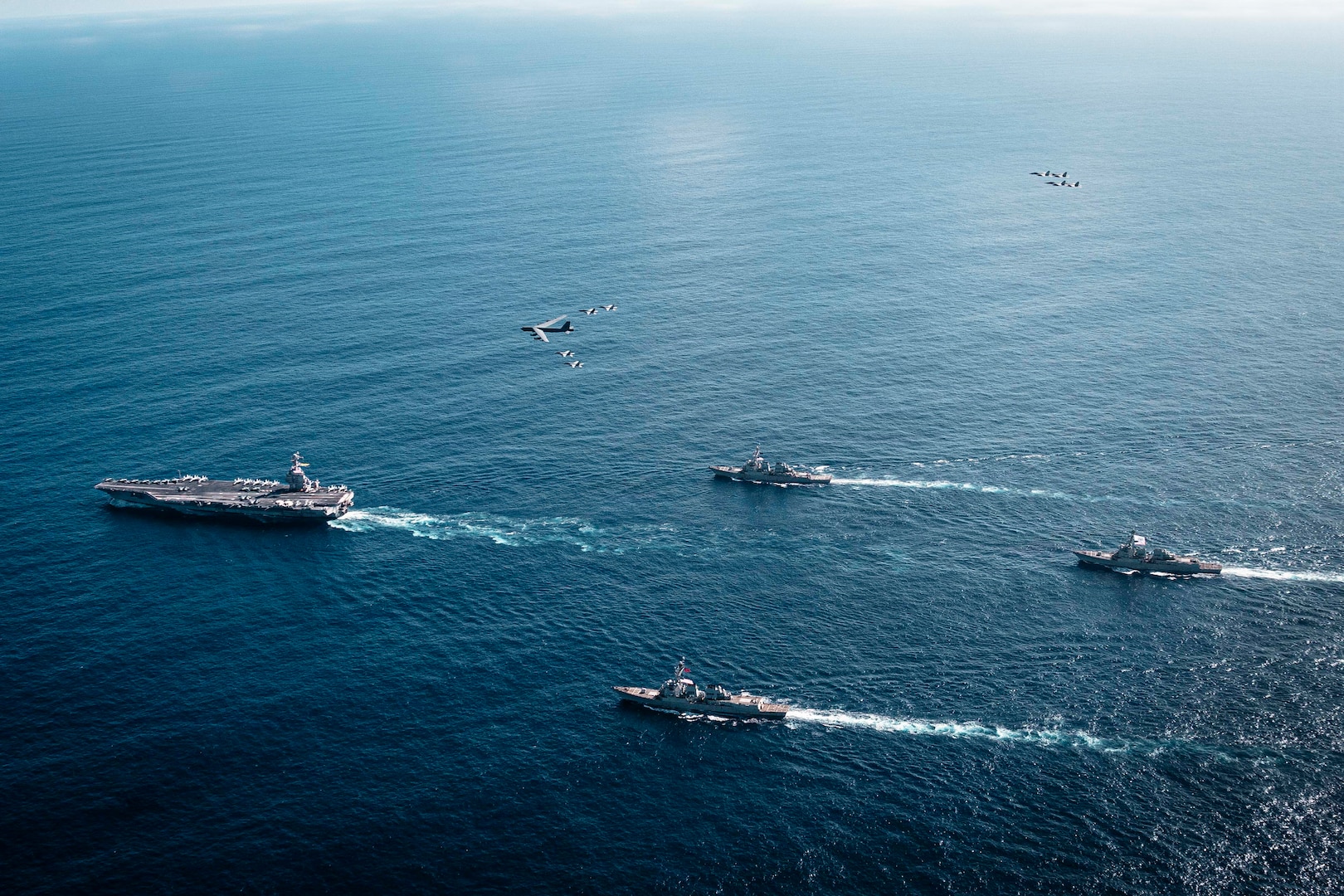
The world’s largest aircraft carrier, the USS Gerald R. Ford, now casts a shadow over the Caribbean. It is the centrepiece of a massive and growing US military build-up encircling Venezuelaa show of force culminating in President Donald Trump’s stark declaration this weekend that Venezuelan airspace is “closed.” The move, denounced by Caracas as a “colonialist threat,” marks the most dangerous peak in years of hostility between Washington and the socialist government of Nicolás Maduro.
Since returning to the Oval Office in January, Trump has relentlessly turned the screws. He has doubled the bounty on Maduro’s head to $50 million, labelling him a “global terrorist leader.” For months, the US Navy has conducted deadly strikes on suspected drug boats in international waters, claiming nearly 100 lives. Now, the rhetoric has shifted from the sea to the land and sky, with Trump hinting that ground strikes inside Venezuela are imminent.
The Official Reason: A “Drug War” with Contradictions
The public justification from the White House is a fierce, unilateral drug war. Trump frames the maritime strikes and military pressure as necessary to stem the flow of narcotics he claims are killing Americans. “Airlines, Pilots, Drug Dealers, and Human Traffickers,” he warned, are the targets of his airspace closure.
Yet, this narrative is fraying under scrutiny. US data and experts consistently show that the lethal fentanyl crisis devastating American communities is sourced from Mexican cartels and crosses the southwestern land border, not the Caribbean sea lanes the Navy is now patrolling. This disconnect has led critics in Washington to condemn the boat attacks as “extrajudicial killings” that violate international law, prompting a congressional inquiry.
The Unspoken Reasons: Oil, Influence, and Hemispheric Dominance
Look beyond the narcotics talk, and a clearer, more traditional strategic picture emerges. Analysts and Republican strategists point to two core, interlinked motives: oil and influence.
Venezuela sits atop the world’s largest proven oil reserves. In a revealing 2023 campaign rant, Trump laid bare his transactional view, lamenting that the US was now “buying oil from Venezuela” and making a “dictator very rich.” He contrasted this with his own prior ambition: “When I left, Venezuela was ready to collapse, we would have taken it over, we would have gotten all that oil.”
The goal is not merely crude; it’s control. The US seeks to topple Maduro’s government, a key ally of China, Russia, and Iran in America’s backyard, and replace it with a pliant, US-aligned regime. It is a blunt-force attempt to reassert undisputed supremacy in the Western Hemisphere.
Global Backlash and Domestic Division
The escalation has triggered a firestorm of international condemnation. France called the strikes illegal. Left-wing Colombian President Gustavo Petro severed security ties with the US, labelling Trump a “barbarian.” Brazil’s Lula warned against foreign interference. Russia and China issued strong rebukes, with Beijing reaffirming its “intimate” friendship with Caracas.
At home, the move is causing rare fractures within Trump’s MAGA base, which was built on a promise to avoid “forever wars.” Firebrand congresswoman Marjorie Taylor Greene has publicly questioned the focus on Venezuela over domestic economic woes.
Amid the drums of war, a flicker of bizarre diplomacy remains. Trump recently mused he “might talk” to Maduro, the “foreign terrorist organisation” leader, “if we can save lives.” It’s a contradiction that encapsulates the moment: the threat of invasion paired with the possibility of a deal, where the only constants are immense pressure and the vast oil reserves lying beneath the crisis. The Caribbean, once again, has become a chessboard for power, with the people of Venezuela poised as the most vulnerable pieces.
Follow Joburg ETC on Facebook, Twitter , TikTok and Instagram
For more News in Johannesburg, visit joburgetc.com