News
Chaos in Parliament as Deputy Police Minister Skirts Statutory Rape Question, MPs Demand Answers
Chaos in Parliament as Deputy Police Minister Skirts Statutory Rape Question, MPs Demand Answers
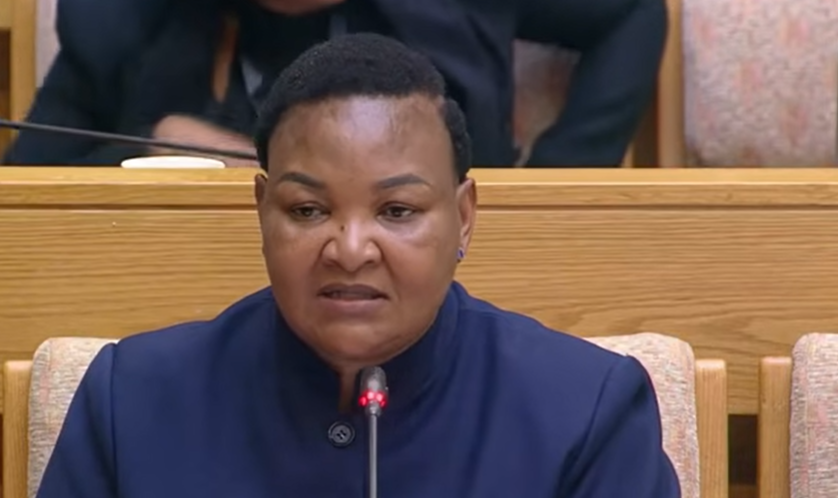
When South Africans tuned into Parliament on Wednesday, they expected clarity on one of the country’s most painful issues the protection of young girls from sexual abuse. Instead, the National Assembly delivered confusion, frustration, and raised voices as Deputy Police Minister Polly Boshielo struggled to directly answer a question on statutory rape.
What should have been a straight-forward accountability session turned into a tense back-and-forth, with tempers flaring and MPs accusing Boshielo of dodging critical concerns. At one point, the session bordered on unruly microphones cutting, objections flying, and members demanding real action instead of political platitudes.
The Question That Sparked It All
EFF MP Muzi Khoza stood up armed with numbers that shocked the room: 2 103 births recorded among girls aged 10–14 this year alone. He asked a pointed question why does SAPS often fail to open or investigate statutory rape cases, and why are young girls not getting the protection they deserve?
It was a moment many South Africans watching could relate to. In communities countrywide, reports of minors falling pregnant spark outrage, yet justice seems painfully slow or absent.
But instead of addressing the heart of Khoza’s question, Boshielo veered into educational law, personal anecdotes, and references to her attendance at a conference. She explained that new legislation now allows anyone to open a case of statutory rape, not only relatives, a valid point, but not the one she was asked.
And MPs did not let it slide.
EFF MPs Push Back: “She didn’t answer the question.”
The chamber cracked with dissatisfaction almost immediately.
EFF MPs Hlengiwe Mkhaliphi and Leigh-Ann Mathys were blunt, the deputy minister had not touched the actual question.
“This is very serious; we are talking about statutory rape,” Mkhaliphi protested.
Mathys went further, adding that the government of national unity was failing South Africans, especially during 16 Days of Activism Against Gender-Based Violence, when the country is meant to be spotlighting accountability.
However, House chairperson Werner Horn dismissed the objections as a “point of debate,” and Mathys, joining virtually, was eventually muted. A symbolic moment, many noted, considering how often victims themselves feel unheard.
Outside Parliament, one could already imagine how social media would spin it:
“Girls are giving birth at 12, and Parliament is debating whether a question was answered?”
“During 16 Days of Activism, we still can’t get direct answers?”
For a nation tired of gender-based violence headlines, the frustration feels familiar.
Some Progress, But Is It Enough?
Before things heated up, Boshielo did highlight government efforts to support survivors.
The Department of Justice will inaugurate a new Sexual Offences Court in Botshabelo, Free State, one of 16 planned for this financial year.
Last year, 19 were opened, and 42 are being upgraded to offer survivor-centred services from faster case processing to better victim support environments.
She also mentioned a 100-day challenge aimed at reducing turnaround times for sexual offences and domestic violence cases, including a directive to issue protection orders within 24 hours.
These are meaningful developments, but they felt overshadowed by what was missing: clear accountability on why so many statutory rape cases stall at police stations.
The Bigger Picture: A Country Tired of Excuses
South Africa has long battled violence against women and children. The numbers are terrifying, and communities on the ground rarely see justice move fast.
So when Parliament asks why little girls are giving birth and cases go nowhere, people expect more than deflection they want responsibility, urgency, and proof that the system is changing.
Instead, the moment left many wondering:
Do our leaders truly grasp the gravity of what is happening to children?
Boshielo may return to Parliament with clearer responses and she may need to. The country is watching, especially as the fight against gender-based violence gains renewed focus.
But Wednesday’s session served as a reminder: South Africans are no longer accepting vague answers. Parliament is being pushed, loudly to speak plainly, act decisively, and protect the most vulnerable.
Because if a 10-year-old gives birth, the least the nation deserves is accountability.
{Source: IOL}
Follow Joburg ETC on Facebook, Twitter , TikTok and Instagram
For more News in Johannesburg, visit joburgetc.com