News
Trump gloats over peace deal as violence erupts in eastern Congo
Trump Celebrates Peace Deal While Gunfire Still Echoes in Eastern Congo
A handshake in Washington and explosions back home
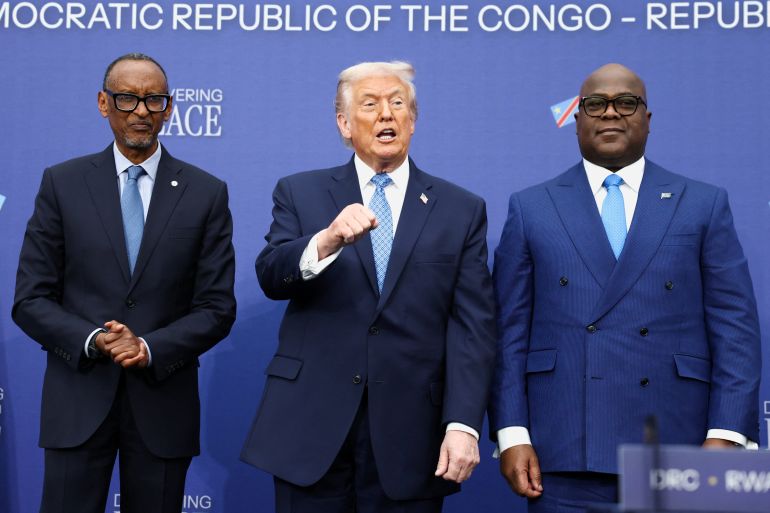
It was a surreal split-screen moment for Africa on Thursday: while guns thundered in eastern Democratic Republic of Congo (DRC), US President Donald Trump stood in Washington grinning beside Rwanda’s Paul Kagame and DRC President Felix Tshisekedi, calling their newly signed peace agreement “a great miracle.”
A miracle is something many in the region say they would welcome but after decades of bloodshed, displacement, and fragile ceasefires, people on the ground know miracles rarely arrive with signatures and photo ops.
Still, the White House ceremony went ahead, with Trump boasting that the agreement was not only about peace, but also about business particularly the critical minerals the US wants access to in Rwanda and the DRC.
In typical Trump flair, he joked that Kagame and Tshisekedi had “spent a lot of time killing each other,” and would now spend their time “hugging, holding hands and taking advantage of the United States economically.”
The comment drew sharp reactions online, where critics accused Washington of treating African peace like a bargaining chip and mineral resources like the grand prize.
Leaders tread cautiously, knowing the war is far from over
Kagame and Tshisekedi, perhaps more aware of how volatile things are back home, didn’t share Trump’s triumphant tone.
“There will be ups and downs,” Kagame warned, acknowledging that progress will not be linear. Tshisekedi echoed the sentiment, calling the deal “the beginning of a new path a demanding path.”
Demanding is putting it lightly.
Even as pens were still drying on the agreement, reports confirmed new clashes with the M23 rebel group a powerful force widely believed by the UN to receive backing from Rwanda, although Kigali denies this.
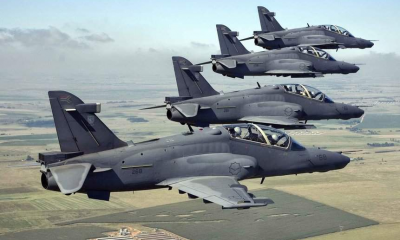
Gunfire was heard near Kamanyola in South Kivu, homes were reportedly bombed in Kaziba, and fighter jets were seen overhead. Local officials said there were “many dead,” but as with most frontline news in the region, independent verification remains difficult.
If peace begins with paperwork, its real test will be in the hills where villagers pack their lives into sacks and run.
Minerals at the heart of the deal and American interests
Trump didn’t shy away from the economic incentives. Alongside the peace accord, the US signed critical mineral agreements with both nations, giving American companies access to cobalt and rare earth minerals vital for electric cars, batteries and tech manufacturing.
“We’re going to take out some of the rare earth,” Trump said proudly. “And everybody’s going to make a lot of money.”
It’s not the first time his administration has negotiated resource extraction deals, similar agreements were announced in Ukraine. Critics argue the US interest in peace may be strongly tied to what lies beneath Congo’s soil.
But for a region exhausted by war, even peace tied to profit might feel better than no peace at all.
A conflict older than most headlines
The DRC conflict is one of the world’s longest-running wars, claiming hundreds of thousands of lives. The most recent escalation began in late January when M23 seized major cities including Goma and Bukavu.
A previous ceasefire, mediated by Qatar in June, crumbled quickly each side accusing the other of violations. Locals in South Kivu say M23 reinforcements with armoured vehicles are still arriving, and analysts fear they could soon encircle Uvira, the last major city not under their control.
It’s no wonder ordinary Congolese respond to “peace deal” headlines with weary skepticism. They’ve lived through many.
Public mood: hope, fatigue and a side-eye at Washington
Across African forums and social media threads, reactions are mixed:
Some dare to hope even a flawed agreement might slow the bloodshed.
Others question US motives, seeing minerals as the bigger prize than Congolese lives.
Most are simply tired tired of war, tired of promises, tired of signing ceremonies followed by funerals.
A peace deal isn’t peace, not until guns go quiet.
The ink is dry, but the field is burning. The question now is whether the agreement can hold long enough to matter or whether history repeats itself in smoke and displacement.
Trump wants a Nobel Peace Prize. Kagame wants stability. Tshisekedi wants ground regained. And the US wants minerals.
What civilians want is far simpler:
To sleep without artillery in the distance.
If this deal brings even a step towards that, it’ll be worth more than any rare earth mineral.
{Source: IOL}
Follow Joburg ETC on Facebook, Twitter , TikTok and Instagram
For more News in Johannesburg, visit joburgetc.com