News
Bondi Attack Leaves Australia’s Jewish Community Grieving, Angry And Afraid
A Beachside Tragedy That Cut Deep
Bondi Beach is usually synonymous with summer, salt air and crowds soaking up the Sydney sun. This week, it became a place of mourning.
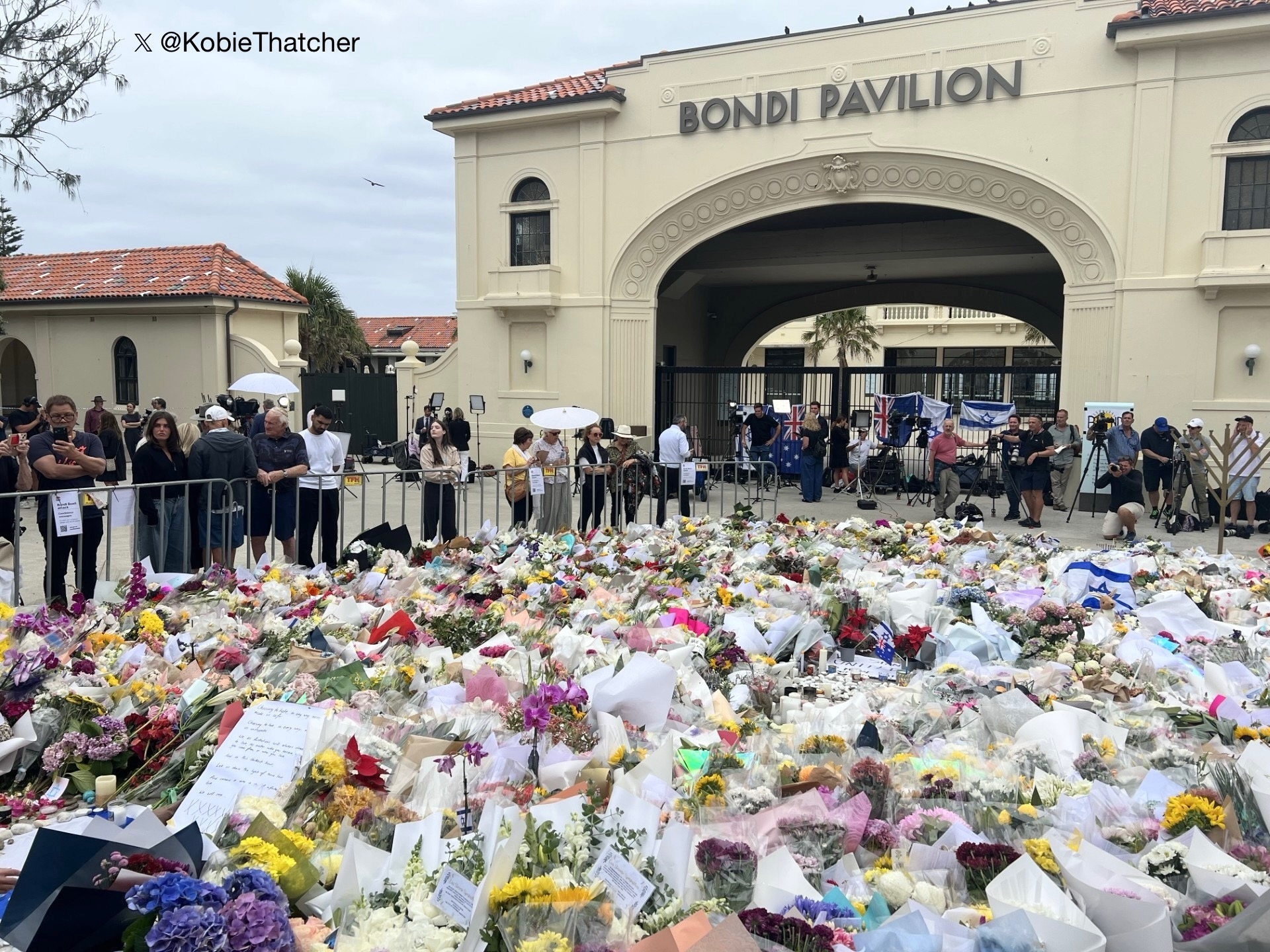
After a deadly shooting at a Hanukkah festival left 15 people dead, the promenade has filled with flowers, candles and handwritten notes. Among the victims were two Holocaust survivors who had rebuilt their lives in Australia, a 10-year-old girl, and people who died trying to shield loved ones or stop the attackers.
For Australia’s Jewish community, the shock has been immediate and deeply personal. Many say the attack has shattered a long-held belief that Australia was a safe haven, far removed from the hatred their families once fled.
“We Thought We Were Safe”
Standing near a floral memorial, Rabbi Yossi Friedman summed up a feeling echoed across Sydney and beyond. There is grief, but also a growing sense of unease.
Jewish Australians, many of them descendants of Holocaust survivors who arrived after World War Two, speak of a painful irony. Their grandparents escaped pogroms and persecution in Europe, only for fear to resurface generations later in a country they trusted as home.
The Bondi attack, allegedly carried out by father and son Sajid Akram, who was killed by police, and Naveed Akram, now facing terrorism and murder charges, has forced a reckoning about safety, identity and belonging.
A Community Already On Edge
For many, this moment did not come out of nowhere.
Several community members point to October 9, 2023, when antisemitic chants were heard at a pro-Palestinian rally outside the Sydney Opera House, as a turning point. The perception that authorities were slow to respond still fuels frustration today.
Australia’s Jewish population was estimated at around 117,000 in 2021. Since the October 7 Hamas attack on Israel and the war in Gaza that followed, antisemitic incidents in Australia have surged dramatically. Official figures show a more than 300 percent increase in threats, assaults, vandalism and intimidation in the year after the conflict began.
Schools With Guards And Walkie Talkies
The impact of that fear is visible in everyday life.
Parents describe Jewish schools that resemble fortified spaces, with armed security, patrols and volunteer parents stationed outside with radios. What should feel like a normal school run now comes with anxiety and constant vigilance.
Brett Ackerman, a Sydney-based data analyst, says his children attend the same Jewish school he once did. The difference is stark. Security measures, once unthinkable, are now seen as unavoidable.
“We should be able to be who we are and not be afraid,” he says. Instead, many families plan exits in restaurants, avoid wearing visible symbols of faith, or think twice before attending public events.
Government Response Under Scrutiny
Prime Minister Anthony Albanese has described the Bondi shooting as an antisemitic terrorist act of pure evil, saying the attackers were inspired by Islamic State ideology.
His government has pointed to recent actions including criminalising hate speech, banning Nazi symbols and salutes, and appointing Australia’s first special envoy to combat antisemitism, Jillian Segal. Segal has warned that anti-Jewish prejudice has been seeping into society for years without a strong enough response.
Albanese has also renewed calls for tighter gun controls, after it emerged the older attacker legally owned multiple firearms. That push has sparked debate, even among those directly affected.
“Gun Laws Are Not The Whole Answer”
Not everyone believes gun reform addresses the core problem.
Retired writer Danny Gingef argues that focusing solely on weapons risks missing the deeper issue. To him, the real danger lies in unchecked hatred and extremist ideology.
He points to recent marches where symbols linked to militant groups have appeared, saying they contribute to a climate of intimidation. Like many others, he describes living on constant alert, scanning exits and weighing personal safety against public visibility.
A Wider Reckoning For Australia
On social media, the reaction has been raw and divided. Messages of solidarity and grief sit alongside heated debates about antisemitism, free speech and the war in Gaza. Hashtags calling for unity have trended, while others reflect anger at what many see as years of inaction.
What is clear is that this tragedy has pushed antisemitism into the national spotlight in a way few events have before.
As Gingef puts it, antisemitism is not a problem for Jewish Australians alone to solve. It is a test of how Australian society confronts hatred, protects minorities and decides what kind of country it wants to be.
For now, the candles at Bondi continue to burn, marking lives lost and a community asking hard questions about safety, belonging and the future.
{Source:EWN}
Follow Joburg ETC on Facebook, Twitter , TikTok and Instagram
For more News in Johannesburg, visit joburgetc.com