Business
Why Motsepe’s $195m Mining Dispute Has Landed in a South African Court
A courtroom tug-of-war that spans Joburg and Dar es Salaam
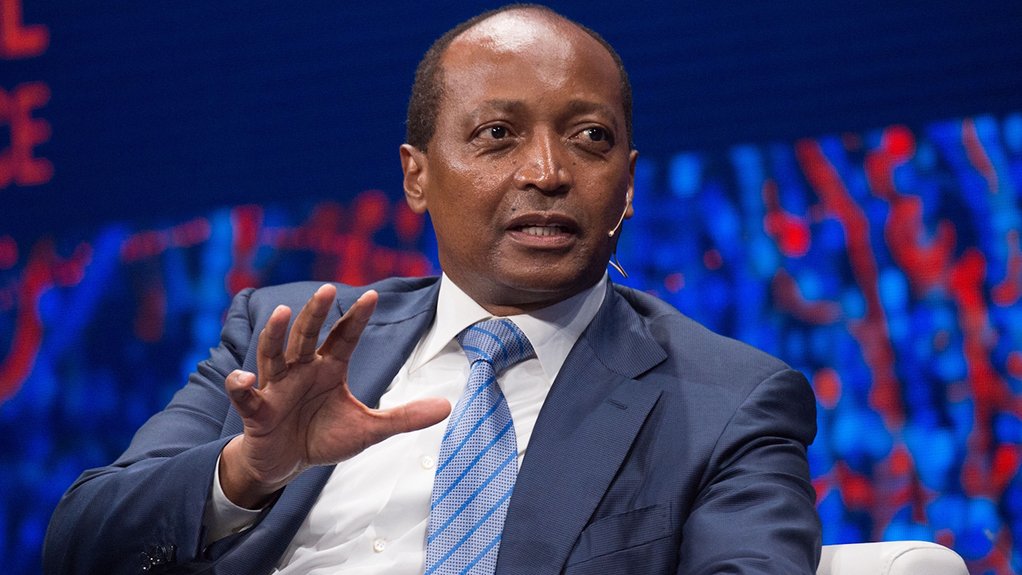
A legal fight tied to a graphite mining deal in Tanzania has landed firmly on South African soil. Lawyers for billionaire Patrice Motsepe’s investment firm African Rainbow Capital (ARC) argue that a local court has the authority to decide whether the firm can be held liable in a massive US dollar lawsuit already underway in Tanzania.
At the centre of the storm is African Rainbow Capital, commonly referred to as ARC. The firm is asking the Gauteng High Court to step in and issue clear declaratory orders that ARC argues would be binding on the Tanzanian proceedings.
The amount at stake is $195m. Converted to rands, it is a figure that makes even seasoned mining executives sit up.
Where the dispute began
The roots of the case go back to a confidential agreement signed in 2019 in Johannesburg. That deal involved African Rainbow Minerals (ARM) and the US-based Pula Group. The proposal focused on a mining investment in Tanzania, in a graphite-rich region later linked to a separate mining right.
Things unravelled after Arch Sustainable Resources invested in Australia’s Evolution Energy Minerals in 2021. That company is involved in a graphite project in Chilalo, the same area earmarked for the Pula-backed project now owned by Pula Graphite.
Pula Group says that the investment breached confidentiality and caused serious commercial harm. ARC disputes that claim entirely.
Why South Africa matters in this fight
ARC’s legal team insists the South African courts are not bystanders. Their argument is simple but powerful. The agreement was signed in Johannesburg, and ARC itself was never a party to it. On that basis, they say a South African judge can declare that ARC has no contractual obligations and cannot be liable for damages claimed in Tanzania.
There is also a wider concern at play. ARC argues that allowing a foreign court decision to stand unchallenged could be harmful to South African legal principles. From a local perspective, this has drawn close attention within legal and business circles.
A case tangled in procedure and geography
While the damages claim continues in Tanzania, it has been slowed by procedural skirmishes. ARC is currently the only party actively opposing the claim there. Default judgments loom over Motsepe, ARM and Arch after the case was not initially defended, a detail that has added urgency to the South African application.
ARC maintains that neither it nor Motsepe nor Arch were parties to the confidential agreement. Their position is that Pula Graphite cannot claim rights or damages from a contract it never signed.
On the other side, Pula Group president Mary Stith argues the Gauteng High Court has no authority over Pula Group or Pula Graphite. She maintains that the dispute belongs in Tanzania, even while acknowledging that South African law can be applied there.
More than a mining dispute
For South Africans watching from the sidelines, this case has become a lesson in how global mining deals can collide with local law. It highlights how agreements signed in Joburg boardrooms can end up tested in foreign courts, with billions on the line.
Whatever the outcome, the decision will likely shape how South African companies approach cross-border deals in the future. For now, all eyes are on the Gauteng High Court, where a ruling could redraw the legal map of this already complex dispute.
Follow Joburg ETC on Facebook, Twitter, TikT
For more News in Johannesburg, visit joburgetc.com
Source: Business Day
Featured Image: Engineering News