News
Trump pulls the US out of dozens of global bodies and Africa could feel the fallout
America steps back and the ripple effects reach Africa
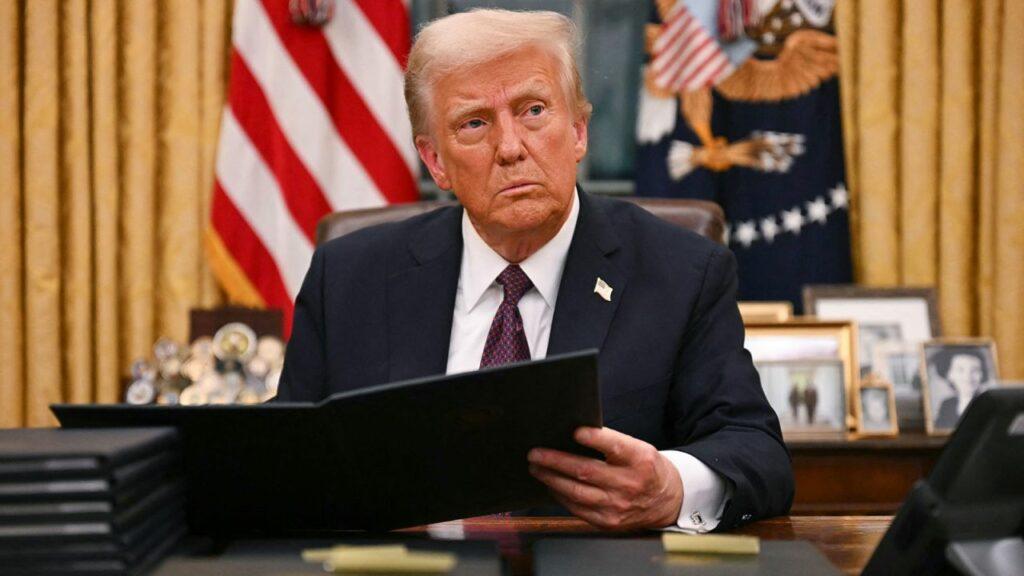
In a sweeping move that has sent shockwaves through diplomatic circles, United States President Donald Trump has confirmed that his administration will withdraw from 66 international organisations, including 31 United Nations bodies, some of which play a direct role in Africa’s economic development, peacebuilding and climate policy.
The decision follows a year-long review of America’s participation in global institutions, launched in early 2025. While Trump framed the move as a reset in how the US engages with the world, critics warn it could leave gaps that developing regions, particularly Africa may struggle to fill.
“Wasteful, ineffective and harmful”: the reasoning behind the exit
Trump signed the executive order this week, formalising the findings of the review led by US Secretary of State Marco Rubio. The task team was instructed to identify organisations deemed misaligned with American interests.
Rubio did not mince his words.
According to the administration, many of the bodies were found to be redundant, poorly managed, ideologically captured, or a threat to US sovereignty. Trump clarified that, in the case of UN institutions, withdrawal means ending participation or funding where legally possible.
“The days of billions of dollars in taxpayer money flowing to foreign interests at the expense of our people are over,” Rubio said, signalling that more withdrawals could still follow.
Why Africa is watching closely
Among the UN bodies affected are several that have long shaped policy and development frameworks across the African continent.
Notably, the US is stepping away from:
-
The UN Economic and Social Council’s Economic Commission for Africa (ECA)
-
The Office of the Special Adviser on Africa
These institutions have historically provided research, policy guidance and coordination support for African governments, particularly around trade integration, infrastructure planning and economic reform.
For African diplomats and economists, the concern isn’t just about funding. It’s about influence. US participation often brings political weight, technical expertise and donor confidence. Its absence could shift power dynamics within the UN system.
Climate, trade and justice also affected
Beyond Africa-specific bodies, the withdrawals cut across some of the most influential global platforms, including:
-
The UN Framework Convention on Climate Change
-
The International Trade Centre
-
The UN Conference on Trade and Development
-
The International Residual Mechanism for Criminal Tribunals
-
The Peacebuilding Commission and Fund
Several non-UN climate and energy bodies, including the Intergovernmental Panel on Climate Change and the International Renewable Energy Agency are also on the exit list, raising fresh questions about America’s global climate stance.
Here is a list of the organisations affected:
UN organisations
- Department of Economic and Social Affairs
- ECOSOC Economic Commission for Africa
- ECOSOC Economic Commission for Latin America and the Caribbean
- ECOSOC Economic and Social Commission for Asia and the Pacific
- ECOSOC Economic and Social Commission for Western Asia
- International Law Commission
- International Residual Mechanism for Criminal Tribunals
- International Trade Centre
- Office of the Special Adviser on Africa
- Office of the Special Representative of the Secretary General for Children in Armed Conflict
- Office of the Special Representative of the Secretary-General on Sexual Violence in Conflict
- Office of the Special Representative of the Secretary-General on Violence Against Children
- Peacebuilding Commission
- Peacebuilding Fund
- Permanent Forum on People of African Descent
- UN Alliance of Civilizations
- UN Collaborative Programme on Reducing Emissions from Deforestation and Forest Degradation in Developing Countries
- UN Conference on Trade and Development
- UN Democracy Fund
- UN Energy
- UN Entity for Gender Equality and the Empowerment of Women
- UN Framework Convention on Climate Change
- UN Human Settlements Programme
- UN Institute for Training and Research
- UN Oceans
- UN Population Fund
- UN Register of Conventional Arms
- UN System Chief Executives Board for Coordination
- UN System Staff College
- UN Water
- UN University
Non-UN organisations
- 24/7 Carbon-Free Energy Compact
- Colombo Plan Council
- Commission for Environmental Cooperation
- Education Cannot Wait
- European Centre of Excellence for Countering Hybrid Threats
- Forum of European National Highway Research Laboratories
- Freedom Online Coalition
- Global Community Engagement and Resilience Fund
- Global Counterterrorism Forum
- Global Forum on Cyber Expertise
- Global Forum on Migration and Development
- Inter-American Institute for Global Change Research
- Intergovernmental Forum on Mining, Minerals, Metals, and Sustainable Development
- Intergovernmental Panel on Climate Change
- Intergovernmental Science-Policy Platform on Biodiversity and Ecosystem Services
- International Centre for the Study of the Preservation and Restoration of Cultural Property
- International Cotton Advisory Committee
- International Development Law Organization
- International Energy Forum
- International Federation of Arts Councils and Culture Agencies
- International Institute for Democracy and Electoral Assistance
- International Institute for Justice and the Rule of Law
- International Lead and Zinc Study Group
- International Renewable Energy Agency
- International Solar Alliance
- International Tropical Timber Organization
- International Union for Conservation of Nature
- Pan American Institute of Geography and History
- Partnership for Atlantic Cooperation
- Regional Cooperation Agreement on Combatting Piracy and Armed Robbery against Ships in Asia
- Regional Cooperation Council
- Renewable Energy Policy Network for the 21st Century
- Science and Technology Center in Ukraine
- Secretariat of the Pacific Regional Environment Programme
- Venice Commission of the Council of Europe
Online reaction: praise, concern and disbelief
Reaction on social media has been predictably divided.
Supporters of Trump have praised the move as long overdue, calling it a rejection of “global bureaucracy” and ideological overreach. Others, including international policy analysts and African commentators, expressed concern that the decision could weaken multilateral cooperation at a time when global challenges from climate shocks to conflict require collective action.
Some African policy voices online questioned whether emerging powers like China and the Gulf states would now step in to fill the vacuum left by the US.
A familiar Trump-era playbook
This isn’t Trump’s first clash with international institutions. During his earlier presidency, the US pulled out of or froze funding to several global agreements and bodies, arguing that they disadvantaged American workers or constrained national sovereignty.
What makes this moment different is scale and timing. The withdrawals come amid fragile global economic recovery, intensifying climate pressures, and ongoing conflicts in parts of Africa.
What happens next?
Rubio has made it clear that the review is not finished, leaving the door open for further exits. For now, the immediate impact will depend on how funding gaps are addressed and whether other donor nations step up.
For African countries, the challenge will be navigating a multilateral system where one of its most influential players has chosen to step back, potentially reshaping development partnerships for years to come.
Whether this marks a permanent retreat or a bargaining tactic remains to be seen. What’s certain is that the global table just got a little emptier and Africa is paying close attention.
{Source: The Citizen}
Follow Joburg ETC on Facebook, Twitter , TikTok and Instagram
For more News in Johannesburg, visit joburgetc.com