News
Canada breaks eight-year freeze with China in Carney-Xi talks
Canada reaches out to China after years of tension
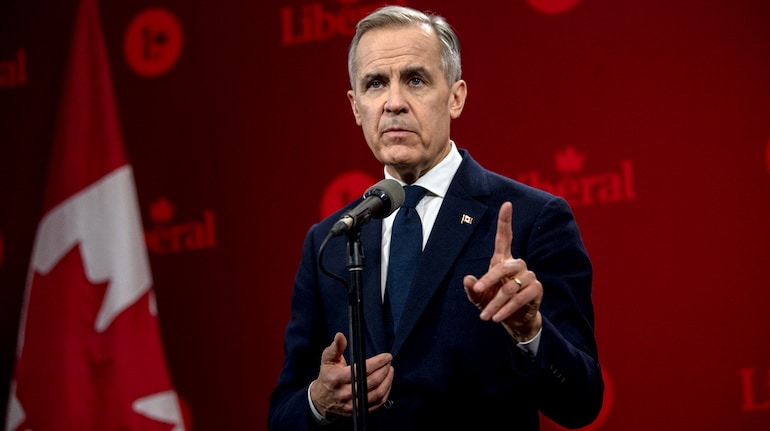
In a landmark moment, Canadian Prime Minister Mark Carney met with Chinese President Xi Jinping on Friday, marking the first visit by a Canadian leader to China in eight years. The meeting, held at the Great Hall of the People in Beijing, aims to mend strained ties that have lingered since a series of high-profile disputes in 2018.
Carney hailed a “new strategic partnership” with Beijing, emphasizing that cooperation in agriculture, energy, and finance could form the foundation of a rejuvenated relationship. “Together we can build on the best of what this relationship has been in the past to create a new one adapted to new global realities,” Carney said.
Xi, for his part, welcomed the visit as a turning point. “It can be said that our meeting last year opened a new chapter in turning China–Canada relations toward improvement,” he told Carney, noting that restoring stable and healthy relations would serve the common interests of both countries.
From Huawei arrests to trade spats
Relations between Ottawa and Beijing soured dramatically after Canada detained Huawei founder’s daughter Meng Wanzhou in 2018 on a US warrant, prompting China to arrest two Canadians on espionage charges. In the years that followed, both countries slapped tariffs on each other’s exports, and Ottawa accused Beijing of attempting to interfere in Canadian elections.
The diplomatic freeze has also coincided with a broader economic squeeze for Canada. Under President Trump, the United States imposed steep tariffs on steel, aluminium, vehicles, and lumber, pushing Ottawa to diversify its trading partners.
A pivot toward Beijing and trade opportunities
Carney’s visit signals a deliberate pivot, seeking to reduce Canada’s reliance on the US market, which currently absorbs around 75% of Canadian exports. In contrast, China buys less than 4% of Canadian goods, despite being the country’s second-largest trading partner.
Officials on both sides are exploring ways to lower tariffs and boost bilateral trade, though no formal agreements have yet been reached. Carney’s agenda also includes meetings with Premier Li Qiang and Chinese business leaders to expand trade opportunities and encourage investment.
Public and business reactions
The Canadian public and media have largely welcomed the thaw, seeing it as a pragmatic move to secure markets beyond the US. Business groups have expressed cautious optimism, highlighting sectors like agriculture and energy as immediate areas for cooperation.
Social media discussions, meanwhile, underscore the lingering tension from past disputes, with some users pointing to Canada’s ongoing struggle to balance trade between its powerful southern neighbour and the global economic giant to the west.
While the thaw is a positive development, experts caution that rebuilding trust will take time. Previous issues, including political interference and mutual arrests, cast long shadows, and China remains careful in negotiating with Ottawa.
Nonetheless, Carney’s engagement represents a strategic recalibration for Canada: strengthening economic ties, diversifying trade, and asserting its place in a rapidly shifting global landscape, all while carefully navigating its historically close but sometimes fraught relationship with the United States.
{Source: IOL}
Follow Joburg ETC on Facebook, Twitter , TikTok and Instagram
For more News in Johannesburg, visit joburgetc.com