Spain mourns after deadly high-speed train crash leaves 21 dead
Spain woke up to heartbreak on Monday after a devastating collision between two high-speed trains in the southern region of Andalusia claimed at least 21 lives and left more than 70 people injured. What should have been an ordinary Sunday evening journey turned into one of the country’s darkest rail disasters in over a decade.
The crash has shaken a nation that prides itself on having one of the most advanced high-speed rail networks in Europe.
What went wrong on the tracks
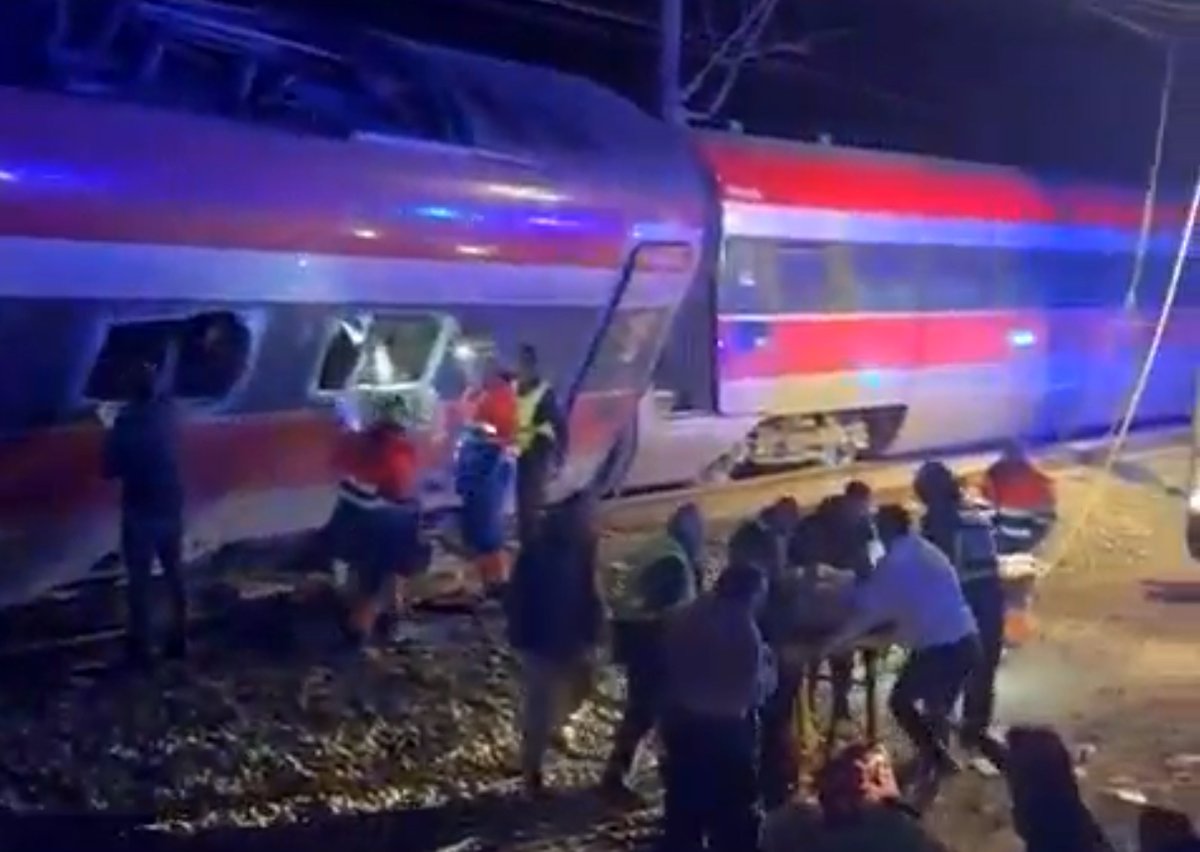
According to Spain’s rail infrastructure operator Adif, the disaster unfolded near the town of Adamuz when a train travelling from Malaga to Madrid derailed and crossed onto an adjacent track. Moments later, it collided with an oncoming train heading toward Huelva, causing both trains to derail.
Emergency officials confirmed that 21 people were killed, while at least 73 others were injured, many of them seriously. Transport Minister Oscar Puente said around 30 passengers were rushed to hospital in critical condition, though all injured passengers had been evacuated from the wreckage by Monday morning.
What has left authorities puzzled is that the crash occurred on a straight, recently renovated stretch of track, involving a train described as “practically new”. Puente called the circumstances of the accident “extremely strange”, signalling that investigators face difficult questions.
Chaos, twisted metal and desperate rescues
Rescue teams worked through the night in harrowing conditions. Hundreds of passengers were still inside the damaged carriages, complicating rescue efforts.
Firefighters described scenes of devastation, with twisted metal trapping passengers. Some carriages slid down a four-metre embankment, while others remained crumpled across the tracks.
“It’s hard, delicate work,” said Francisco Carmona, head of firefighters in Córdoba. “In some cases, we had to remove the deceased to reach survivors.”
The defence ministry deployed military emergency units, vehicles and specialised rescue teams to assist local responders as the scale of the tragedy became clear.
‘It felt like a horror movie’
Survivors have begun sharing chilling accounts of the moments after impact. A passenger identified only as Montse, who was travelling on the second train, said the train jolted violently before everything went dark.
“People were thrown around. Luggage was flying. Children were crying,” she recalled, adding that a train attendant behind her was bleeding from a head injury. “I feel like I was given a second chance at life.”
Another survivor, Lucas Meriako, described the scene as resembling “a horror movie”, saying glass shattered inside the carriages and passengers were injured by debris.
A nation in mourning
Prime Minister Pedro Sánchez described the tragedy as a “night of deep pain” for Spain, offering condolences to the families of the victims and support for the injured. Messages of sympathy also poured in from King Felipe VI and Queen Letizia, as well as international leaders including French President Emmanuel Macron and European Commission President Ursula von der Leyen.
On social media, Spaniards shared messages of grief, disbelief and solidarity, with many questioning how such a disaster could happen on a modern high-speed network.
A painful chapter in Spain’s rail history
Spain operates Europe’s largest high-speed rail network, spanning more than 3,000 kilometres and connecting major cities such as Madrid, Barcelona, Seville and Malaga. While the system is widely regarded as safe, the country has endured tragedy before.
In 2013, a high-speed train derailment near Santiago de Compostela killed 80 people, marking the deadliest rail disaster in Spain since 1944. That memory has resurfaced as investigators begin examining what caused Sunday’s collision.
High-speed rail services between Madrid and Andalusian cities including Seville, Cordoba and Malaga were suspended on Monday as authorities secured the site and launched a full investigation.
As Spain mourns, the focus now shifts to answers and to ensuring that such a catastrophe never happens again.