
News
State of emergency declared as wildfires devastate southern Chile
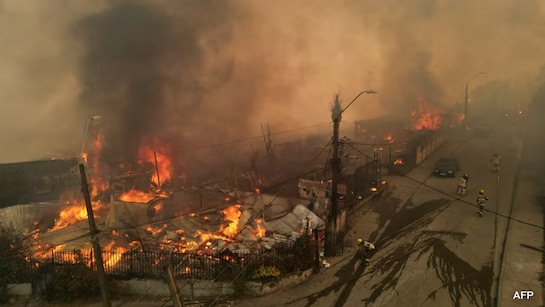
A country on edge as flames tear through the south
Chile woke up this week to scenes that feel all too familiar yet no less devastating. Entire neighbourhoods reduced to ash. Families fleeing in the dark with nothing but the clothes they were wearing. At least 19 lives were lost as uncontrolled wildfires ripped through the southern parts of the country, forcing the government to declare a state of emergency.
The fires have been burning for days across the Nuble and Biobio regions, roughly 500 kilometres south of Santiago. Strong winds and extreme summer heat turned what began as bushfires into fast-moving infernos, swallowing towns within minutes and leaving behind landscapes that resemble war zones.
“The fire came like a whirlwind”
In the coastal town of Penco, residents describe a night of sheer terror. One moment calm, the next chaos.
Locals say the flames arrived with such force that escape windows vanished almost instantly. Houses, vehicles, and entire streets were consumed before dawn. Most of the reported deaths so far have been linked to this area, according to local officials.
Nearby Lirquen, a port town of about 20,000 people, faced a similar fate. Residents recall fires advancing in seconds, leaving no time to save belongings or even gather family members properly. Some survived only by running straight to the beach, using the shoreline as a last line of defence against the flames.
Soldiers, curfews, and a nation in crisis mode
As night fell, soldiers were deployed to patrol affected towns, part of the emergency powers activated by President Gabriel Boric. A nighttime curfew was introduced to keep residents safe while firefighting and rescue efforts continued.
Nearly 4,000 firefighters have been battling the blazes, working against punishing heat and unpredictable winds. President Boric travelled to the hard-hit city of Concepcion to oversee operations firsthand, later describing conditions as extremely difficult.
In a notable show of unity, Boric also confirmed plans to brief president-elect Jose Antonio Kast, stressing that political differences are set aside when the country faces disaster.
Displacement on a massive scale
More than 50,000 people have been displaced, with evacuations concentrated largely in Penco and Lirquen. Emergency shelters have filled quickly, while volunteers and aid groups rush to provide food, clothing, and medical support.
Social media has been flooded with images of charred homes and empty streets, sparking an outpouring of grief and solidarity. Many Chileans are also expressing frustration and fear, pointing to a growing sense that these disasters are no longer rare events but part of a worsening pattern.
A painful reminder of recent tragedy
For many, this disaster reopens wounds from February 2024, when fires near Vina del Mar killed 138 people in one of Chile’s deadliest fire events on record. That tragedy affected thousands and reshaped national conversations around preparedness, land management, and climate resilience.
Experts say the current fires are another sign of how climate change is reshaping life in south-central Chile. Rising temperatures, prolonged droughts, and extreme weather swings have created conditions where fires ignite faster and spread further than ever before.
What comes next for Chile
With forecasts still warning of high heat and strong winds, the coming days remain critical. Authorities are urging residents to follow evacuation orders and curfews while emergency teams work to prevent further loss of life.
For now, the focus is on survival, recovery, and mourning those lost. But once the smoke clears, Chile will again face hard questions about how to protect vulnerable communities in a future where fire seasons grow longer and more dangerous each year.
Follow Joburg ETC on Facebook, Twitter, TikT
For more News in Johannesburg, visit joburgetc.com
Source: IOL
Featured Image: NDTV


