
News
Why Dr Martin Luther King Jr’s voice still cuts through today’s moral fog
There is a growing unease in the public mood, one that stretches far beyond party politics or election cycles. It is the sense that something essential has slipped away. Integrity feels negotiable. Accountability feels optional. Corruption, once shocking, is now often explained away as part of how power works.
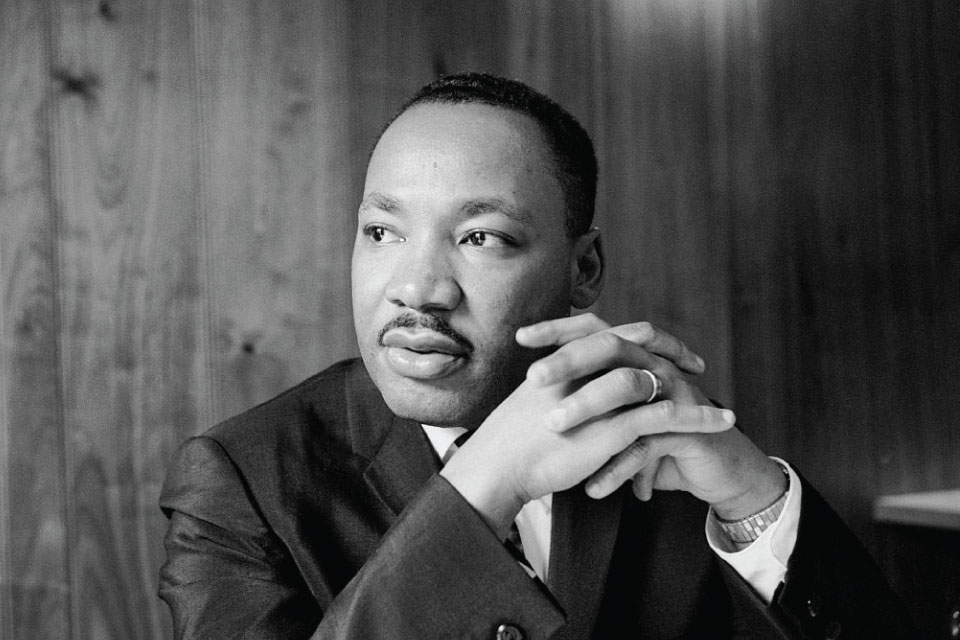
This is the backdrop against which the legacy of Dr Martin Luther King Jr feels especially sharp. As the world marks what would have been his 97th birthday, his insistence on moral clarity reads less like history and more like a warning we failed to heed.
When principle gives way to convenience
Across today’s political landscape, conviction has been replaced by calculation. Leaders campaign with the language of service, then govern in ways that quietly favour donors, corporate interests, or political survival. Complex legislation is drafted far from public view, while ordinary people feel the consequences immediately through rising costs, shrinking opportunities, and deepening inequality.
The danger is not just corruption itself, but how easily it becomes normalised. Many citizens now shrug at scandals that once would have ended careers. The idea that corruption is simply the price of leadership has taken hold. Dr King rejected that thinking outright. Power, he argued, loses all legitimacy the moment it detaches from justice.
Why good sustains and corruption consumes
King’s moral framework was rooted in a simple truth. Good stands on its own. It builds trust, strengthens institutions, and creates stability that lasts. Corruption does none of this. It produces nothing new and sustains nothing long-term. It survives by feeding on what is good, by exploiting trust, distorting truth, and weakening the guardrails that hold societies together.
Truth works the same way. It does not require deception to exist. Lies, on the other hand, demand constant maintenance. They must be repeated, defended, and layered until exhaustion sets in. That is why corruption depends so heavily on silence, distraction, and public fatigue. Honest speech remains its greatest threat.
Beyond politics, into everyday life
The absence of moral clarity is not confined to parliaments and boardrooms. It shows up in homes where responsibility is traded for comfort and in a culture where accountability is framed as cruelty. Strong families are not built on perfection, but on consistency and example. Adults who model restraint, integrity, and honesty shape societies far more than slogans ever could.
Corporations face a similar test. Many speak fluently about values while quietly prioritising profit over people. Jobs are cut, environments damaged, and communities destabilised in the name of efficiency. History shows that no organisation that sacrifices ethics for short-term gain escapes the long-term cost. Once trust is broken, it rarely returns.
The fierce urgency of now
Dr King warned that societies do not collapse only through hatred or violence but through indifference to injustice. He spoke of the fierce urgency of now, a reminder that moral responsibility cannot be postponed until the next election, the next quarter, or the next news cycle.
Public reaction to this message still resonates strongly online, where many reflect on how rare such clarity feels in modern leadership. His words are frequently shared not as nostalgia, but as a benchmark. A measure of how far expectations have fallen.
Choosing integrity over illusion
Corruption offers only temporary victories, often paid for by borrowing from the future through debt, division, and institutional decay. It eventually consumes the very foundations it relies on. Good, by contrast, multiplies. Integrity strengthens institutions. Ethical restraint creates resilience. Accountability, even when delayed, arrives.
Moral leadership is not about image or ideology. It is about courage. The courage to tell the truth when lying is rewarded. The courage to serve the common good when self-interest is easier. The courage to accept short-term sacrifice for long-term stability.
As Dr Martin Luther King Jr reminded the world, the time is always right to do what is right. Our crisis today is not one of intelligence or resources, but of character. Moral clarity cannot be outsourced or automated. It must be lived, defended, and demanded. Especially from those who seek power in the public’s name.
Follow Joburg ETC on Facebook, Twitter, TikT
For more News in Johannesburg, visit joburgetc.com
Source: IOL
Featured Image: UNCSA


