News
Julius Malema: the rise, rebellion and controversy of South Africa’s most polarising politician
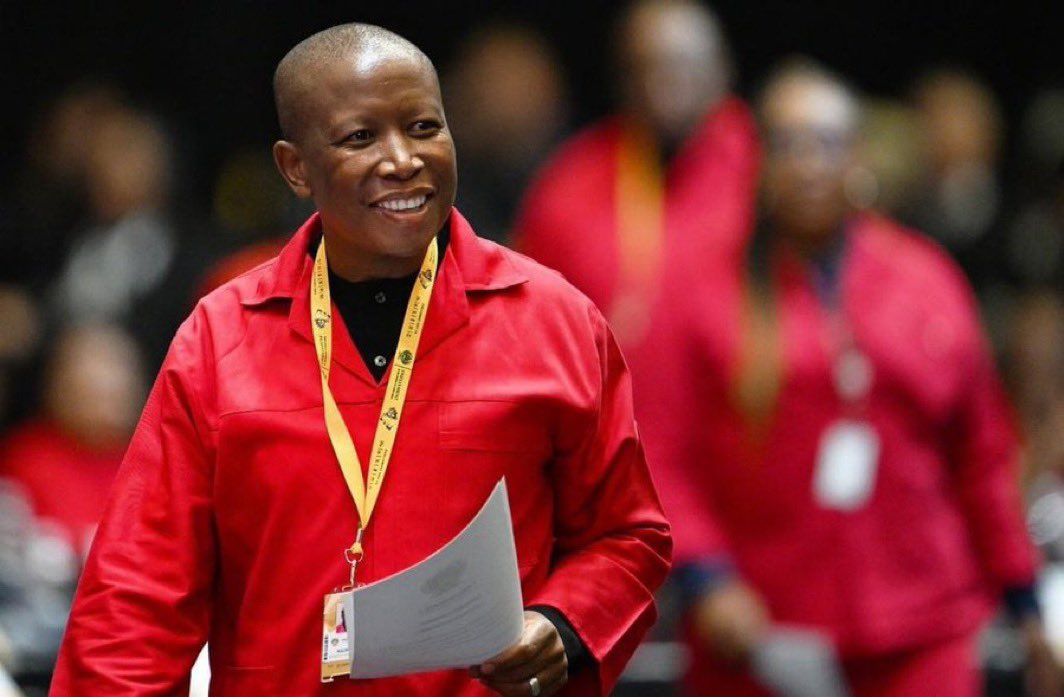
Few political figures in post-apartheid South Africa provoke as much emotion as Julius Malema. To his supporters, he is fearless, unapologetic and willing to say what others won’t. To his critics, he represents division, intimidation and dangerous rhetoric. Love him or loathe him, Malema has carved out a political career that has left a permanent mark on the country’s democratic landscape.
From student politics to national spotlight
Malema’s political story began long before red berets and parliamentary walkouts. He cut his teeth in organised politics through the Congress of South African Students (Cosas), a traditional breeding ground for future leaders aligned with the ANC. From there, he rose through the ranks of the ANC Youth League, eventually becoming its president, a role that thrust him into national prominence.
As Youth League leader, Malema became known for his fiery speeches, sharp attacks on political opponents and an unapologetically confrontational style. At a time when the ANC was grappling with internal divisions and public pressure, Malema positioned himself as the voice of frustrated young South Africans demanding faster economic change.
A dramatic fall from the ANC
That rise came to a sudden and dramatic halt in 2011, when the ANC charged Malema for conduct that allegedly brought the organisation into disrepute. As disciplinary proceedings loomed, tensions spilled onto the streets. Supporters disrupted proceedings, broke through police barricades, and clashed with law enforcement and journalists, scenes that foreshadowed the political style Malema would later perfect.
The outcome was decisive: Malema was expelled from the ANC, followed by several Youth League allies. For many observers, it looked like the end of his political career. Instead, it became the beginning of something new.
The birth of the Economic Freedom Fighters
In 2013, Malema and his allies launched the Economic Freedom Fighters (EFF), branding themselves as a radical alternative to the political establishment. The party’s messaging focused on economic inequality, land redistribution and challenging what it called the failures of the ruling elite.
Just a year later, the EFF stunned the political scene by winning 25 seats in Parliament in the 2014 general election. Dressed in red overalls and domestic workers’ uniforms, EFF MPs made their presence impossible to ignore, disrupting parliamentary norms and forcing uncomfortable conversations into the national spotlight.
A leader defined by confrontation
Since then, Malema has remained one of the government’s loudest critics, using Parliament, rallies and social media to challenge those in power. His style, bold, theatrical and often provocative, has kept him in headlines and at the centre of public debate.
But that same style has repeatedly landed him in trouble. Malema is widely associated with the struggle song “Kill the Boer, Kill the Farmer,” which many South Africans view as hate speech. In August last year, the Equality Court found him guilty of hate speech for remarks interpreted as calling for the killing of white people.
The controversy reached international attention when, during a meeting between President Cyril Ramaphosa and former US president Donald Trump, footage of Malema singing the song was played, a moment that reignited global scrutiny of South Africa’s racial and political tensions.
Accusations, intimidation claims and internal fallout
Malema’s relationship with the media has also been fraught. He has faced repeated accusations of intimidating journalists and barring them from EFF events, reinforcing concerns about press freedom and political intolerance.
Internally, dissent has grown louder. Some EFF members have openly accused Malema of running the party in an authoritarian manner. In recent years, high-profile figures such as Floyd Shivambu and Mbuyiseni Ndlozi have left the party, deepening speculation about fractures within the movement Malema built.
Land, power and a divided public
One of Malema’s most enduring political positions has been his vocal support for land occupation without compensation, a stance that resonates deeply with many South Africans still locked out of economic opportunity and deeply alarms others who fear instability and lawlessness.
On social media, reaction to Malema remains sharply divided. Supporters praise his refusal to soften his message, while critics argue his rhetoric fuels division rather than solutions. In a country still wrestling with inequality and historical injustice, Malema continues to embody that tension.
A political legacy still unfolding
More than a decade after his expulsion from the ANC, Julius Malema remains impossible to ignore. He has survived political exile, built a party from scratch, shaken Parliament and forced uncomfortable debates into the open.
Whether history judges him as a fearless champion of economic freedom or a reckless agitator remains an open question. What is certain is this: Julius Malema has shaped South African politics in ways few of his contemporaries have and his story is far from over.
{Source: The Citizen}
Follow Joburg ETC on Facebook, Twitter , TikTok and Instagram
For more News in Johannesburg, visit joburgetc.com