Courts & Legal
Why a social worker believes Julius Malema should get a fine, not jail time
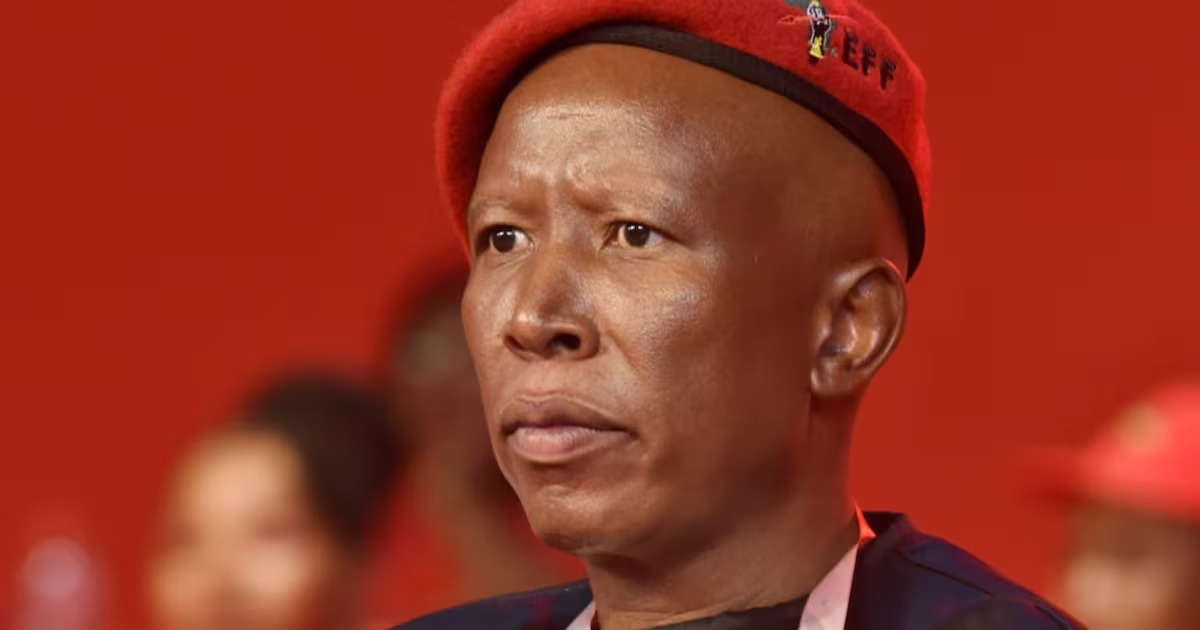
On a tense Friday morning in East London, the mood outside the regional court felt closer to a political rally than a routine court appearance. Red berets flooded the streets as supporters of Economic Freedom Fighters leader Julius Malema gathered in numbers, singing and chanting in solidarity. Inside the courtroom, however, the focus shifted from spectacle to consequence as Malema’s legal team prepared arguments that could determine whether he walks free or faces years behind bars.
At the centre of the debate was not only the law but also a social worker’s carefully argued plea for mercy.
The conviction that brought Malema back to court
Malema’s appearance followed his conviction in October 2025 on multiple charges linked to a firearm incident that dates back to July 2018. He was found guilty of unlawfully possessing a firearm and ammunition, discharging a firearm in a public space, and recklessly endangering people or property.
The case stems from footage that went viral after showing Malema firing what appeared to be a rifle during the EFF’s fifth anniversary celebrations at Sisa Dukashe Stadium in Mdantsane. At the time, the video ignited fierce national debate about political leaders, gun safety, and the culture of celebratory gunfire in South Africa.
The conviction now places Malema at risk of a prison sentence that could range from two to fifteen years.
A social worker steps into the spotlight
During pre-sentencing proceedings, the defence called Jessi Ann Thompson, a social worker in private practice, to present a mitigation report aimed at guiding the court toward what she described as a proportionate and constructive sentence.
Thompson painted a broader picture of Malema’s life and personality, speaking about his upbringing without a father figure and the traits that have shaped his public leadership. She described him as a perfectionist with strong leadership qualities, while also acknowledging that he can display intense emotional responses in moments of conflict. These traits, she suggested, had surfaced during his testimony and reactions to the guilty verdict.
Her message to the court was not that Malema should escape accountability, but that punishment should fit both the crime and its context.
What happened on the day of the incident
According to Thompson’s testimony, the firearm discharge was brief and caused no physical harm. She told the court that Malema fired celebratory shots for less than a minute, with no injuries reported and no damage to infrastructure.
She stressed that there was no evidence the firearm had been obtained for ongoing criminal use or with intent to harm. While Malema continues to dispute aspects of the conviction, the court heard that he recognises the inherent dangers of firing a weapon in a public space and regrets the perception that such behaviour could be seen as acceptable.
Importantly, Thompson highlighted that Malema has remained a first-time offender and has not been implicated in any criminal conduct in the seven years since the incident.
A case without clear precedent
One of the more striking points raised was the apparent absence of precedent. Despite longstanding public warnings about celebratory gunfire, Thompson told the court that she could not find previous cases where someone had been convicted and sentenced specifically for firing a weapon for celebratory purposes.
In her view, Malema may effectively be the first person to face criminal consequences of this nature, raising questions about how punishment should balance deterrence with fairness.
Why prison may do more harm than good
Thompson argued strongly against a custodial sentence, describing imprisonment as the harshest form of punishment, typically reserved for cases where retribution and deterrence clearly outweigh other considerations.
She warned of the profound and far-reaching effects of incarceration, not only on the offender but also on their family. The court heard that Malema is the primary financial provider for his wife and three children and that a prison sentence would place their financial security at serious risk.
Beyond the personal impact, the defence also raised the political consequences of imprisonment.
♦️Happening Now♦️
The EFF is painting East London red in support of our President @Julius_S_Malema
Arrest criminals not revolutionaries!#HandsOffMalema pic.twitter.com/aCNsXC5y9F
— Economic Freedom Fighters (@EFFSouthAfrica) January 23, 2026
The political stakes for parliament
Under South African law, a prison sentence of more than twelve months without the option of a fine would automatically disqualify Malema from serving in parliament for five years after completing his sentence.
Thompson told the court that Malema enjoys significant support across the country, with many voters placing confidence in his leadership and political philosophy. Removing him from parliament, she argued, would leave a gap in representation for the communities that see him as their voice within the National Assembly.
This argument has sparked intense debate online, with social media users split between those who believe no politician should be treated differently before the law and others who argue that jailing a sitting opposition leader could have serious democratic consequences.
♦️In Pictures♦️
The EFF President @Julius_S_Malema arriving earlier today for his pre-sentencing hearing at East London Magistrates Court.#HandsOffMalema pic.twitter.com/VnRQgZAKqG
— Economic Freedom Fighters (@EFFSouthAfrica) January 23, 2026
A different kind of punishment
Rather than prison, Thompson recommended that the court impose a suspended fine, treating all charges as part of a single incident rather than separate offences. She also proposed additional conditions, including restricting Malema from applying for a firearm licence for a specified period and ordering him to make a financial contribution to Gun Free South Africa.
The suggestion aims to reinforce accountability while promoting public safety, without resorting to incarceration.
As the court weighs its decision, the case continues to resonate far beyond East London. It has reopened national conversations about gun control, political responsibility, and whether justice should focus more on punishment or prevention.
For now, the country waits to see whether the court agrees that a fine, rather than a prison cell, is the most effective way forward.
Follow Joburg ETC on Facebook, Twitter, TikT
For more News in Johannesburg, visit joburgetc.com
Source: The Citizen
Featured Image: Daily Dispatch