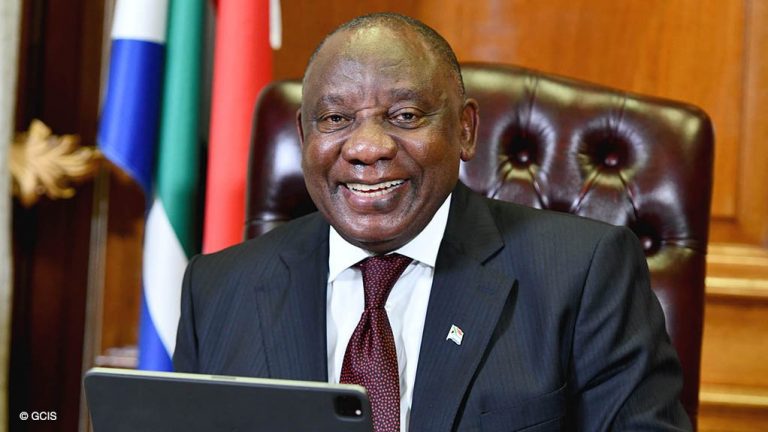
Ramaphosa says South Africa is recovering, but warns there’s no room for complacency
For the first time in years, South Africa didn’t arrive at the World Economic Forum in Davos armed with promises and plans. It arrived with proof.
That was the message President Cyril Ramaphosa drove home this week, reflecting on South Africa’s showing at last week’s gathering of global political and business leaders in Switzerland. The country, he said, is no longer pitching hope, it’s pointing to results.
But the president was also clear: early gains mean very little if South Africa fails to build on them.
From promises to proof
In his weekly newsletter, Ramaphosa contrasted this year’s Davos visit with last year’s appearance. In 2024, South Africa came with a reform agenda and a long to-do list. This year, it returned with evidence that those reforms are beginning to shift the dial.
The economy has now recorded four consecutive quarters of growth. Inflation is at its lowest average level in two decades. The rand has strengthened, the JSE has performed well, and official data shows unemployment, poverty and inequality have all declined.
For a country battered by load shedding, weak growth and repeated shocks, those figures have landed as a rare piece of good news and South Africans have noticed. Online reaction to Ramaphosa’s comments has been cautiously optimistic, with many welcoming the progress but warning that everyday costs and job insecurity remain real concerns.
Why growth alone isn’t enough
Ramaphosa was careful not to oversell the moment. While the numbers point in the right direction, he stressed that the recovery remains fragile.
According to the president, the difference between a short-lived uptick and a lasting economic shift comes down to one thing: investment.
With higher commodity prices and a firmer currency creating favourable conditions, Ramaphosa said South Africa has “wind in its sails”, but still needs a steady hand on the wheel. Without sustained investment, especially in infrastructure, growth could stall just as quickly as it arrived.
Infrastructure and reform take centre stage
The president pointed to infrastructure spending and structural reform as the levers that can turn momentum into long-term, inclusive growth. These priorities were reinforced at the first meeting of the Presidential Economic Advisory Council (PEAC) for the year.
The council, made up of local and international economists, academics and industry experts, advised government to act on recent gains by increasing public infrastructure investment while simultaneously lowering the cost of doing business.
It’s a familiar refrain but one that carries more weight now that confidence in the economy is rising.
Looking beyond South Africa’s borders
Ramaphosa also emphasised the need to sharpen South Africa’s competitiveness and expand into new markets, particularly across the African continent. As trade within Africa grows under regional agreements, he said South Africa must position itself to benefit, but only if its institutions are strong and responsive.
That, he suggested, is where the real work lies: closing the gap between policy announcements and on-the-ground delivery.
‘No time to rest’
Despite the upbeat indicators, Ramaphosa’s warning was unambiguous. Progress does not equal victory.
In the coming days, Cabinet will meet at its annual lekgotla to map out practical steps government will take, alongside business and labour, to lock in growth and translate confidence into jobs and investment.
For a public long used to false dawns, the president’s message struck a careful balance: cautious optimism, backed by data, paired with an acknowledgment that South Africa cannot afford to slow down now.
The recovery may be real, but, as Ramaphosa put it, there is no time to rest.