Courts & Legal
Labour Court rules against security firm over stutter discrimination
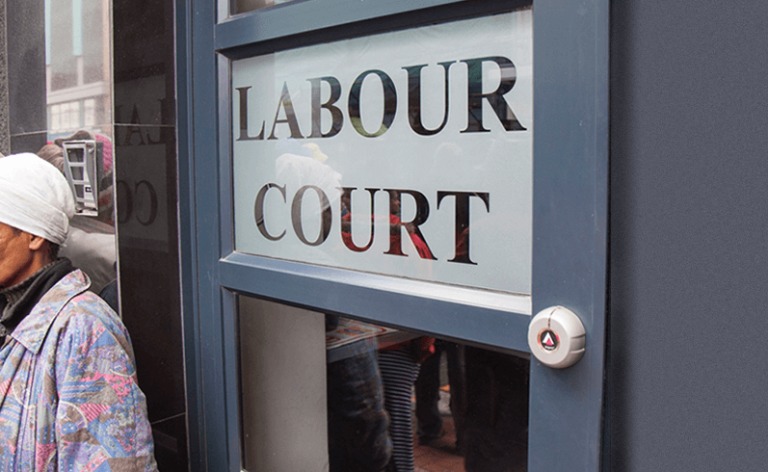
When speech becomes a workplace barrier
In a city where thousands rely on security work to make ends meet, a recent Labour Court judgment in Johannesburg has struck a nerve far beyond the courtroom. It centres on a simple but powerful question. Can an employer move you aside because the way you speak makes others uncomfortable?
For Justice Mmakau, a security guard living with a speech stutter, that question became painfully real when he was removed from his post at a public-facing site and transferred elsewhere. This week, the Labour Court made it clear that what happened to him crossed a legal line.
The transfer that changed everything
Mmakau was employed by Mantis Security and stationed at a client’s premises, where he dealt directly with members of the public. He has a stutter, something he has lived with throughout his working life. According to his case, his stutter became the reason he was taken off the site and moved to another location.
At the Commission for Conciliation, Mediation and Arbitration, the matter turned on a single issue. Was the transfer linked to his disability, or was it based on operational needs? Mantis Security acknowledged that if the move was motivated by his stutter, it would amount to unfair discrimination under the Employment Equity Act.
The commissioner ultimately dismissed Mmakau’s claim, finding that he had not proven discrimination. But that decision did not sit well with the Labour Court.
Why the Labour Court stepped in
On review, the Labour Court found that the CCMA commissioner had failed to properly evaluate the evidence. The court ruled that the arbitration award could not stand and replaced it with a finding in favour of the employee.
In practical terms, this meant recognising that Mmakau had indeed been unfairly discriminated against because of his speech disability. The court then turned to compensation, a step that often shapes how such judgments resonate in everyday workplaces.
Compensation and what it signals
At the time of the dispute, Mmakau earned R6,160 a month. While similar discrimination cases have sometimes resulted in higher awards, the court took into account that he had kept his job and was seeking compensation rather than damages.
The final award amounted to four months’ salary, totalling R24,640. A no-cost order was made. Notably, neither Mantis Security nor the CCMA opposed the review application or appeared in court.
A broader moment for disability rights at work
Online reaction to the judgment has been swift, particularly among labour law commentators and disability rights advocates. Many see the ruling as a reminder that discrimination is not always loud or dramatic. Sometimes it looks like a quiet transfer, justified as operational, but rooted in discomfort with difference.
Speech impediments like stuttering are often misunderstood in South African workplaces, especially in roles involving public interaction. This case reinforces that discomfort is not a lawful reason to sideline an employee.
For workers across Johannesburg and beyond, the message is clear. Disability, visible or not, does not diminish dignity or the right to fair treatment. And for employers, the judgment is a warning that decisions made without care and proper justification can come back to haunt them in court.
Follow Joburg ETC on Facebook, Twitter, TikT
For more News in Johannesburg, visit joburgetc.com
Source: IOL
Featured Image: Conviction