Courts & Legal
Gigaba Corruption Case Heads To Gauteng High Court As Transnet Scandal Deepens
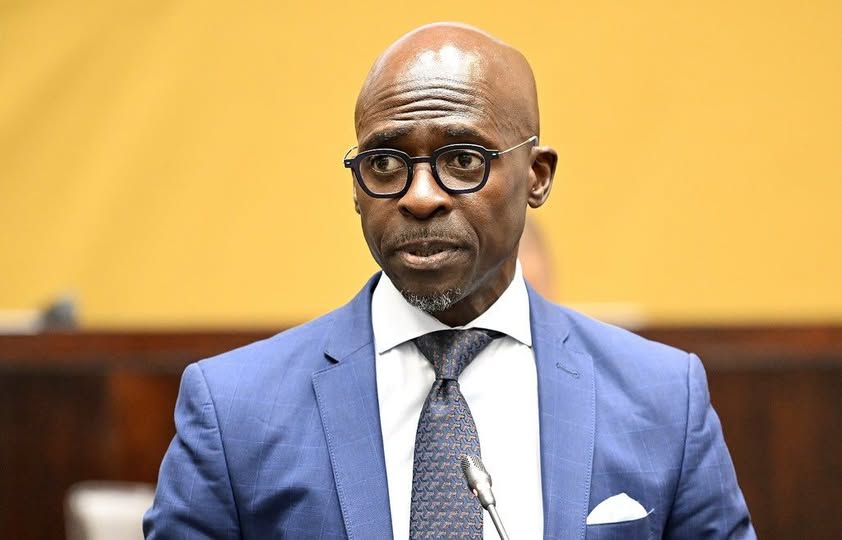
What began as a technical procurement scandal buried in Transnet’s paperwork has now become one of the most high-profile corruption cases to move through South Africa’s courts. Former Cabinet minister Dr Malusi Gigaba, along with four ex-Transnet executives, is officially headed to the Gauteng High Court to answer to allegations tied to the state-owned rail company’s controversial locomotive procurement programme.
How the case landed in High Court
Gigaba made a brief appearance at the Palm Ridge Specialised Commercial Crime Court, where prosecutors confirmed that the matter will now be enrolled in the Gauteng High Court in Johannesburg. The case, which returns on 19 February, also involves former top executives Anoj Singh, Brian Molefe, Siyabonga Gama and Thamsanqa Jiyane.
All accused have been served with indictments and notices of trial, marking a significant move forward in a corruption saga that has hovered over the company since the height of the state capture era.
What the state says went wrong at Transnet
South Africa’s Investigating Directorate Against Corruption (IDAC) alleges that Transnet’s locomotive acquisition programme was tainted by serious irregularities. Three major contracts for 95, 100 and 1,064 locomotives were allegedly awarded in violation of procurement rules, resulting in losses worth billions.
The state maintains that while Transnet was attempting to expand and modernise the rail network, tender processes were ignored, manipulated or bypassed. These lapses opened the door to what investigators believe became one of the most costly procurement failures in the SOE’s history, including a widely criticised R54 billion locomotive deal.
Gigaba’s alleged links to the Gupta family
The allegations against Gigaba stretch back to his tenure as minister of public enterprises between 2010 and 2014. The state claims the former minister accepted undisclosed amounts of cash from members of the Gupta family during this period. Prosecutors argue that these payments were corrupt in nature and tied to the broader manipulation of Transnet’s procurement processes.
Gigaba first appeared in court in November 2025, facing a corruption charge linked to three Transnet contracts signed during his time in office. His co-accused, the four senior Transnet executives, were arrested and granted bail earlier in 2025 after also being charged in connection with the Gupta-linked scheme.
A case rooted in South Africa’s state capture history
The Transnet locomotive scandal is widely viewed as one of the core pillars of the state capture project, which saw billions siphoned from state-owned enterprises through rigged contracts and political connections. The case forms part of broader efforts to hold high-profile political and corporate figures accountable for the financial collapse and operational failures that continue to affect the country’s logistics network today.
As the matter heads to the High Court, it marks another critical test of South Africa’s willingness to pursue accountability at the highest levels of government and business.
{Source:IOL}
Follow Joburg ETC on Facebook, Twitter , TikTok and Instagram
For more News in Johannesburg, visit joburgetc.com