Business
Private education in South Africa for R780 a month: How it works
A private school fee that sounds impossible, but exists
In a country where private school fees often rival bond repayments, the idea of paying R780 a month for private education sounds like a rumour you would dismiss over morning coffee. Yet across parts of the Western Cape, and now beyond, that figure is very real.
A non-profit education group is quietly reshaping what private schooling can look like in South Africa. The model is simple but bold. Keep costs low, lean on technology where it makes sense, partner with government, and never lose sight of the learner sitting in the classroom.
For families squeezed between rising living costs and uneven public schooling, it has struck a nerve online. On social media, parents have reacted with disbelief, curiosity, and a fair amount of hope. Many are asking the same question: why is this not everywhere already?
How the R780-a-month model works
The education group charges R7,800 a year for the 2026 school year, paid over ten months. That works out to R780 per month. At present, around 2,000 learners are enrolled across its schools.
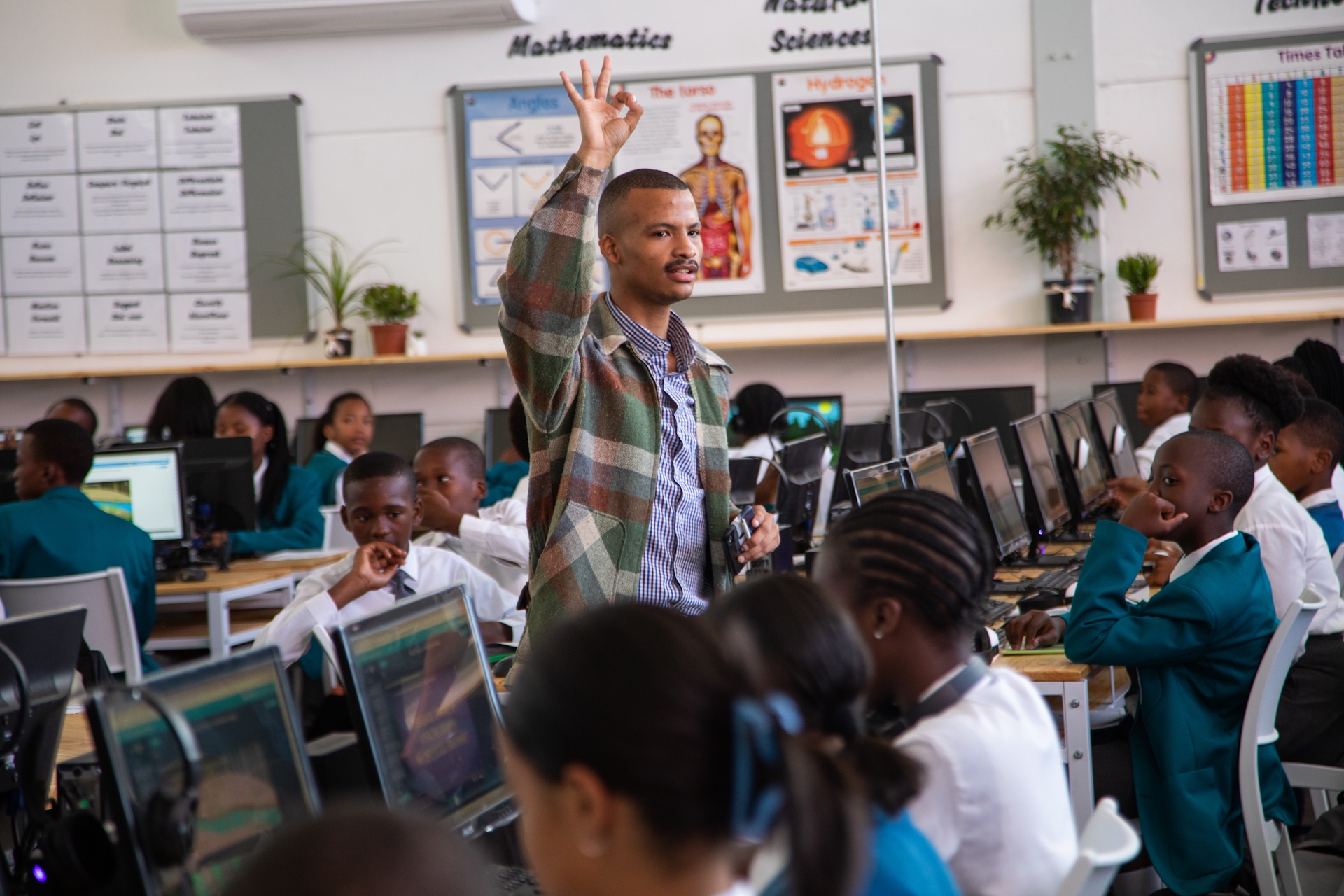
The organisation operates as a non-profit company and runs a blended learning system. High school learners follow a fully blended model that combines digital learning with in-class facilitation. Primary school learners are taught through more traditional methods, supported by technology rather than driven by it.
Each school employs roughly 73 staff members, including qualified teachers, facilitators, and operational teams. The goal is not to replace teachers with screens but to use technology to stretch limited resources without sacrificing academic outcomes.
From one school to a growing network
The journey started in 2018 in Eersterivier, where a high school opened through a partnership with a no-fee public school and the Western Cape Education Department. That first school reached full capacity by 2021 and produced its first matric class in the same year.
Today, the network includes five schools across the Western Cape. There is one high school in Eersterivier, as well as primary and high schools in Stellenbosch and Pinelands. The Stellenbosch and Pinelands campuses are designed to eventually serve 1,720 learners from Grade R through to Grade 12.
Beyond the province, the group also works with partner schools in Johannesburg and KwaZulu-Natal, showing that the model is not limited to one region.
Big builds backed by donors, not fees
One of the most surprising parts of the story is the scale of investment behind these schools. The Stellenbosch campus, which opened in 2024, cost around R80 million to build. It welcomed its first group of Grade 8 learners and will add one grade each year until its first matric class graduates in 2028.
More recently, a new school opened in Pinelands, Cape Town, with an estimated development cost of R135 million. All of that funding was raised externally. The school is currently operating from a temporary site, with construction of the permanent campus scheduled to begin in February 2026.
This funding model is central to keeping fees low. Instead of asking parents to carry the full cost of infrastructure, the schools rely on partnerships between philanthropy, government, and families.
Lessons learned from lockdown learning
The blended learning approach was not dreamed up in a boardroom. It was shaped by necessity. When the COVID-19 pandemic forced schools online, the first Apex school moved quickly to digital learning and ensured learners had access to data.
During this period, the organisation developed its own learner management system, which later became the backbone of its blended model. When schools began reopening in mid-2020, learners alternated between in-person and online days. By 2022, the blended learning approach was fully launched.
Internal assessments showed that learner performance matched, and in some cases exceeded, that of traditional schools. Education leaders outside the organisation have taken notice, describing the results as something many would have dismissed as unrealistic just a few years ago.
Why this matters for South Africa
South Africa’s education gap is not just about access. It is about affordability, quality, and sustainability. This model challenges the assumption that private education must be exclusive to be effective.
It also raises uncomfortable questions. If a non-profit can deliver strong results at public school level costs, what else is possible with the right partnerships and innovation?
For now, the schools are not yet within reach of every family or every province. But the growing interest suggests that this experiment is tapping into something South Africans have been waiting for: a version of private education that feels realistic, not aspirational.
Follow Joburg ETC on Facebook, Twitter, TikT
For more News in Johannesburg, visit joburgetc.com
Source: Business Tech
Featured Image: apex-schools.org