News
Iran escalates tensions by branding EU armies as terrorist organisations
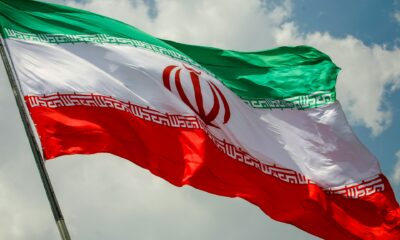
Iran has taken a sharp diplomatic swing at Europe, officially designating the armed forces of EU member states as terrorist organisations. The move is a direct response to the European Union’s recent decision to blacklist Iran’s powerful Islamic Revolutionary Guard Corps, and it signals just how quickly relations have soured.
The decision was passed by Iran’s parliament over the weekend, turning what had been months of mounting tension into a full-blown political standoff. For Tehran, the message is simple. If European brands one of Iran’s core military institutions as a terrorist, Iran will respond in kind.
A tit-for-tat that was almost inevitable
From Tehran’s perspective, the EU’s move crossed a red line. The Revolutionary Guard is not just a military force. It plays a central role in Iran’s politics, economy, and regional influence. Labelling it a terrorist organisation was always going to provoke a serious reaction.
Iranian parliamentary speaker Mohammad Baqer Qalibaf framed the EU decision as an attempt to please Washington rather than an independent European stance. Speaking on Sunday, he suggested Europe was acting under pressure from the United States and trying, unsuccessfully, to protect its own territorial interests.
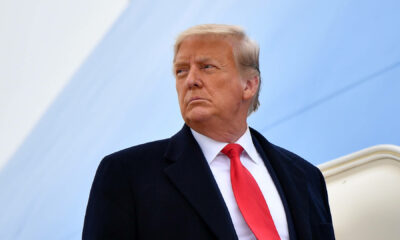
His remarks appeared to reference recent comments by US President Donald Trump, who has publicly floated the idea of annexing Greenland, a territory linked to an EU member state through Denmark.
Protests, pressure, and blame
This diplomatic clash comes after weeks of unrest inside Iran. In December, mass protests erupted across the country over worsening economic conditions. What began as public anger over prices and livelihoods escalated into violent riots and broader political demands.
Iranian authorities have consistently accused the United States and Israel of stoking the unrest, claiming foreign interference turned domestic protests into deadly street violence. While the demonstrations have largely subsided, the political fallout continues to ripple outward.
Europe’s decision to blacklist the Revolutionary Guard was directly linked to Iran’s handling of these protests, according to EU officials.
Europe doubles down
The EU has shown no signs of backing off. EU foreign policy chief Kaja Kallas announced that foreign ministers had taken what she called a decisive step by designating the IRGC as a terrorist organisation. Formal adoption of the decision is expected within days.
European Commission president Ursula von der Leyen publicly welcomed the move, alongside a new package of sanctions targeting 15 individuals and six entities linked to Iran. These measures include asset freezes, travel bans, and additional restrictions.
For Brussels, the message is about accountability. For Tehran, it looks like escalation.
Tehran calls it a dangerous mistake
Iran’s foreign minister, Abbas Araghchi, has been especially blunt. In a post on X, he accused the EU of fanning the flames of a wider regional conflict and dismissed the IRGC designation as a strategic blunder and a public relations stunt.
His comments underline Iran’s concern that Europe is aligning itself too closely with Washington at a time when tensions in the Middle East are already high.
A wider global divide
The IRGC is already designated as a terrorist organisation by the United States, Israel, Canada, Australia, Saudi Arabia, and Bahrain. Europe’s decision brings the bloc firmly into that camp, widening the gap between Tehran and Western capitals.
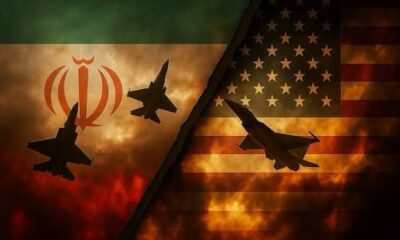
Meanwhile, President Trump has continued to ratchet up pressure, warning of possible military action and claiming a large US naval presence has been sent to the region. At the same time, he has left the door open to diplomacy, adding another layer of uncertainty to an already volatile situation.
What this means going forward
Iran’s designation of EU armies is largely symbolic, but symbols matter in geopolitics. It hardens positions on both sides and makes de-escalation more difficult. For ordinary people, whether in Europe or the Middle East, the worry is that rhetoric could eventually turn into something far more tangible.
For now, both sides appear locked into a cycle of retaliation. And as history has shown, once that cycle starts, it is rarely easy to stop.
Follow Joburg ETC on Facebook, Twitter, TikT
For more News in Johannesburg, visit joburgetc.com
Source: IOL
Featured Image: This is Beirut