News
Epstein’s shadow reaches South Africa and it should worry us all
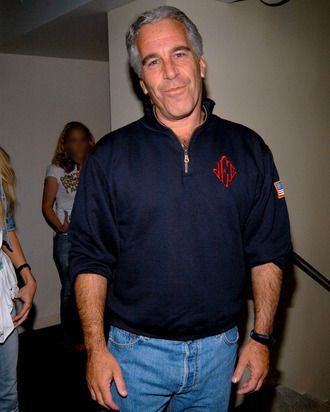
Epstein’s shadow reaches South Africa and it should worry us all
For a long time, South Africa has felt geographically and psychologically far removed from the world’s darkest scandals. We’re at the edge of the map, the thinking goes, too far, too disconnected to be deeply entangled in the horrors that dominate headlines elsewhere.
The newly released Jeffrey Epstein documents shatter that comfort.
Buried within millions of pages of emails, travel plans and correspondence is a sobering reality: young South African women were on the radar of Epstein’s global exploitation network, not as an afterthought, but as a perceived “opportunity”.
Why South Africa entered Epstein’s orbit
The US Department of Justice’s release of more than three million Epstein-linked documents has given journalists worldwide a rare look at how his operation functioned. What emerges is not chaos, but coordination, a network that relied on wealth, influence and access to move young women across borders.
South Africa appears in these records not as a central hub, but as a targeted source country.
Emails linked to Epstein’s associates reference Cape Town-based contacts communicating with modelling agencies, discussing the “placement” of young women in global fashion capitals like Paris and New York. One contact explicitly spoke about returning to South Africa to “scout”, describing the country’s young women as having “huge potential”.
Those words alone should stop any parent in their tracks.
The modelling myth and how exploitation hides in plain sight
South Africans know how powerful the modelling dream can be. In a country battling youth unemployment and economic inequality, the promise of international travel, contracts and exposure can feel like a golden ticket.
That’s exactly why Epstein’s network leaned on modelling pipelines.
Victims who later testified described how legitimate-sounding opportunities blurred into coercion, manipulation and abuse. The industry’s informal structures scouts, intermediaries, private introductions, made it easy for predators to operate without scrutiny.
What looks like glamour from the outside can quickly become a trap.
The Zuma dinner, power, proximity and discomforting optics
South Africa’s name also surfaces in connection with a 2010 private dinner in London involving then-president Jacob Zuma. Emails show Epstein-linked figures helped arrange the gathering, including the presence of a young model.
There is no allegation of criminal conduct tied to Zuma, and the Jacob Zuma Foundation has firmly denied any impropriety. But the episode reveals something unsettling about how power operates: elite social circles where access is curated, appearances are engineered, and young women are sometimes treated as accessories rather than people.
Even without wrongdoing, the optics matter.
Public reaction: anger, fear and grim recognition
On South African social media, the response has been visceral. Parents have shared warnings. Survivors have spoken about how easily “opportunities” can turn predatory. Others have voiced a bitter recognition, that this country’s girls have long been vulnerable to exploitation, whether by traffickers, abusers or economic desperation.
The Epstein files didn’t create this risk. They simply exposed how global predators see South Africa.
The unanswered question no one wants to face
What we don’t yet know and may never fully know, is how many South African women were actually pulled into Epstein’s world.
Some survivors have already gone public through testimony and memoirs. Others may never speak. Silence, in cases like these, is not proof of absence it’s often the residue of trauma.
What this means for South Africa right now
This isn’t about panic. It’s about awareness.
South Africa is not insulated from global exploitation networks. Our distance offers no protection. Our beauty, ambition and inequality can, in fact, make young women more vulnerable, not less.
The lesson is painfully simple: scrutiny matters. So does education. So does teaching young people that no opportunity should require secrecy, pressure or silence.
Jeffrey Epstein’s crimes were global by design. The documents show that South Africa was never invisible to him or his associates and that should force a hard, honest conversation at home.
Protecting our daughters means looking beyond the fantasy of escape and asking harder questions about who benefits, who controls the door, and who pays the price.
{Source: The Citizen}
Follow Joburg ETC on Facebook, Twitter , TikTok and Instagram
For more News in Johannesburg, visit joburgetc.com