News
South African students struggle under rising university application fees
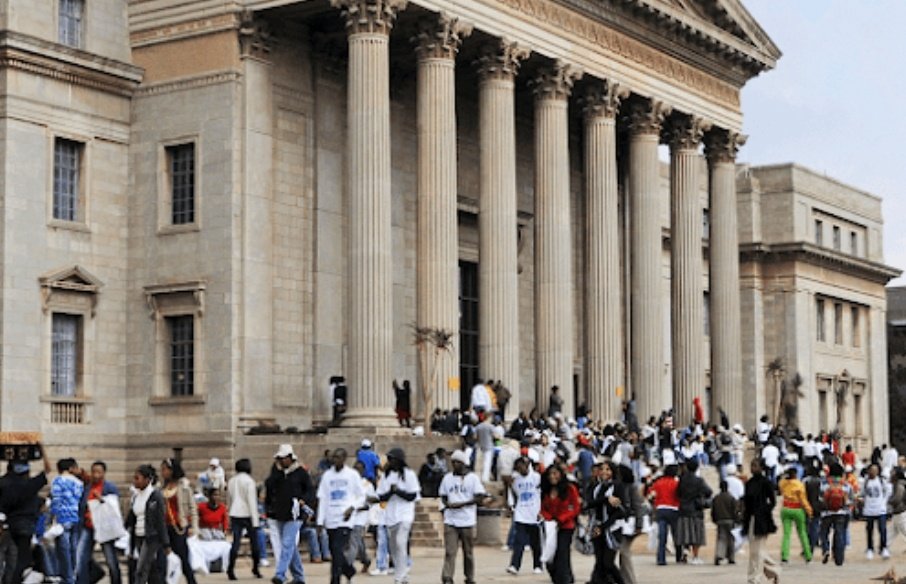
R100 to R300 just to apply: how South African students are paying to compete for scarce university spots
For thousands of South African students, the first step toward higher education has become a costly hurdle. With application fees at public universities ranging from R100 to R300, learnersespecially those from low-income and rural householdsare feeling the financial pinch before they even step onto a campus.
While universities insist these fees cover administrative costs, staff salaries, and IT systems, student groups argue that the charges create an early barrier, filtering out academic potential based on poverty.
Millions collected, but few spots available
Take the University of Cape Town (UCT), for example. Last year, the university received over 102,000 applications for roughly 4,000 first-year spaces. Even at the modest R100 fee for South African and SADC applicants, that represents R10 million in fees alone.
Similarly, Wits University processed 160,000 applications for 5,800 places, while Vaal University of Technology saw 210,849 applications for 10,881 spaces. Across the country, public universities handle hundreds of thousands of applications annually, collecting millions of rands in non-refundable fees.
Students push back
The South African Union of Students (SAUS) has been vocal in opposing the fees. Dr Thato Masekoa noted that learners from rural areas face compounded difficultiesnot just the cost of the fee, but also challenges accessing the internet, data, and banking services.
“Many prospective students apply to multiple universities to improve their chances,” Masekoa said. “These cumulative costs are often impossible for low-income families to shoulder.”
Student activists, including members of SASCO, have highlighted that application fees disproportionately exclude working-class applicants, restricting diversity and reinforcing inequalities in higher education.
Universities defend fees
Despite the outcry, universities argue fees are necessary. UCT’s Elijah Moholola said fees cover the “labour-intensive process of manually processing applications,” while Wits’ registrar, Carol Crosley, emphasized that hundreds of staff are employed to manage applications, orientation, and administration.
The University of Pretoria charges R300 per application, citing costs for staff, IT systems, and verification processes. The institution does, however, offer fee waivers for applicants with household incomes under R150,000 per year, but critics argue this does not go far enough.
Some universities are moving toward online solutions to reduce costs. The University of Johannesburg, for instance, has made online applications free for most students, charging R200 only for paper-based submissions, which are now rare.
The broader picture
Experts warn that application fees are more than just a financial hurdlethey influence who gets access to higher education and can impact diversity on campus. Educational activist Hendrick Makaneta called for government intervention to standardize or subsidize application fees, ensuring that a prospective student’s finances do not dictate their future.
“Application fees can shrink applicant pools from underrepresented groups and hamper efforts to transform public universities,” Makaneta said.
With the 2027 intake expected to open in April, thousands of hopeful learners will once again face a tough choice: pay to compete for limited spaces or risk being left out of the higher education system entirely.
As the debate continues, South African students, universities, and policymakers are grappling with a difficult question: how do you balance operational costs with equitable access to education in a country where opportunity is already scarce?
{Source: IOL}
Follow Joburg ETC on Facebook, Twitter , TikTok and Instagram
For more News in Johannesburg, visit joburgetc.com