News
Why the US pulled back from Iran, and why the crisis is far from over
Why the US paused on Iran, and why calm is still an illusion
In the early days of February, the world braced for a US military strike on Iran. American forces were positioned across the region, supply chains were aligned, and the sense of inevitability hung heavy in global headlines. Then, at the last moment, Washington stepped back.
For many watching from afar, the pause looked like restraint. A sign that cooler heads had prevailed. From the Middle East to social media feeds in South Africa, the reaction followed a familiar rhythm. Relief mixed with scepticism. Memes joked about another “almost war” moment, while analysts warned that nothing fundamental had changed.
They were closer to the truth.
What happened was not a rethink of strategy but a recalibration of pressure.
A pause rooted in risk, not peace
The military option against Iran has not been shelved. It remains part of Washington’s planning framework, sitting alongside sanctions, diplomacy, and deterrence. The decision to halt action at the final stage came down to timing and risk, rather than any sudden belief that confrontation could be wished away.
A direct strike on Iran carries consequences that are notoriously difficult to control. Retaliation would likely not be limited to a single target or country. US bases across the region, Israeli cities, and allied infrastructure could all be drawn into a widening cycle of response. For American planners, the question was not whether Iran would respond, but how far that response could spread.
At that moment, the costs of immediate action appeared higher than the gains.
Missile defence and credibility concerns
One of the quieter but decisive factors behind the pause was missile defence readiness. Protecting Israel and regional partners requires a level of coordination and coverage that US planners themselves have signalled is not yet complete.
Launching an operation without confidence in defensive systems would risk exposing vulnerabilities. Not just physical ones, but political ones too. A failure to shield allies in the face of a large-scale Iranian response would raise uncomfortable questions about the reliability of US security guarantees.
In a region where credibility often matters as much as capability, that risk was hard to ignore.
Domestic pressure back home
There is also the shadow of history. Long, grinding conflicts in the Middle East have left the US public weary of open-ended military commitments. A confrontation with Iran would not resemble a short, contained operation. It would threaten global energy markets, unsettle already fragile regional balances, and demand sustained attention and resources.
For a US administration facing domestic priorities and political constraints, committing to such a path without clear escalation control is a heavy ask.
Tehran’s careful counterplay
Iran’s response to the pause has followed a familiar dual track. On one hand, firm warnings. On the other hand, quiet diplomacy.
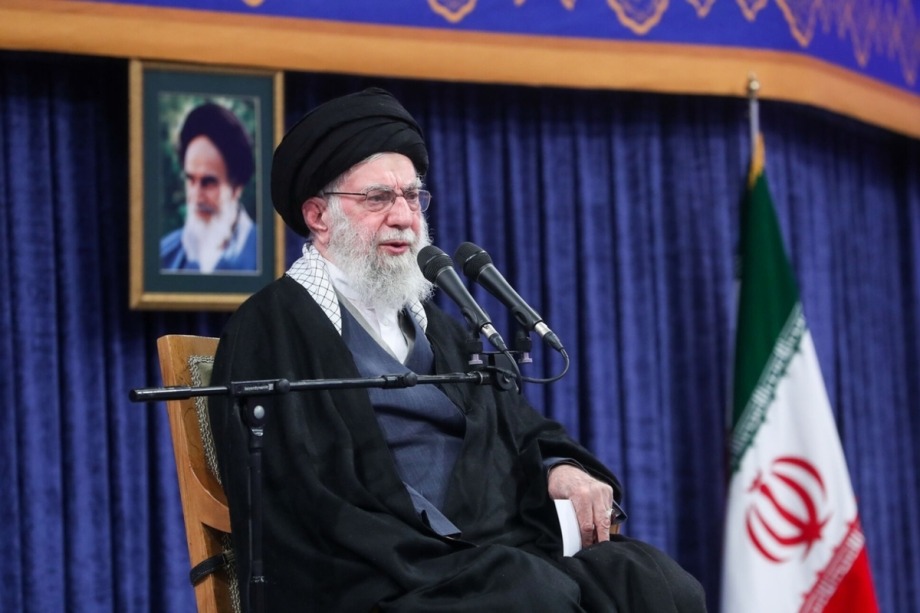
Statements from Iran’s leadership have emphasised the regional consequences of any attack, reinforcing deterrence by raising the perceived price of action. At the same time, Iranian officials have signalled openness to talks, with possible meeting points mentioned in Türkiye, the UAE, or Egypt.
This is not a contradiction. For Tehran, diplomacy is not surrender. It is a tool to slow momentum, test intentions, and avoid setting a precedent where sustained military pressure produces political concessions.
Talks without trust
History offers a useful lens here. US-Iran relations have often seen diplomacy and force operating side by side. Negotiations have unfolded alongside airstrikes, covert actions, and public threats. Dialogue, in this context, manages risk rather than resolving disputes.
Claims about Iran’s nuclear capabilities add another layer of complexity. While political rhetoric frequently suggests an urgent threat, intelligence assessments reported in Western media have indicated no evidence that Iran possesses nuclear weapons. That gap between rhetoric and verification has fuelled public debate, with many questioning whether the nuclear issue is as much political as it is technical.
Israel’s uneasy position
Israel sits at the centre of this tension, and its position has grown more delicate. While coordination with Washington has long been assumed, recent signals suggest information sharing has become more selective. That has reportedly caused unease in Israeli strategic circles, where alignment with the US is seen as non-negotiable.
The divergence reflects different time horizons. Washington is focused on managing escalation across alliances. Israel is focused on what it sees as a narrowing window to address long-term threats. When those perspectives drift apart, the risk of miscalculation rises.
The noise of inevitability
Public discourse has not helped. A steady stream of leaks, predictions, and countdowns has created an atmosphere where war feels perpetually imminent. On social media, speculation often outruns substance, amplifying anxiety and pressure.
More measured assessments suggest the timeline has simply shifted. From days to weeks, or even months. That is not stability. It is postponement.
A standoff, not a settlement
What is emerging is a prolonged phase of managed instability. The US continues to apply pressure without crossing thresholds that would trigger uncontrollable escalation. Iran reinforces deterrence while engaging diplomatically. Negotiations exist, but largely as a way to regulate danger rather than solve the underlying conflict.
The strongest restraint on all sides remains a shared understanding of the consequences. A full-scale war involving Iran would ripple across the Middle East and the global economy, pulling multiple powers into direct confrontation.
That awareness explains the pause. It does not signal peace.
The moment may feel quieter, but the ground beneath it remains unsettled. Decisions have been deferred, not resolved, and the balance holding this fragile equilibrium could still shift with little warning.
Follow Joburg ETC on Facebook, Twitter, TikT
For more News in Johannesburg, visit joburgetc.com
Source: IOL
Featured Image: Middle East Monitor