News
Questions grow over Sindile Mfazi’s death as poisoning claim reaches Parliament
A death that refuses to fade quietly
Five years after the death of senior police officer Sindile Mfazi, a disturbing claim has landed before Parliament and reopened wounds many believed had been sealed during the chaos of the Covid-19 pandemic.
Mfazi, who served as deputy national commissioner of crime detection, officially died in 2021 from Covid-19-related complications. At the time, the country was overwhelmed by pandemic deaths, and questions were few. Now, a former Crime Intelligence officer is insisting the story told to the public may not be the full truth.
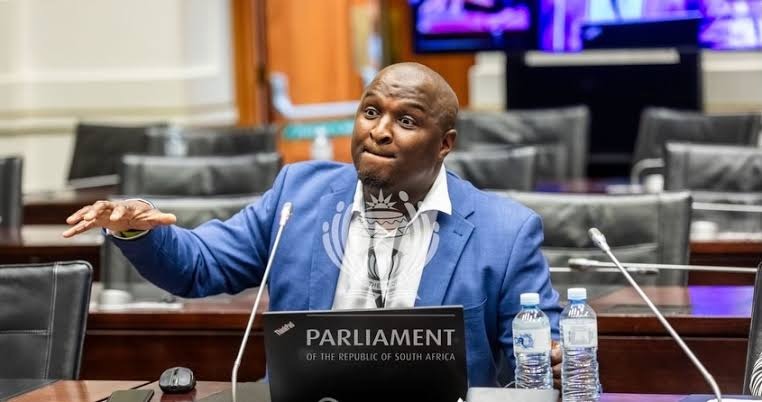
Testifying before an Ad Hoc parliamentary committee this week, former warrant officer Pilasande Dotyeni pleaded with MPs to look deeper. His message was blunt and emotional. Mfazi, he claimed, did not die of natural causes, and his death was allegedly disguised as a Covid-19 fatality.
The allegation that changed the tone
Dotyeni told MPs that forensic evidence obtained after a court-ordered exhumation pointed to poisoning. According to his testimony, casting resin was allegedly found in Mfazi’s system during a post-mortem conducted after his burial. He claimed this explained reports of blood at the scene, describing what he believed was a far more violent death than the official version suggested.
He described Mfazi not only as a senior officer but also as a visible figure in the state, noting that he was one of the generals who stood alongside President Cyril Ramaphosa during his inauguration. In Dotyeni’s words, when someone of that stature dies under suspicious circumstances, citizens have a duty to ask hard questions.
What Mfazi was investigating
Central to the claims is Mfazi’s work in the months before his death. Dotyeni told the committee that Mfazi had been investigating the Secret Services Account, particularly in relation to the R1.6 billion spent on Covid-19 personal protective equipment.
He said Mfazi contacted him in early 2020, asking him to help record conversations involving senior police officers at a specific office to understand what was unfolding behind closed doors. Even after being moved to the Western Cape, Mfazi allegedly continued probing activities linked to SAPS headquarters.
For many South Africans, the timing alone raises eyebrows. The Covid-19 PPE scandal remains one of the most controversial chapters of the pandemic, with public trust still fragile years later.
A home turned into a crime scene
Dotyeni’s testimony painted a troubling picture of the hours after Mfazi’s death. He told MPs that one of Mfazi’s drivers alerted him to the death and that Mfazi’s wife later confirmed it. During that call, Dotyeni said it appeared others were present and controlling her movements, including her phone use.
More concerning were claims that individuals from SAPS head office allegedly removed documents from Mfazi’s home while his body was still upstairs. Dotyeni said blood had not been cleaned from the scene when these files were taken, further fuelling suspicions of foul play.
The family, he added, was unhappy with the official explanation and pursued legal action after the funeral to secure a post-mortem. An inquest was later opened following the exhumation.
Why the investigation stalled
According to Dotyeni, the inquest docket exists within SAPS and includes forensic reports and witness statements identifying those who allegedly removed documents from the house. He claimed the investigation was effectively handed to SAPS head office, which he described as a compromised crime scene due to potential involvement of implicated individuals.
He told MPs the case has been allowed to die a slow death, despite what he insists is documented forensic evidence. His plea to Parliament was simple. Demand full disclosure. Who authorised the retrieval of documents, what became of the toxicology report, who Mfazi was investigating, and why the investigation stopped.
Parliament responds
ANC MP Khusela Sangoni-Diko supported the call for deeper scrutiny, suggesting that Dotyeni be granted an in-camera session so he could safely name those Mfazi was allegedly investigating. She agreed that SAPS should be required to make a full disclosure and that further action could be pursued through the Police Portfolio Committee if necessary.
On social media, the testimony has reignited public anger and suspicion around unresolved deaths linked to state corruption cases. Many users have questioned how a case involving such serious allegations could remain unresolved for years, while others have called for independent investigators outside SAPS structures.
A reckoning still to come
Whether Dotyeni’s claims lead to concrete action remains to be seen. What is clear is that Sindile Mfazi’s death has re-entered the national conversation at a time when South Africans are demanding accountability from institutions meant to protect them.
For a country still reckoning with the legacy of Covid-19 corruption and secrecy, the renewed scrutiny of this case feels less like history being revisited and more like unfinished business finally knocking at Parliament’s door.
Follow Joburg ETC on Facebook, Twitter, TikT
For more News in Johannesburg, visit joburgetc.com
Source: IOL
Featured Image: Instagram/@ANCParliament