Business
Afreximbank puts R128 billion behind South Africa’s economic comeback
Afreximbank’s R128 billion bet on South Africa’s economic revival
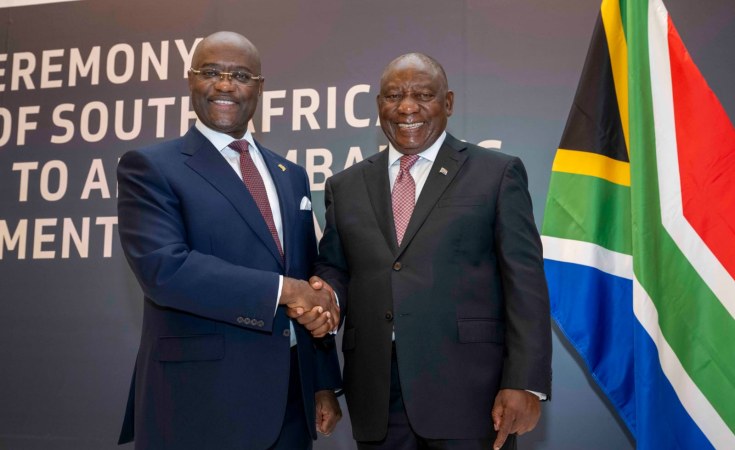
When a continental lender puts R128 billion on the table, people pay attention. That is exactly what happened this week when African Export-Import Bank, better known as Afreximbank, announced a sweeping investment package aimed squarely at reigniting South Africa’s economy.
The commitment, valued at eight billion dollars, was unveiled at a high-level engagement with the Department of Trade, Industry and Competition. For many in the room, it felt like more than a funding announcement. It was a signal that South Africa’s industrial ambitions still matter on the African stage.
Keeping value at home
At the centre of the plan is a push to stop South Africa’s raw materials from leaving the country without doing the hard work first. Afreximbank President George Elombi made it clear that mineral beneficiation and automotive manufacturing are key priorities.
The thinking is simple. Processing minerals locally creates jobs, builds skills, and keeps wealth circulating in the economy rather than exporting it offshore. In a country wrestling with unemployment and sluggish growth, that message has landed strongly, especially among industrial analysts and trade unions who have long called for deeper localisation.
Energy as the backbone
No industrial revival works without reliable power. Afreximbank’s package places heavy emphasis on energy generation and transmission, acknowledging what every South African business owner already knows. Without electricity, factories stall and investment dries up.
By tying energy infrastructure directly to industrial funding, the bank is betting that power stability and manufacturing growth must move together. On social media, the announcement sparked cautious optimism, with many users welcoming the focus on energy while asking how quickly projects could move from plans to reality.
Opening doors to African markets
Beyond national borders, the funding also aims to position South Africa as a stronger player within the African Continental Free Trade Area. Afreximbank wants local producers to plug more effectively into Africa’s growing single market, using South Africa’s industrial base as a launchpad for regional trade.
This angle matters in a country where exporters are increasingly looking north as global markets become more competitive and unpredictable.
Teaming up with local institutions
Rather than going it alone, Afreximbank plans to work alongside South Africa’s major development and financial players. These include the Industrial Development Corporation, the Development Bank of Southern Africa, the Public Investment Corporation, and commercial banks.
This partnership approach is designed to stretch the impact of the funding across multiple sectors and reduce bottlenecks that often slow large-scale projects.
A lifeline for small businesses
Alongside the headline figure sits an additional three billion dollar inclusive financing programme, developed with the DTIC and the National Transformation Fund. This portion is aimed at small and medium-sized enterprises, as well as marginalised businesses that struggle to access traditional funding.
For township entrepreneurs and smaller manufacturers, this element could be just as significant as the larger industrial projects. Access to patient capital remains one of the biggest barriers to survival and growth.
Not a new relationship
While the scale of the announcement feels new, Afreximbank’s relationship with South Africa is not. The bank has previously backed initiatives such as a South Africa-Africa trade and investment programme launched in 2018, a cross-border water infrastructure project with Zimbabwe, and early development work on a titanium dioxide facility in Richards Bay.
It also has a pipeline of projects worth more than six billion dollars spanning energy, transport, healthcare, manufacturing, and mining. In other words, this week’s announcement builds on groundwork already laid.
A continental vote of confidence
Elombi framed the investment as part of a broader African mission, positioning South Africa not as an isolated case but as a driver of continental growth. That framing resonates at a time when confidence in the local economy is fragile.
Whether this R128 billion commitment delivers on its promise will depend on execution, speed, and accountability. For now, it stands as one of the most significant economic confidence boosts South Africa has seen in recent years.
Follow Joburg ETC on Facebook, Twitter, TikT
For more News in Johannesburg, visit joburgetc.com
Source: IOL
Featured Image: allAfrica.com