Business
First Tesla Cybertruck photographed in South Africa at OR Tambo Airport
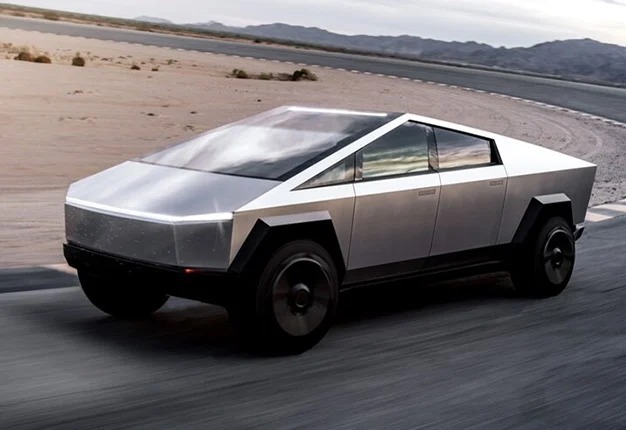
It was only a matter of time before it happened. A stainless steel giant, all sharp lines and sci-fi attitude, has finally touched down on local soil. Social media has been buzzing this week after photos emerged of what appears to be the first Tesla Cybertruck ever imported into South Africa.
The images, shared on Instagram by local user TheRealDivan, show the unmistakable electric bakkie being loaded onto a flatbed truck at OR Tambo International Airport. Within hours, the posts had bounced across motoring pages, WhatsApp groups, and comment sections, with South Africans doing what they do best. Debating, joking, and zooming in on every detail.
Why this Cybertruck matters
This is not just another imported luxury car. The Cybertruck is not officially sold in any right-hand drive market, including South Africa. It is currently available in left-hand drive countries such as the United States, Canada, and parts of the Middle East, which makes its local arrival a big deal.
According to local automotive enthusiasts, this particular Cybertruck is expected to stay in the country and be converted to right-hand drive by Race South Africa so it can legally operate on public roads. That step is essential because South African regulations do not allow left-hand drive vehicles on public roads unless they were registered before the year 2000.
In recent years, a small number of Tesla vehicles have made their way into South Africa, mostly right-hand drive models imported from the United Kingdom. The Cybertruck, however, is a different beast entirely.
A bakkie built to divide opinion
Love it or laugh at it, the Cybertruck is impossible to ignore. Its angular, Blade Runner-style design has split opinion worldwide, with critics comparing it to a child’s sketch and fans praising its bold refusal to look like anything else on the road.
That same polarising design is already playing out locally. South African social media reactions range from excitement about seeing cutting-edge EV tech in a bakkie-obsessed country to scepticism about how practical or repairable it would be on local roads.
Yet, despite the jokes, the Cybertruck has proven it can sell. In its first year on the market, it recorded nearly 39,000 sales in the United States, outperforming electric bakkies from established rivals and ranking fifth among all electric vehicles. Sales dipped sharply in 2025, dropping by almost half, a slowdown Tesla has linked to broader economic and trade uncertainty.
Engineering that backs up the hype
Underneath the meme-worthy shape is some serious engineering. The top specification Cyberbeast model can sprint from standstill to 100 kilometres per hour in roughly 2.7 seconds, despite weighing more than three tonnes. Even the now-discontinued single-motor version managed respectable performance figures.
One of the Cybertruck’s most talked-about innovations is its 48-volt electrical system. This higher voltage setup allows for thinner wiring that is significantly lighter than conventional systems, improving efficiency and reducing material use.
The bakkie also features steer-by-wire technology, which makes manoeuvring a vehicle of this size far easier than expected. All-wheel-drive versions can tow close to five tonnes, although real-world testing shows that heavy towing dramatically reduces driving range.
Then there is the exoskeleton. Made from ultra-hard stainless steel, the body is dent-resistant and strong enough to stop small-calibre bullets. The reinforced glass is designed to handle severe impacts, including large hail, provided it has not been compromised beforehand.
Not without its problems
The Cybertruck has not been a flawless launch. In 2025, Tesla recalled tens of thousands of units after discovering that exterior trim panels could detach while driving. Additional recalls addressed issues with rearview cameras, wipers, and accelerator pedal components.
These problems have fed scepticism around the vehicle, especially in markets where after-sales support is already limited. That makes the arrival of one in South Africa both exciting and slightly nerve-racking.
What it says about EVs in South Africa
Even without an official presence, Tesla enjoys strong brand recognition locally. Surveys consistently show high interest among South African EV adopters, despite the lack of dealerships, charging infrastructure challenges, and import costs.
The Cybertruck’s arrival taps directly into South Africa’s deep love for bakkies. It raises an interesting question. Could an electric bakkie ever really work here at scale? For now, this Cybertruck is more symbol than solution, but symbols matter.
Whether it becomes a regular sight or remains a once-off curiosity, one thing is certain. This stainless steel newcomer has already done its job. It has everyone talking.
Follow Joburg ETC on Facebook, Twitter, TikT
For more News in Johannesburg, visit joburgetc.com
Source: MyBroadband
Featured Image: News24