News
Heat, hunger and hope: The reality inside South Africa’s Home Affairs queues
Heat, hunger and hope: The reality inside South Africa’s Home Affairs queues
For many South Africans, a trip to Home Affairs is less a quick errand and more a test of endurance. From before sunrise, hundreds line up outside offices across the country, hoping to secure crucial documents, ID cards, birth certificates, or passports, only to face hours of waiting, system outages, and the occasional disappointment of walking away empty-handed.
While Home Affairs has promised improvements, including the 2022 launch of the Branch Appointment Booking System (Babs) to streamline services, many citizens report that these changes haven’t reached those who need them most. Rural communities and lower-income households, in particular, remain at a disadvantage due to high data costs and limited internet access.
Long lines under the scorching sun
In Durban, the heat was nearly unbearable as hundreds waited in the sticky summer air outside multiple branches. At the Umgeni Road office, pregnant women, elderly citizens, and children leaned against brick walls, shielding themselves from the 32°C sun, while the queue barely moved.
Bantu Mzobe, 32, from Umlazi, had hoped for a quick passport and ID collection. “I was told I wouldn’t have to queue,” he said. “I’ve been here three hours, and there are still 50 people ahead of me.”
A woman who asked not to be named recounted a five-hour ordeal after first applying for a smart ID in 2024. “I don’t see the difference in this new system they’re boasting about,” she said, exasperated.
Even in offices with better ventilation, like the Pavilion Shopping Centre branch, delays persisted. Nokulunga Shabane, 31, waited more than two hours past her scheduled appointment. “It’s unfair for them to call me for an appointment when they knew they would not be ready,” she said.
Not everyone’s experience was negative. Newlywed pensioner Sihle Cele from Cornubia praised the Pavilion branch for efficiently processing his marriage certificate. “No one will faint in this office due to heat or health issues. It appears to be working up to par,” he said.
A nationwide struggle
Cape Town, Gauteng, Limpopo, and the Eastern Cape all reported similar chaos. Long queues formed hours before opening, often for multiple services simultaneously. Nomvula April in Cape Town said the online booking system failed her: “When I try to book online, it just says no slots found every time. So, what choice do we have? We just come and stand.”
In Gauteng, George Misaveni Madzhabula of Diepsloot arrived at the Randburg office with R46 in his pocket, only to leave hours later without his ID. Others spoke of paying informal “queue fees” to secure spots an unofficial micro-economy born of desperation.
Thando Sikole admitted, “I had to pay for a spot because I can’t afford to lose a whole day at work. If you come late, you won’t be helped.”
Longstanding systemic issues
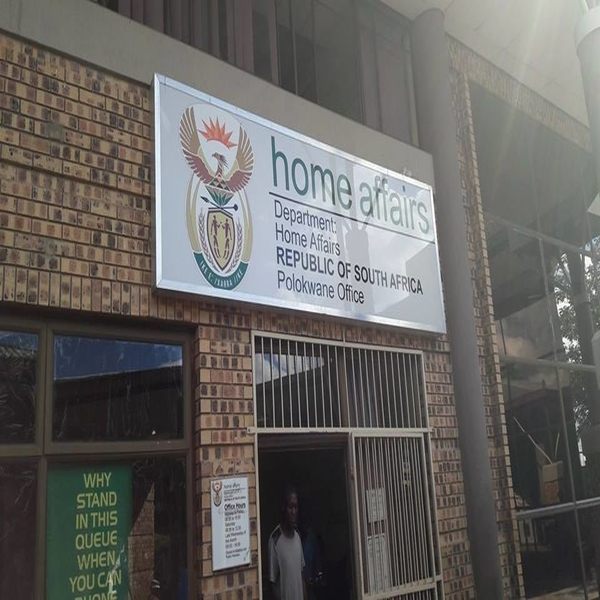
The frustrations reflect deeper problems. Parliamentary visits to Limpopo and the Eastern Cape revealed severe staff shortages, outdated computers, and IT failures. At the Komani office, the biometric system had been offline for a week, halting services entirely. Polokwane and Gqeberha offices were similarly affected, with some staff working at only 40% capacity.
Stats SA data highlights the scale of the challenge: in 2023, over 4.4 million South Africans aged 16 and older had never received an ID card, while nearly 932,138 births were registered that year.
The human cost
For citizens, these delays are more than inconvenient, they can affect access to jobs, schooling, and social grants. Lindani Lefoka, 17, described his first ID application as “horrible,” while his mother Vuyokazi added, “They are working very slowly. Some people even leave without being assisted.”
Yet amid the chaos, moments of relief occur. Grade 12 pupil Jenniffer Malatji, who arrived at 11am in Fourways, received her smart ID by 1.20pm. “The system went down a few times, but the service was moving. I wouldn’t say it was that bad, considering what people usually say about Home Affairs,” she said.
Waiting for solutions
While Home Affairs political head Leon Schreiber has pushed for digital solutions and partnerships to improve service delivery, the experiences of South Africans across the country show that technology alone cannot bridge longstanding gaps in staff, infrastructure, and access.
As citizens continue to brave the heat, hunger, and long hours, one thing remains clear: behind every number in a queue statistic is a human story of patience, frustration, and hope that someday, getting an ID or birth certificate will not feel like a marathon.
{Source: IOL}
Follow Joburg ETC on Facebook, Twitter , TikTok and Instagram
For more News in Johannesburg, visit joburgetc.com