News
R855 a month: What South Africa’s poorest need to survive
R855 a month: The harsh reality of living on South Africa’s poverty line
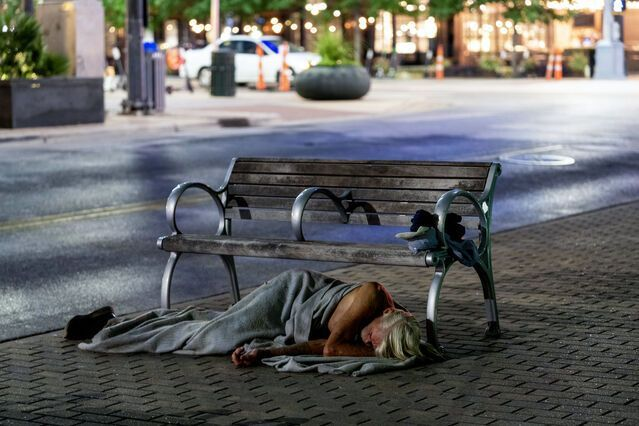
For millions of South Africans, surviving on less than R1,000 a month is a daily reality. Statistics South Africa (Stats SA) recently updated the country’s poverty lines for 2025, revealing just how tight life can be at the margins. At the lowest end, the so-called food poverty line stands at a mere R855 per person per month, barely enough to meet minimum daily energy needs.
The upper-bound poverty line, meanwhile, is R2,846 per month. On paper, this covers basic food, household staples, and essential items. In practice, it leaves little room for anything beyond survival.
From maize meal to electricity: Stretching R2,846
Stats SA’s analysis shows that even the upper-bound poverty line is a survival budget rather than a comfortable living standard. Monthly groceries alone would cost roughly R1,205: 10 kg maize meal, 2 kg of rice and pasta, a couple of kilos of chicken and beef, dairy, vegetables, fruit, and basic staples like bread, tea, and cooking oil.
That leaves about R1,600 to cover everything else transport, electricity, water, medical expenses, school fees, airtime, and cleaning supplies. There’s no room for savings, emergencies, or the occasional treat.
Social media users quickly reacted to the figures, with many pointing out the stark contrast between the poverty line and the statutory national minimum wage of R30.23 per hour. A full-time minimum wage worker earns roughly R5,230 a month almost double the upper-bound poverty line. “If R2,846 is enough to survive, R5k is survival plus breathing room,” one Twitter user quipped, highlighting the inequality between the working poor and minimum wage earners.
A two-decade evolution
It hasn’t always been this stark. Two decades ago, the upper-bound poverty line was only R1,054, while the food poverty line was R228 a month. In real terms, these numbers have risen with inflation, but living costs have ballooned, and the struggle for basic necessities remains intense.
Stats SA calculates these lines using the internationally recognized Cost of Basic Needs approach, linking welfare to real household consumption. The measures are regularly updated to reflect shifts in household spending patterns, including essentials such as food, housing, clothing, transport, and basic services.
What the lines really tell us
It’s important to note that the poverty lines are not a measure of wealth or overall quality of life. They are benchmarks tools for policy-makers, researchers, and NGOs to understand economic vulnerability and track socio-economic trends.
For families living on the food poverty line, the focus is purely survival: enough energy intake to get through the day. For those at the upper-bound line, the struggle extends to balancing basic food with essential living costs, often leaving households financially precarious and exposed to shocks.
A call for context and action
These figures underscore the economic realities for South Africa’s most vulnerable. They remind us that when a household lives on R855 a month, discussions about savings, investment, or leisure are luxuries.
With the cost of living rising, and systemic inequalities persisting, Stats SA’s update serves as both a wake-up call and a lens through which to understand the human stories behind the numbers. For policymakers, it’s a prompt to design interventions that reach those clinging to the margins. For citizens, it’s a stark reminder of the resilience required just to get by.
{Source: IOL}
Follow Joburg ETC on Facebook, Twitter , TikTok and Instagram
For more News in Johannesburg, visit joburgetc.com