If you’ve opened your tap lately and heard nothing but air, you’d be forgiven for thinking the worst.
Across Johannesburg, entire neighbourhoods have endured dry days, some for weeks, while videos of water gushing down streets from burst pipes circulate online. The phrase “Day Zero” has crept back into conversation, reviving uncomfortable memories of Cape Town’s 2018 crisis.
But according to the City of Johannesburg, we’re not there.
Not even close, they insist.
Still, something is clearly wrong.
Day Zero or just déjà vu?
The municipality has moved to calm fears, stating “unequivocally” that Johannesburg is not at or approaching Day Zero the term used to describe a total system collapse where water can no longer be supplied at all.
“Johannesburg continues to receive and distribute water across the city,” the city said, pushing back against claims that the metro is on the brink.
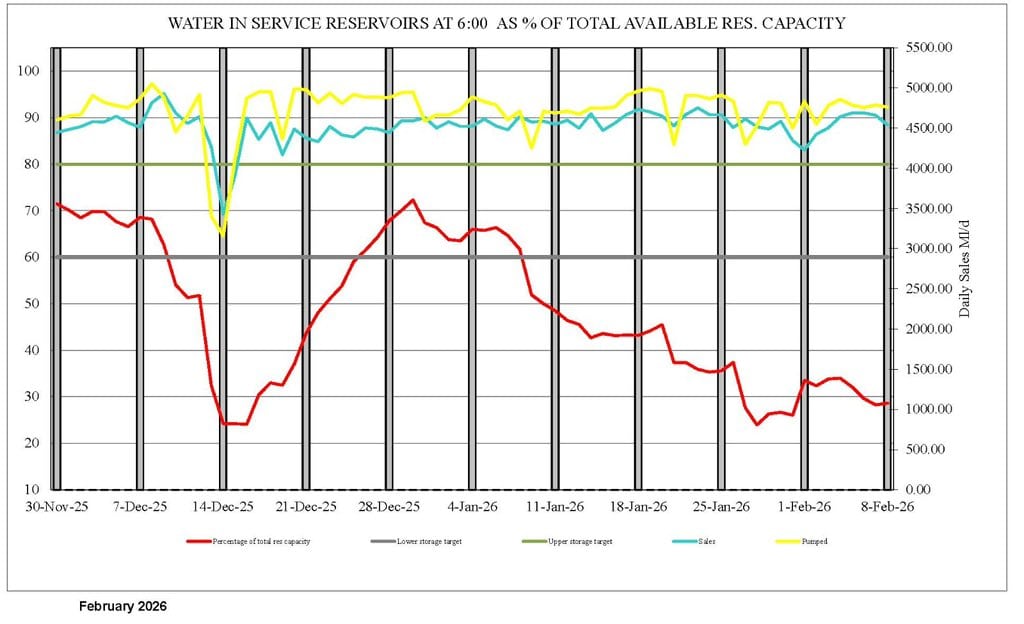
Rand Water, which pumps bulk water into Gauteng’s municipal systems, backed that up. On Monday, it confirmed it has been supplying an average of 4 700 megalitres per day (ML/d) into the provincial system.
Consumption, meanwhile, has hovered around 4 500 ML/d.
On paper, supply exceeds demand.
So why are taps running dry in Melville, Greenside, Brixton and beyond?
The real concern: storage is shrinking
The uncomfortable detail lies in storage levels.
Rand Water data shows storage volumes across Gauteng have dropped dramatically from just over 3 500 ML/d at the end of December to just over 1 000 ML/d this past weekend.
That drop is what has engineers worried.
“The lower the storage, the bigger the risk of water supply issues,” Rand Water warned, urging metros to cut consumption to rebuild reserves and prevent possible interruptions.
In other words, the system isn’t collapsing but it’s under strain. And when storage dips too low, even a minor disruption can tip entire areas into outages.
For residents, the distinction feels academic. On community WhatsApp groups and Facebook pages, frustration is boiling over.
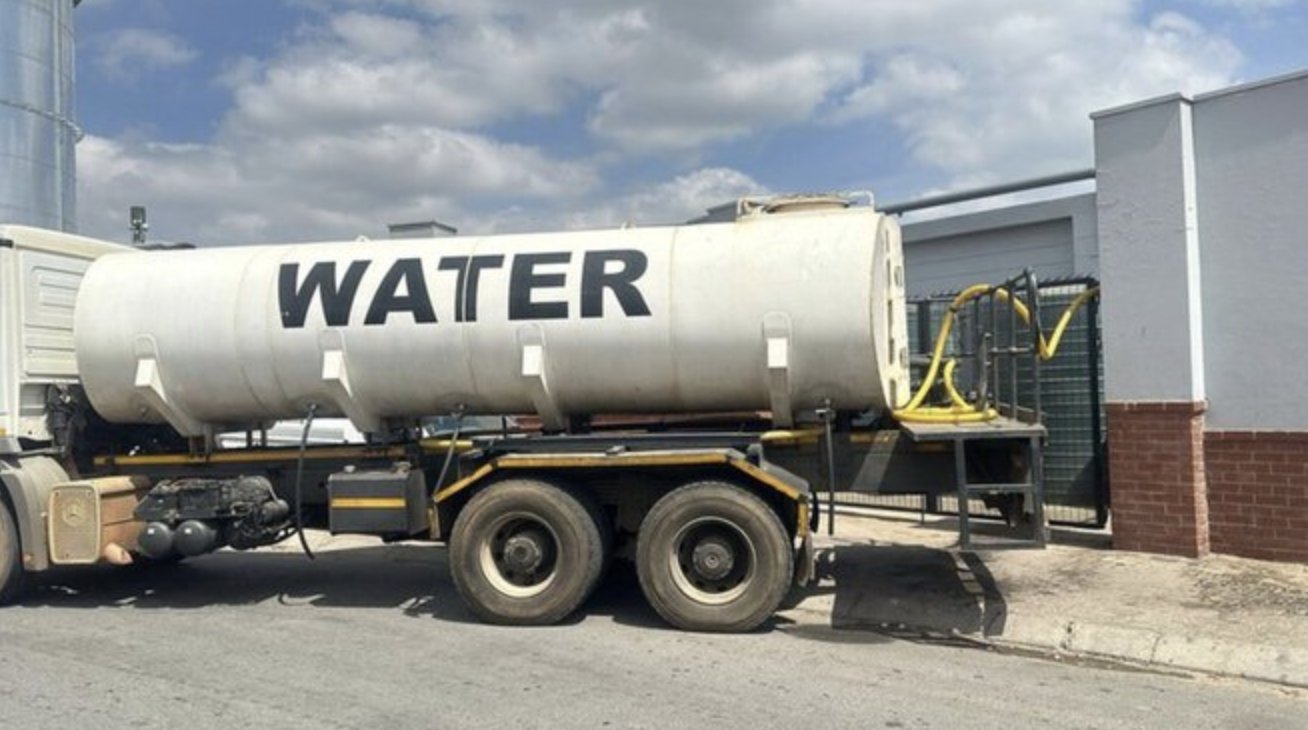
“How is there enough water if we haven’t had any for days?” one Auckland Park resident asked online. Another posted photos of water tankers queuing in suburban streets, calling the situation “managed chaos”.
Infrastructure under pressure
The city says “infrastructure constraints” are compounding the problem.
As of Tuesday evening, the Commando system was among the worst affected. The Crosby and Brixton towers and reservoirs were low but still operational. Hursthill’s two reservoirs, however, were placed on bypass leaving some areas without supply.
Neighbourhoods such as Melville, Greenside, Auckland Park and Parktown West, which have experienced prolonged outages this year, are now part of what the city describes as a long-term system stabilisation plan expected to run until April.
Add to that a burst pipe in Linbro Park this week, which sent large volumes of clean drinking water rushing into the streets. The affected sections were isolated for repairs, but no completion timeline was confirmed.
For many residents, that image streets flooded while homes sit dry perfectly captures Johannesburg’s infrastructure dilemma.
A city rich in bulk supply, but battling ageing pipes, pressure imbalances and maintenance backlogs.
The water war room
In response to mounting pressure and calls earlier this week for national intervention, the city has launched what it calls an Intergovernmental Water War Room.
The structure brings together the municipality, Rand Water, and representatives from provincial and national government.
According to the city, the war room is monitoring the system in real time, coordinating technical responses, accelerating repairs and implementing demand-management measures to protect critical infrastructure.
It’s a high-level acknowledgement that this is bigger than a few burst pipes.
Whether it becomes a genuine turning point or just another committee with a dramatic name remains to be seen.
A strike ends and repairs resume
There is at least one practical boost: municipal employees who had been on an unprotected strike since Friday have agreed to return to work.
Johannesburg Water confirmed that staff resumed normal operations on Tuesday, which should help accelerate repairs and stabilisation efforts.
In a crisis built partly on delayed maintenance and pressure management, having boots back on the ground matters.
Sourced: The Citizen
The bigger question: how did we get here?
Johannesburg’s water challenges didn’t begin this week.
Rapid urban growth, ageing infrastructure, high consumption levels and recurring maintenance backlogs have created a fragile balancing act. While Gauteng receives significant bulk supply, the distribution network inside municipalities often struggles to keep up.
Experts have long warned that demand management, from fixing leaks to reducing household overuse is as critical as increasing supply.
Yet, in many suburbs, water restrictions are treated as optional, and leaking infrastructure can go unrepaired for days.
The city’s message is clear: localised outages and pressure management do not equal total system failure. They are, officials say, necessary to prevent one.
For residents filling buckets and refreshing municipal updates hourly, that reassurance rings hollow, for now.
Johannesburg may not be at Day Zero.
But the water crisis has exposed just how thin the margin is between “stable supply” and system stress.
And in a city built on resilience, patience is running almost as low as the reservoirs.