Power & Utilities
Our taps are dry, our dams are full so what’s really going on with Joburg’s water?
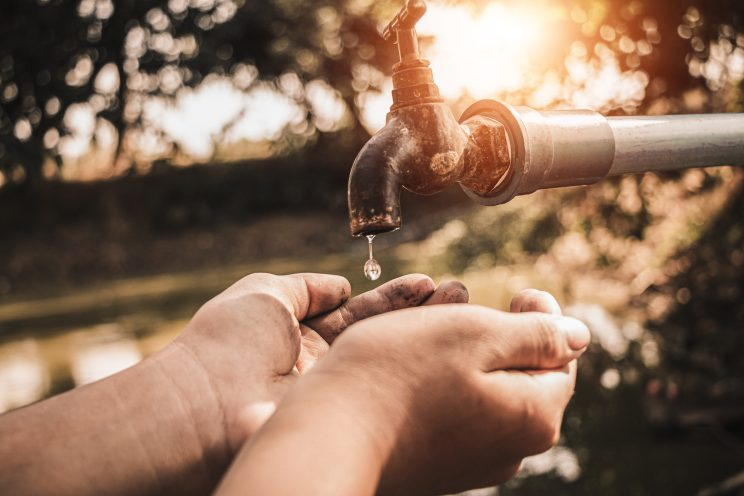
Our taps are dry, our dams are full, so what’s really going on with Joburg’s water?
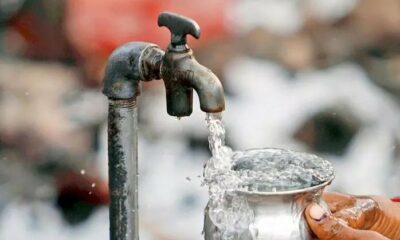
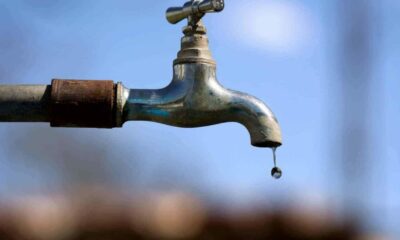
There’s something deeply unsettling about driving past a dam that’s brimming after good summer rains and then going home to a dry tap.
That’s the reality for thousands of Johannesburg residents right now.
It’s not just inconvenience anymore. It’s anger. Confusion. And increasingly, disbelief.
Because if the dams are full, how can the city be running out of water?
The blame game begins
In recent weeks, water authorities have pointed to “overuse” by residents as a key driver of the crisis. We’re told that Johannesburg’s average consumption sits at about 300 litres per person per day, roughly double the global average.
The implication is clear: we’re using too much.
Cue the collective guilt trip.
But critics argue that framing the crisis around consumer behaviour tells only half the story and possibly the wrong half.
Civil society group WaterCAN has pushed back strongly, saying the real issue isn’t reckless residents watering lawns. It’s systemic failure.
And many Joburgers agree.
On social media, the mood has shifted from concern to open frustration. “Don’t blame us for your leaks,” one user posted on X. Another wrote: “Fix the pipes before you fix my shower time.”
The 40% problem
Here’s the statistic that’s quietly fuelling the outrage: around 40% of water in the system is lost.
That’s not going into baths, kettles or car washes. It’s disappearing through leaks, burst pipes and ageing infrastructure.
If 300 litres per person per day is the total system consumption, and 40% is lost before it even reaches users, then actual household and business usage is closer to 180 litres per person per day.
Suddenly, the narrative feels different.
Johannesburg residents and businesses account for about 60% of total water use. The rest a staggering portion is effectively wasted.
That’s not a consumer crisis. That’s an infrastructure crisis.
A system creaking under decades of neglect
The truth is, Gauteng’s water challenges didn’t start this summer.
Since 1994, water infrastructure has expanded to serve a growing population, but maintenance and upgrades haven’t always kept pace. Pipes laid decades ago are under immense pressure. Reservoirs and pumping systems operate at the edge of capacity.
Engineers have warned for years that the system needs sustained investment and professional management.
Instead, critics say political appointments and cadre deployment have hollowed out technical expertise in key institutions, including Rand Water and Joburg Water.
It’s a harsh accusation, but one that’s gaining traction as outages stretch from hours into days.
In any well-run private utility, executives presiding over 40% system losses would face consequences. In the public sector, they often remain in place, sometimes even earning performance bonuses.
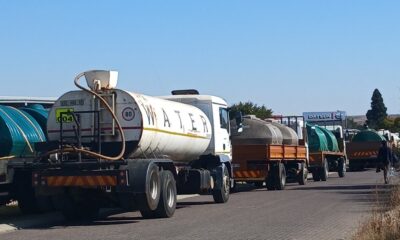
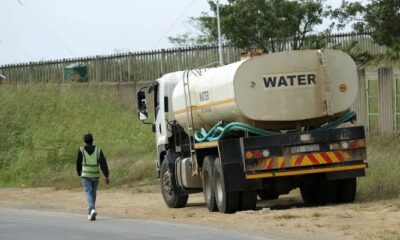
That reality stings for residents queueing at water tankers.
Full dams, empty confidence
This summer’s above-average rainfall has left many of Gauteng’s dams comfortably full. On paper, bulk supply isn’t the issue.
So when taps run dry, the disconnect feels almost absurd.
The crisis, it seems, is less about how much water South Africa has and more about whether it can move that water efficiently from source to suburb.
Pressure management, infrastructure constraints and repairs are often cited as reasons for outages. And while those explanations may be technically accurate, they don’t ease public frustration.
Because from the outside, it feels like a system that’s being patched rather than rebuilt.
A call for national disaster status
WaterCAN has gone a step further, calling for Johannesburg’s water situation to be declared a national disaster.
That would unlock additional resources and potentially bring national oversight into the mix.
For some, that sounds drastic. For others, it feels overdue.
Declaring a disaster isn’t just symbolic, it’s an admission that the crisis has outgrown municipal management.
And if 40% water losses, dry neighbourhoods and public trust erosion don’t qualify as a crisis, many residents are asking: what does?
Where to from here?
South Africans have a way of tolerating dysfunction, until they don’t.
Load shedding taught us that. So did Cape Town’s Day Zero scare.
Johannesburg’s water crisis is different in one crucial way: it’s not about scarcity. It’s about stewardship.
The dams are full. The rain has fallen. The supply exists.
The real question is whether the systems and the leadership behind them are capable of delivering it.
Until that’s answered convincingly, Joburgers will keep asking uncomfortable questions.
And if officials keep pointing fingers at consumers while pipes keep bursting underground, they shouldn’t be surprised if the public, as we say locally, braais them for it.
{Source: The Citizen}
Follow Joburg ETC on Facebook, Twitter , TikTok and Instagram
For more News in Johannesburg, visit joburgetc.com