Business
Sentech on the brink as R1.6 billion SABC debt pushes signal distributor into crisis
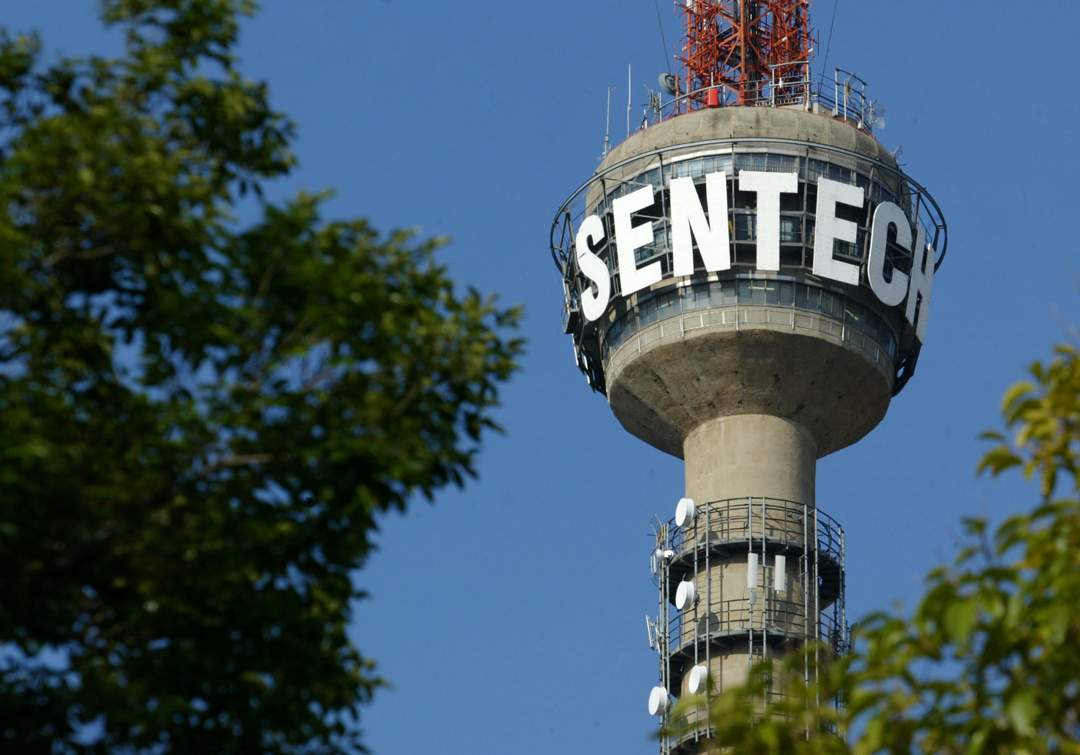
South Africans rarely think about the invisible network that carries their favourite radio shows and evening news bulletins. Yet right now, the company behind that signal is fighting for survival.
Sentech, the state-owned company responsible for distributing broadcast signals, has been declared no longer a going concern. In simple terms, it is no longer considered financially stable enough to keep operating without urgent support.
And that support has arrived, but only just.
R889 million to keep the signal alive
The National Treasury has allocated a total of R889 million to stabilise Sentech. Of that amount, R700 million was earmarked specifically for signal distribution, while R189 million will go towards funding dual illumination.
Dual illumination refers to the continued broadcasting of both analogue and digital television signals at the same time. It remains necessary because South Africa’s long-delayed Broadcast Digital Migration project has still not been fully completed.
The funding is not being described as a bailout or debt write-off. Officials have made it clear that the allocation comes with conditions, which Sentech is still waiting to formally receive.
But even with this intervention, the underlying issue remains unresolved.
The R1.6 billion elephant in the room
At the heart of the crisis lies a bitter financial dispute between Sentech and the South African Broadcasting Corporation.
The public broadcaster owes Sentech roughly R1.6 billion in unpaid signal transmission fees. Sentech’s monthly bill to the SABC stands at R71 million. For much of 2025, the broadcaster paid only R20 million per month, later increasing it to R30 million towards the end of the year.
The SABC has now committed to paying R30 million per month until the end of March 2026. That still leaves a significant shortfall.
Sentech’s leadership has warned Parliament that without at least consistent month-to-month payments, the situation becomes untenable. In 2025, there was already a real threat of a broadcast blackout. The Department of Communications and Digital Technologies had to redirect R60 million from other entities simply to prevent screens from going dark.
It is a sobering reminder of how fragile the system has become.
Not the only debtor
The SABC is not the only organisation in arrears. The Universal Service and Access Agency of South Africa owes R94 million, while community broadcasters collectively owe R34 million.
Meanwhile, Sentech reportedly had just R176 million in the bank at the time of its presentation to Parliament.
The irony is hard to ignore. Sentech is meant to operate as a self-sustaining business enterprise. It generates revenue. It has paying clients. Yet it is handicapped by sister entities that cannot or do not settle their debts.
In a country where state-owned enterprises are meant to enable development, the financial strain within this ecosystem continues to ripple outward.
A wider pattern of distress
Sentech’s troubles do not exist in isolation.
Denel has faced years of financial turmoil linked to historical mismanagement and corruption during the State Capture era. Its last published annual report covered the 2019 to 2020 financial year, revealing a steep drop in revenue from R6.02 billion in 2018 to R2.73 billion in 2020. It recorded a net loss of R1.9 billion during that period. In January 2026, two of its divisions reportedly informed employees they would not receive salaries before reversing that decision.
Broadband Infraco, the government’s long-distance backhaul fibre provider, has been technically insolvent since the start of the 2024 to 2025 financial year. Over five financial years, it accumulated losses of R661 million, including a R202 million loss for the year ended March 2024.
For many South Africans watching these developments unfold, frustration is growing. On social media, discussions often centre on accountability, governance reform, and whether repeated emergency funding is sustainable.
What this means for viewers
For now, the immediate threat of a broadcast blackout appears contained. The R889 million allocation buys time.
But time alone does not fix structural debt, unpaid invoices, or delayed digital migration. If anything, Sentech’s predicament highlights how interconnected South Africa’s state-owned technology and broadcasting infrastructure truly is.
When one entity falters, the knock-on effect travels quickly. From Parliament to living rooms across the country, the signal chain is only as strong as its weakest link.
And right now, that link is under serious strain.
Follow Joburg ETC on Facebook, Twitter, TikT
For more News in Johannesburg, visit joburgetc.com
Source: MyBroadband
Featured Image: Business explainer