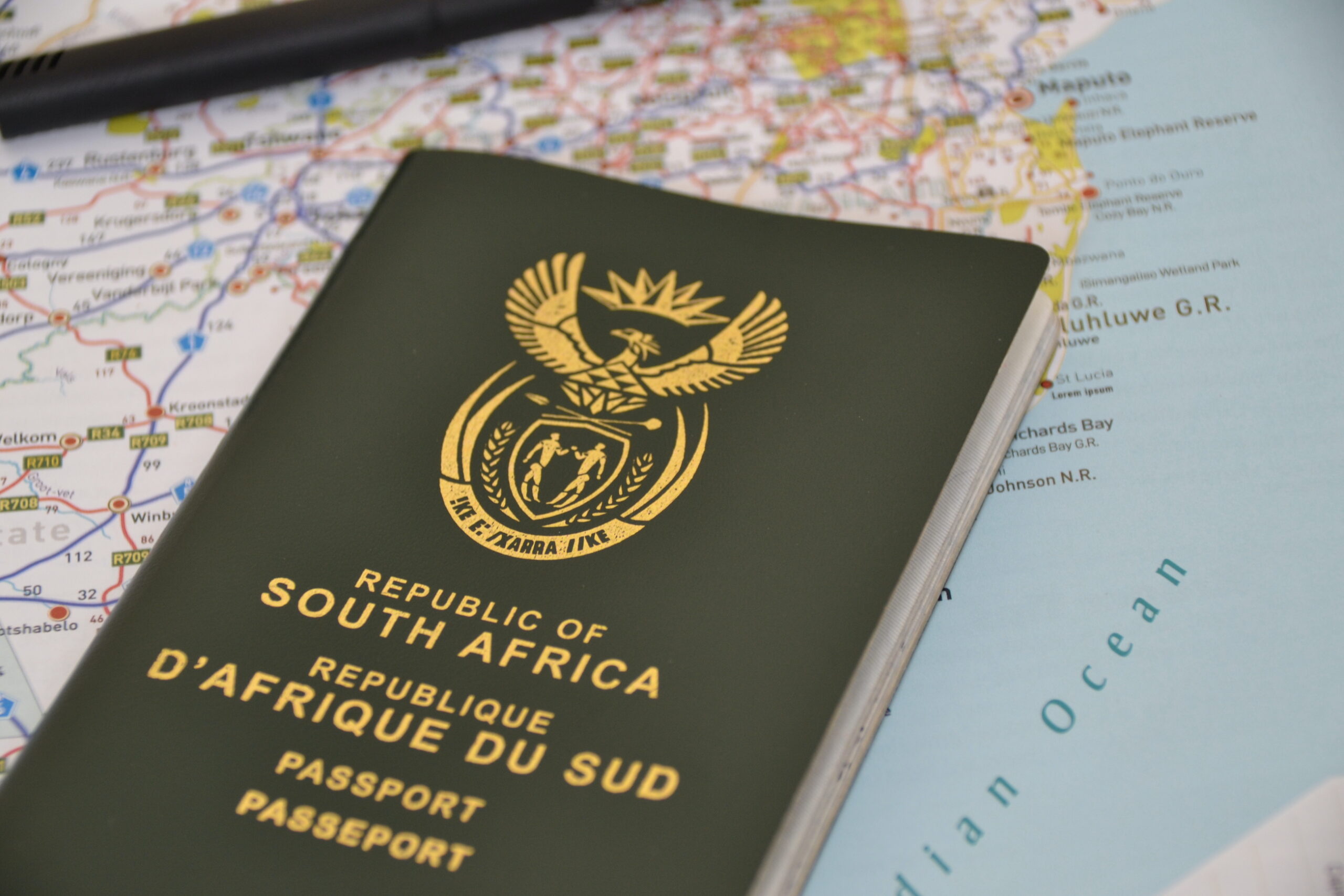
South Africans abroad can reclaim citizenship online, but questions remain
For years, thousands of South Africans living overseas carried a quiet heartbreak: the moment they took up another passport, they automatically lost their South African citizenship.
No dramatic ceremony. No warning phone call. Just a clause in the law that quietly stripped them of their status unless they had secured ministerial permission beforehand.
That chapter has now officially closed.
As of Tuesday, 10 February, Home Affairs Minister Dr Leon Schreiber announced that the long-awaited online citizenship reinstatement portal is live. For many in the diaspora, it marks more than a bureaucratic fix it’s an emotional homecoming.
The court ruling that changed everything
The turning point came on 6 May 2025, when the Constitutional Court ruled that Section 6(1)(a) of the Citizenship Act was unconstitutional and invalid, dating all the way back to 6 October 1995.
That section had dictated that South Africans would automatically lose their citizenship if they voluntarily acquired another nationality, unless they had received prior approval from the minister.
In one stroke, the court declared that provision inconsistent with the Constitution.
For decades, affected South Africans found themselves in limbo, South African by birth and identity, but not by legal status.
From embassy queues to an hour online
According to Schreiber, what once took up to two months at an embassy can now be resolved in about an hour.
The new digital system allows individuals who lost citizenship under the invalid provision to restore it online without filling in forms or standing in queues.
Here’s how it works:
-
Users take a biometric selfie.
-
They scan their passport in real time.
-
The system verifies their identity and citizenship status.
-
If confirmed, their record is automatically updated on the Population Register.
Once reinstated, they can immediately apply for a South African passport or Smart ID, no additional waiting period required.
If the system cannot immediately verify citizenship, the case is handed to a specialist for further investigation and completion.
For a country often criticised for Home Affairs backlogs, this is being positioned as a digital leap forward.
Who is excluded?
Not everyone qualifies.
Those who voluntarily renounced their South African citizenship before the Constitutional Court ruling in May 2025 are not eligible for reinstatement through the portal.
Similarly, individuals who lost citizenship through conversion before 6 October 1995 cannot apply under this system.
The portal specifically addresses those who were affected by the now-invalid section of the law.
A victory for the diaspora
South Africa has a vast global footprint from London to Perth, Toronto to Dubai. Many who left during economic shifts or political uncertainty never intended to sever ties completely.
On social media this week, expatriate groups welcomed the announcement. Some described it as “long overdue.” Others called it “a relief” and “a restoration of dignity.”
Citizenship is more than paperwork. It affects inheritance rights, property ownership, voting and even the simple comfort of belonging.
For many abroad, reclaiming citizenship means reconnecting with family, heritage and future possibilities back home.
But can Home Affairs deliver?
Not everyone is celebrating without reservation.
Dr Shadi Maganoe from Wits School of Law says the portal is a positive and overdue step, but its success depends on execution.
The real question, she suggests, is whether Home Affairs has the administrative capacity to process applications efficiently, especially in cases where documentation is incomplete or legally complex.
South Africans are no strangers to government websites crashing at peak times. Password reset loops and frozen pages have become part of the digital public-service experience.
“If individuals struggle to access the portal, reset passwords, or obtain assistance, the promise of digital efficiency may not translate into meaningful access,” Maganoe warned.
The cybersecurity question
There’s another layer of concern: data protection.
The portal collects highly sensitive information, identity details, migration records and citizenship status. In an era of global cybercrime and data breaches, safeguarding that information is critical.
Any vulnerability could compromise privacy rights and erode public trust in the system.
For a department already under scrutiny for administrative inefficiencies, handling a security breach would be reputationally damaging.
A symbolic shift
Beyond the technical and legal aspects, this development signals something larger.
For years, the automatic loss provision created a perception that South Africa punished mobility, that choosing opportunity abroad meant forfeiting identity at home.
The Constitutional Court ruling and the new portal reflect a shift toward recognising dual citizenship as a reality of a globalised world.
South Africans no longer have to choose between opportunity and origin.
The real test begins now
The portal is live. The law has changed. The promise is speed and convenience.
But as with many government reforms, the real measure will be consistency.
Can the system handle high volumes?
Will specialists resolve complex cases efficiently?
Can Home Affairs protect citizens’ data?
If the answer to those questions is yes, this could become one of the department’s most meaningful modern reforms.
For now, thousands of South Africans scattered across continents have something they didn’t have before: a clear digital path back to the citizenship they never truly stopped feeling in their hearts.