News
Capitec’s urgent warning: That ‘bank’ call on your phone could be a scam
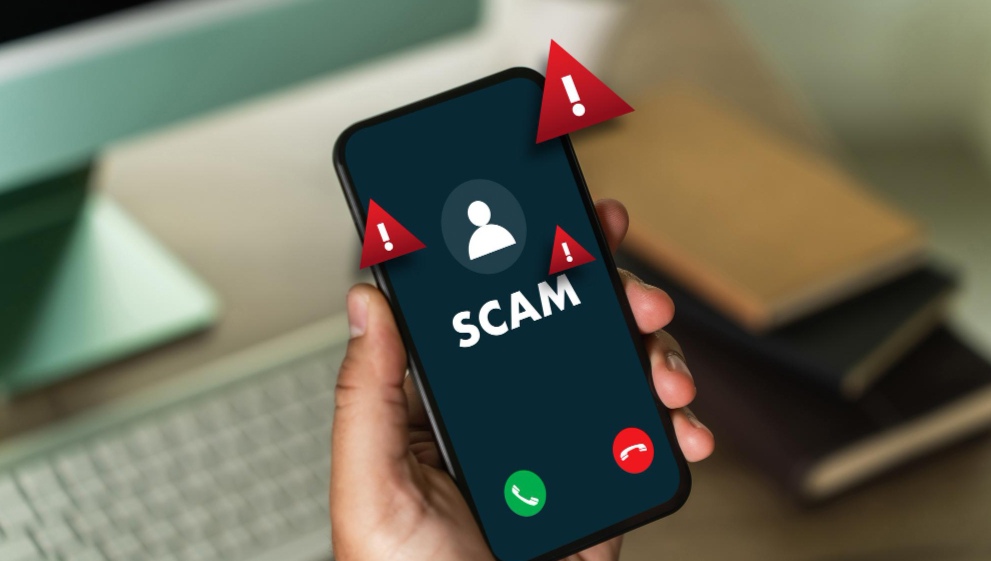
Why Capitec says Truecaller cannot stop spoofed bank scams
There is a certain chill that comes with seeing your bank’s name flash up on your phone screen.
For many South Africans, that moment brings instant urgency. Is there fraud on my account? Has someone accessed my money? Should I answer right now?
According to Capitec, that reaction is exactly what criminals are counting on.
The rise of spoofed bank calls
Nick Harris, Capitec’s head of financial crime, has warned that fraudsters are increasingly spoofing caller IDs to make it look as though calls are coming from legitimate institutions. That includes banks and even the South African Police Service.
The technology behind it is neither rare nor expensive. Criminals use easily available voice-over-Internet-protocol services and online tools to choose whichever number they want displayed. Telecom networks, unable to verify every call at a deeper network level, often accept the number presented to them.
The result is simple and dangerous. Your screen shows your bank’s fraud department. It looks real. It feels real. But it is not.
Harris says caller verification apps such as Truecaller are not built to detect this kind of deception. They rely on the number that is presented to the network. If that number appears legitimate, the app can also be fooled.
Caller ID is not a security tool
Jean Rossouw, Capitec’s head of CSI and financial education, says many people assume that if an app labels a call as “Bank Fraud Line” or “SAPS,” it must be genuine.
That assumption is risky.
Caller ID apps are convenience features, not security systems. They use databases that often include user-supplied information. If enough people have saved a number under a certain name, even incorrectly, that name can appear for others.
In other words, popularity does not equal authenticity.
It is a sobering reminder in a country where phone scams have become part of daily life. From fake courier calls to impersonated law enforcement threats, fraudsters know that fear and urgency can override caution.
When AI joins the scam
The threat is no longer limited to spoofed numbers.
Fraudsters are now pairing caller ID spoofing with artificial intelligence voice cloning. Using snippets of someone’s voice taken from social media or voice notes, criminals can generate convincing imitations of family members, colleagues, or executives.
Truecaller’s chief executive, Rishit Jhunjhunwala, recently revealed that even corporate leaders are being targeted. In one example, a fake version of a CEO’s voice was used to call a company’s chief financial officer to request a large transfer.
It is no longer science fiction. It is accessible technology.
Truecaller’s AI response
In September 2025, Truecaller announced new AI-powered functionality aimed at giving users deeper context about incoming calls, not just a name on the screen.
The company says its updated system can flag suspicious behaviour, identify potential scam networks, and even detect whether a caller’s voice sounds computer-generated. This builds on technology linked to CallHero, an Israel-based cloud telephony company that Truecaller acquired in 2022.
The goal, according to Truecaller, is to provide context. Is the caller part of your network? A delivery service? A verified business? Or a known fraudster?
The company also offers a Verified Business badge for official brand identities. However, much of the new contextual insight is generated dynamically by AI rather than manual labelling.
What this means for South Africans
The takeaway is uncomfortable but important.
Even if your screen says your bank is calling, that alone does not prove it is real. The safest response remains the same: hang up and contact your bank directly using the official number listed on its website or banking app.
On local radio and across social media, South Africans have shared stories of near misses. People describe calls that sounded polished, urgent, and frighteningly legitimate. Some admit they almost complied.
As scams become more sophisticated, the responsibility shifts back to the individual. Apps can help. AI can assist. But vigilance still matters most.
In a world where a voice can be cloned and a number can be faked, trust should never be based on a name displayed on a screen.
Follow Joburg ETC on Facebook, Twitter, TikT
For more News in Johannesburg, visit joburgetc.com
Source: MyBroadband
Featured Image: Quick Heal