Ramaphosa sends in the army as crime and water woes take centre stage at Sona
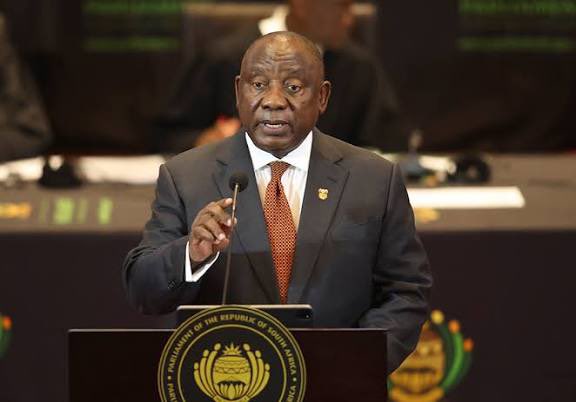
When President Cyril Ramaphosa stood up in Cape Town on Thursday night, the country expected politics. What it got instead was a promise of soldiers on the streets and a frank admission that South Africa’s water system is buckling under years of neglect.
During his State of the Nation Address at the Cape Town City Hall, Cyril Ramaphosa announced that members of the South African National Defence Force (SANDF) will be deployed to parts of the Western Cape and Gauteng. The goal: to back up police in the fight against gang violence and illegal mining.
For communities long caught in the crossfire of turf wars and criminal syndicates, it was a dramatic and some would say overdue, move.
Soldiers on standby as crime tightens its grip
Ramaphosa made it clear that the deployment would follow constitutional processes, with Parliament to be informed about the timing, location and cost. But the message was firm: government believes the situation demands extraordinary measures.
Cape Town has struggled for years with gang violence in areas like the Cape Flats, where shootings have become a grim routine. In Gauteng, illegal mining operations often controlled by organised syndicates have hollowed out abandoned shafts and destabilised communities.
The president said the army would work alongside police where they are needed most. Ministers of police and defence are now tasked with ensuring that deployment is strategic, not symbolic.
The timing is politically charged. Local government elections are just months away, and crime has become a lightning rod issue. The City of Cape Town has also faced criticism over its approach to crime prevention, including the controversial construction of a wall along the airport highway a move detractors called anti-poor.
On social media, reactions were swift and divided. Some users welcomed the show of force, arguing that gangs have terrorised neighbourhoods for too long. Others warned that deploying soldiers risks militarising civilian spaces without addressing the deeper roots of crime.
Ramaphosa insisted this would not be a blunt instrument. He spoke of an integrated strategy aimed at underlying causes from poverty and unemployment to weak gun controls.
More police, tighter gun laws, tougher vetting
Alongside the military deployment, government plans to expand police ranks by recruiting 5,500 new officers, adding to the 20,000 previously announced. The president also promised stricter firearm regulations and stronger enforcement of existing gun laws.
But perhaps the most telling moment came when he acknowledged corruption within law enforcement itself.
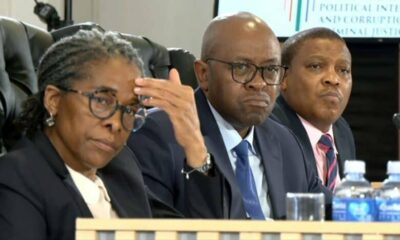
Ongoing hearings at the Madlanga Commission of Inquiry, along with parliamentary processes, have exposed serious allegations of corruption within the South African Police Service and metro police departments.
Ramaphosa did not downplay it. He said the rule of law depends on a police service that is ethical and community-rooted and admitted that reforms are necessary.
A police task team has already been established to act swiftly on investigations stemming from the commission. Senior officers will undergo renewed vetting by the State Security Agency, including lifestyle audits. The president also pledged to strengthen institutions such as the Special Investigations Unit, the National Prosecuting Authority and the Directorate for Priority Crime Investigation.
In a country weary of scandal, that commitment may prove just as significant as boots on the ground.
He further promised to introduce a whistleblower protection bill that would criminalise retaliation and provide legal, financial and psychosocial support to those who speak out.
Water: the other crisis bubbling over
Crime wasn’t the only emergency on the president’s desk.
Ramaphosa acknowledged mounting frustration over water shortages, particularly in parts of Gauteng where residents have protested unreliable supply. In a rare move, he instructed three cabinet ministers to skip the Sona ceremony and attend directly to the crisis in Johannesburg.
According to the president, damaged pipes are being repaired and reservoirs are gradually refilling. But he was candid about the cause: systemic failures, poor planning and years of neglected maintenance.
There is no quick fix, he said.
Government has committed more than R150 billion over the next three years to water infrastructure, including new dams and upgrades to ageing systems. The emphasis now is on long-term water security, something South Africans, from urban townships to farming communities, know cannot be taken for granted.
The water issue strikes a deeper nerve. It’s not just about taps running dry; it’s about trust. Service delivery protests have become a familiar sight, reflecting frustration that basic infrastructure has not kept pace with demand.
A turning point or political theatre?
Ramaphosa’s Sona walked a tightrope between urgency and accountability. Deploying the army is a bold signal, but it also raises uncomfortable questions: Why has it come to this? And will it work?
South Africa has deployed the military internally before, during the July 2021 unrest and at the height of the Covid-19 lockdown. In each case, the presence of soldiers was meant to stabilise extraordinary situations. The effectiveness has been debated ever since.
What makes this moment different is the layered crisis: violent crime, institutional corruption, infrastructure decay and public frustration all converging at once.
The president’s speech suggested he understands that law enforcement alone cannot solve it. Reforming procurement systems, which the Auditor-General has flagged as a breeding ground for corruption is now also on the agenda.
For many South Africans watching from their living rooms, the question is simple: will this be the year promises translate into visible change?
The army may soon march into troubled communities in Cape Town and Gauteng. Whether that march marks a genuine turning point or just another chapter in a long struggle, will depend on what follows once the spotlight of Sona fades.