News
SONA 2026 sets bold growth agenda but the Budget will decide its fate
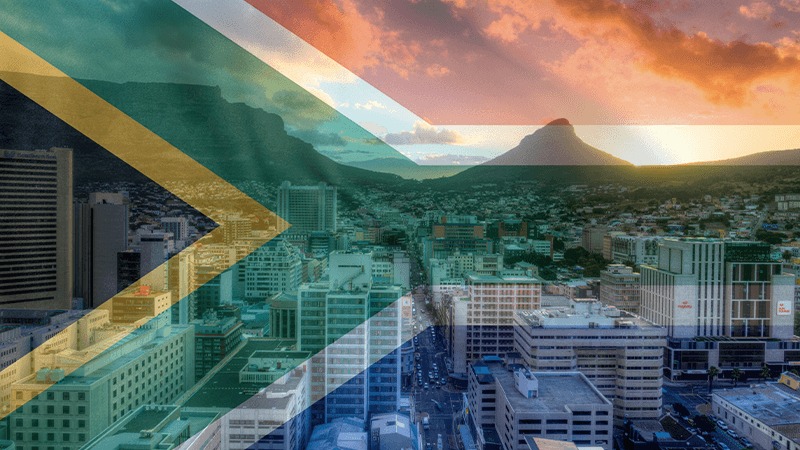
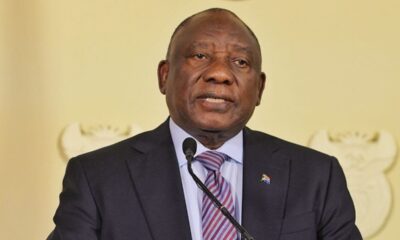
When President Cyril Ramaphosa rose to deliver SONA 2026, the mood in the chamber felt different. Less defensive. More forward-looking.
For the first time in years, there was open talk of turning the page. Of moving from decline to growth. Of rebuilding what has quietly crumbled at the municipal level.
Yet as the applause settled, economists and business leaders were already doing the sums. Because optimism is one thing. Paying for it is another.
A declared turning point
Ramaphosa’s address openly acknowledged municipal collapse, crumbling infrastructure, and failing service delivery. That frank tone struck a chord.
Investec chief economist Annabel Bishop described the speech as marking a turning point. The President’s message was clear: South Africa is leaving behind an era of decline and aiming for prosperity and growth.
There were tangible wins to point to. South Africa has been removed from the FATF grey list. The country received a credit rating upgrade from S&P. The rand has strengthened.
These developments matter. Financial markets respond to signals of stability. Investors respond to reform momentum.
Bishop believes that if infrastructure investment accelerates and reforms continue under Operation Vulindlela phase two, medium-term growth could rise to 3.5 percent by 2030. She also noted that unemployment has finally begun to edge lower as growth stabilises.
For many South Africans, that detail alone offered a flicker of hope.
The arithmetic of the Budget
But hope must pass through the National Treasury.
Kristof Kruger of Prescient Securities cautioned that while the Government of National Unity has restored a degree of predictability, stability alone will not secure long-term investor trust.
The real test, he argues, will be how government funds its ambitions. Major infrastructure upgrades. The rollout of National Health Insurance. Rising debt service costs.
South Africa does not lack policy frameworks. It lacks fiscal space.
Debt servicing remains one of the fastest-growing expenses in the national budget. That is where rhetoric meets arithmetic.
The upcoming Budget will have to show exactly how trade-offs will be managed. Without credible funding plans, even the most compelling vision risks losing momentum.
Property sector sees opportunity
In the property world, the reaction has been notably upbeat.
Stephen Whitcombe of FIRZT Realty welcomed the President’s strong stance on crime and water security. Plans to consolidate intelligence structures, deploy multidisciplinary intervention teams, and add 5,500 police officers this year were viewed as positive signals.
Even more significant for the property sector is the planned R156 billion over three years for water and sanitation infrastructure. The creation of a National Water Crisis Committee, chaired by the President, and a National Water Resource Infrastructure Agency suggests the government recognises that water reliability underpins economic confidence.
Whitcombe also supported renewed efforts to hold failing municipalities accountable where service delivery collapses. Many residents across the country have felt the consequences of neglected pipes, reservoirs, and pumping stations.
BetterBond CEO Stephan Potgieter highlighted another potentially transformative proposal: the formation of a State Property Company to manage 88,000 buildings and five million hectares of land.
The shift from state-built housing to subsidy-supported private ownership could reshape urban development. It signals a move toward mixed-use, well-located housing that reflects a rapidly urbanising population.
For Joburg residents who have watched infrastructure strain under population growth, that prospect feels especially relevant.
The shadow of implementation
Yet scepticism lingers.
Wayne Duvenage of the Organisation Undoing Tax Abuse summed up a sentiment shared by many South Africans: the country does not suffer from a shortage of plans. It suffers from a shortage of execution, transparency, and accountability.
The Auditor General’s recent findings on local government, highlighting insufficient accountability and failing service delivery, reinforce that concern.
In other words, South Africa has heard strong promises before.
What makes this moment different is the convergence of improved market sentiment, reform momentum, and political recalibration under the GNU. Whether that alignment can be sustained through disciplined implementation is the central question.
A cautious national mood
Across social media and business circles, the response has been measured. Not euphoric. Not dismissive.
Cautious optimism may be the most accurate phrase.
SONA 2026 has set a confident tone. It has acknowledged hard truths. It has pointed to real progress in global financial standing.
Now the country waits for the Budget. Because in the end, growth is not declared. It is funded. And it is delivered.
Follow Joburg ETC on Facebook, Twitter, TikT
For more News in Johannesburg, visit joburgetc.com
Source: IOL
Featured Image: LinkedIn/Dr Nik Eberl