News
“A Big Mistake”: Outgoing DA Leader Steenhuisen Warns Against Quitting GNU
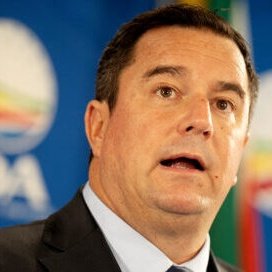
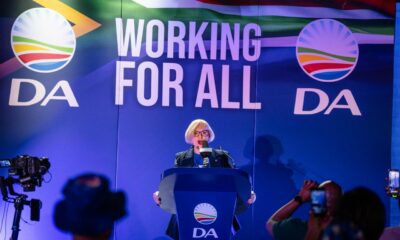
As he prepares to step down after nearly seven years at the helm, outgoing Democratic Alliance leader John Steenhuisen has delivered a stark warning to his party: leaving the Government of National Unity (GNU) would be a catastrophic error that would reverse hard-won electoral gains and alienate the very voters the DA needs to grow.
In an interview with Bloomberg in Cape Town, Steenhuisen acknowledged that a bloc of conservative DA memberssome inspired by the policies of US President Donald Trumpis pushing for a return to the opposition benches. But he argued that such a move would be disastrous for the party’s long-term prospects.
“The biggest switch off for them would be to see a party that panders to a right-wing element that is more interested in what Donald Trump’s doing than what we are actually doing here in South Africa to build a better country,” Steenhuisen said.
The Case for Staying In
The DA won 22% of the national vote in the 2024 elections, the first since apartheid to produce no outright winner. It joined the ANC-led GNU alongside eight smaller parties, a historic realignment that has given the DA its first taste of national executive power.
According to Steenhuisen, the payoff is already visible. Internal polling now places DA support at around 30% an eight-point jump attributed largely to the party’s ability to demonstrate competent governance at the national level. Being in government, he argued, has allowed the DA to rebrand itself and attract more Black voters who previously viewed it with suspicion.
“They now view the party differently because it has demonstrated its ability to deliver better services,” he said.
The Threat on the Home Front
While the GNU debate occupies the party’s right flank, a more immediate threat looms in the DA’s traditional stronghold. The Patriotic Alliance (PA) , led by flamboyant businessman Gayton McKenzie, has made significant inroads among mixed-race (Coloured) voters in the Western Cape and Cape Towncommunities that have long formed the DA’s electoral bedrock.
“I’m very worried about the growth of the PA particularly, particularly in the Western Cape,” Steenhuisen admitted. “I think that the DA needs to look very carefully at the strategy and understand why the PA is making inroads and then mitigate against that.”
The municipal elections, due within the next 12 months, will be the first major test of whether the DA can hold its Western Cape turf while expanding nationally.
Stepping Aside, Not Away
Steenhuisen, 49, surprised many by announcing he would not seek re-election at the DA’s April conference, despite being widely expected to win another term. He will remain in the cabinet as Minister of Agriculture and retain his party membership.
Nominations for his successor open formally in two weeks. Cape Town mayor Geordin Hill-Lewis is viewed as the current frontrunner, though Steenhuisen declined to anoint a preferred candidate. “Certainly I think he’s got all of the attributes to be an excellent leader of the party,” he said, “but it’s not for me to anoint a successor.”
The Bigger Gamble
The DA’s GNU participation has always been a gamble. It exposes the party to the ANC’s baggage, constrains its ability to oppose, and alienates purists who see coalition as contamination. But Steenhuisen’s warning reflects a strategic calculation: that the risks of staying in are outweighed by the rewards of being seen to govern.
Leaving now, he argues, would signal that the DA is more comfortable in opposition than in powera message that would resonate poorly with the moderate, aspirational voters it needs to capture.
“The party needs to decide,” Steenhuisen said. His own decision is made. The question now is whether his successor and the party faithful will heed his warningor learn its truth the hard way.
{Source: Moneyweb}
Follow Joburg ETC on Facebook, Twitter , TikTok and Instagram
For more News in Johannesburg, visit joburgetc.com