News
School jobs programme boosts classrooms and youth opportunity
On paper, South Africa’s education system has made undeniable progress since 1994. More children are in school. Matric results have steadily climbed. The class of 2025 achieved an 88 percent pass rate, the highest in the country’s history.
Yet beyond the statistics lies a harder truth. In many township and rural schools, overcrowded classrooms and stretched teachers remain everyday realities. Access to quality teaching and learning resources is still uneven.
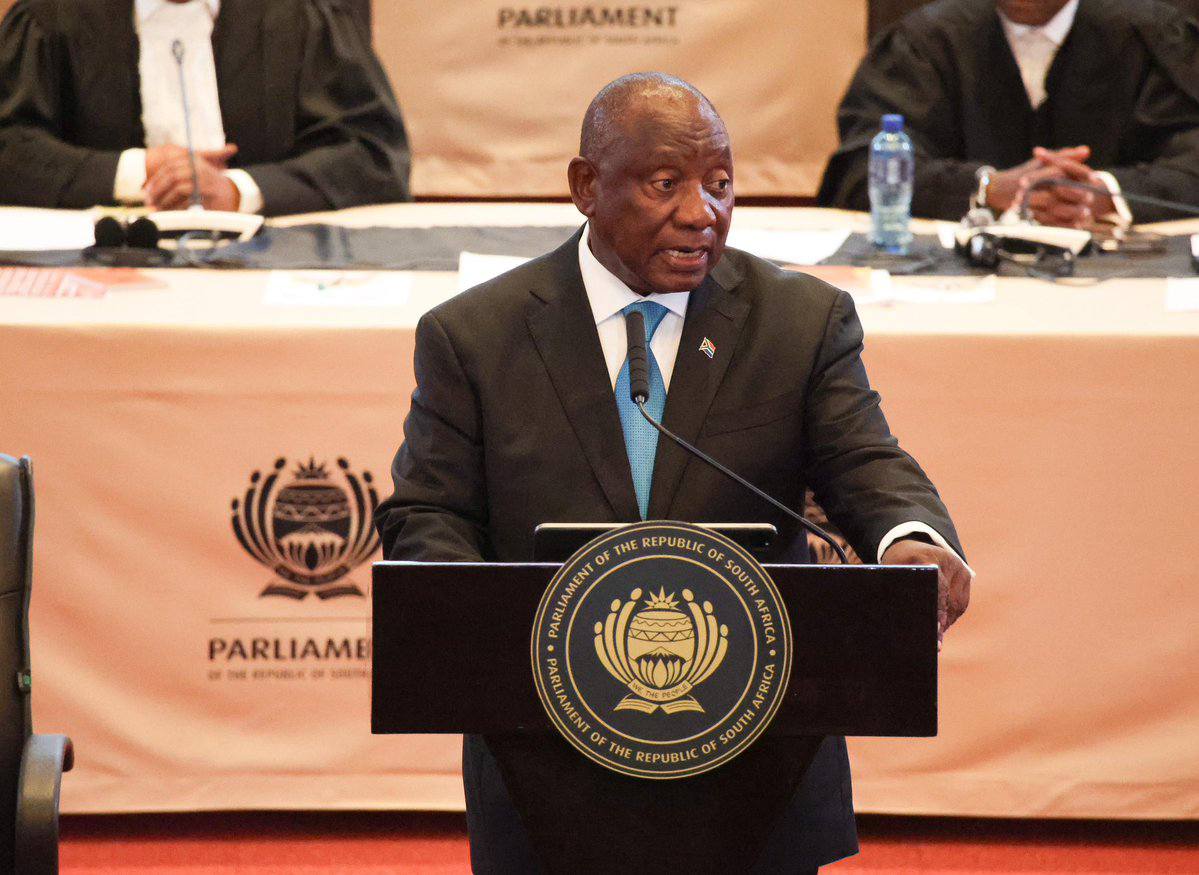
In his weekly newsletter on 16 February, President Cyril Ramaphosa acknowledged this gap head-on. He reflected on issues raised during his recent State of the Nation Address, stressing that while the country has come far, deep inequalities continue to shape young people’s educational journeys.
And it is here that one programme has quietly grown into a cornerstone of government intervention.
A foothold for youth, a boost for schools
Launched in 2020 as part of the Presidential Employment Stimulus, the Basic Education Employment Initiative was designed with two goals in mind. Create jobs for young people. Strengthen public schools that need the most support.
To date, the school assistants programme has created more than 1.3 million work opportunities. According to Ramaphosa, it is the largest youth employment programme in South Africa’s history.
For many participants, it is their first formal work experience. For schools, it means extra hands in classrooms where teachers are often overwhelmed.
General school assistants are required to have at least Grade 9. Education assistants must hold a matric certificate. In the latest phase of the programme, 32 percent of education assistants had some form of tertiary qualification, and 14 percent had a teaching qualification.
This is not simply a case of placing young people in schools and hoping for the best. Education assistants receive compulsory and optional training in areas such as school safety, online safety, financial literacy, word processing, AI fluency, and coding.
That training matters in an education system preparing learners for a rapidly changing, tech-driven world.
Reading champions in no-fee schools
Education assistants have been placed in 19,000 no-fee primary schools across the country. Many support numeracy in the foundation phase. Others serve as Reading Champions, helping improve literacy and bilingual reading skills.
Ramaphosa says the impact is already visible in many schools, with rapid improvements in foundational literacy.
Beyond curriculum support, assistants also help with digital learning, support at-risk learners, and serve as laboratory and workshop assistants. This frees teachers to focus on lesson planning and actual teaching, which in turn can improve educational outcomes.
In communities where one educator may face a packed classroom with limited resources, that support can make a measurable difference.
Early learning and the bigger picture
The school jobs programme does not operate in isolation. It forms part of a broader push to strengthen early learning.
The government is expanding access to Early Childhood Development through the Bana Pele mass registration of ECD facilities and increased subsidies for ECD learners. Through the Social Employment Fund, more than 1,000 previously disadvantaged and underfunded ECD centres are being assisted to meet the criteria for subsidies.
These centres are also receiving nutritional support, toys, books, and learning materials. The Social Employment Fund now reaches over 50,000 children in ECD centres nationwide.
Making Grade R compulsory, intensifying focus on literacy and numeracy, and promoting mother tongue-based bilingual education are part of what Ramaphosa describes as efforts to fix the basic education system at its foundation.
A skills revolution in the making
While celebrating the record 88 percent matric pass rate, the president has also warned about the high dropout rate in the later years of schooling. More learners need to reach matric. More must take subjects such as maths and science to open pathways into further study and employment.
The government is working on a fundamental overhaul of the skills development system, including a dual training model that integrates education with practical workplace experience.
In many ways, the Basic Education Employment Initiative fits neatly into this broader vision. It is both an anti-unemployment measure and an education intervention.
For young South Africans who often struggle to secure that first opportunity, a placement in a school can be more than a temporary job. It can be a stepping stone into teaching, public service, or other careers.
And for learners in under-resourced schools, it may mean something just as significant: extra support in reading, writing, and maths during the years that shape their entire future.
The challenge of inequality in education is far from solved. But as the programme continues to expand, it offers a practical example of how job creation and classroom support can intersect in meaningful ways.
Follow Joburg ETC on Facebook, Twitter, TikT
For more News in Johannesburg, visit joburgetc.com
Source: IOL
Featured Image: Facebook/The Presidency of the Republic of South Africa