They should have been sentenced in 2004. Instead, the families of the Cradock Four have waited another 22 yearsand are still waiting.
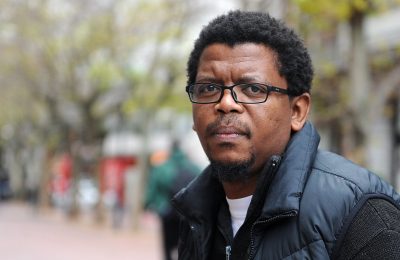
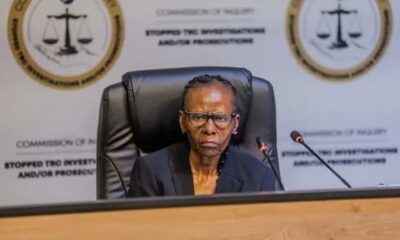
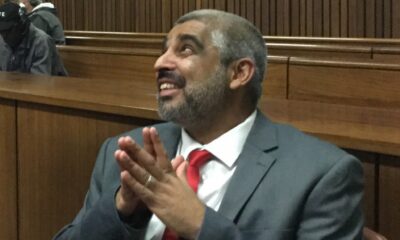
Lukhanyo Calata, son of anti-apartheid activist Fort Calata, delivered a devastating testimony before the Judicial Commission of Inquiry into political interference in Truth and Reconciliation Commission (TRC) cases on Monday. He accused both the apartheid regime that murdered his father and the post-apartheid governments that followed of betrayal.
“My father’s killers should have been sentenced in 2004,” Calata told the commission, chaired by retired Constitutional Court Judge Sisi Khampepe. “Instead, we are here in 2026, still asking why.”
The Cradock Four
Fort Calata, along with Matthew Goniwe, Sparrow Mkhonto, and Sicelo Mhaulicollectively known as the Cradock Fourwere brutally murdered by the apartheid-era Security Branch in June 1985. Their deaths became a symbol of the regime’s brutality and the price paid by those who fought for freedom.
The TRC process, established to deal with apartheid-era crimes, recommended prosecution. But those prosecutions never materialised.
The NPA and Ramaphosa in the Crosshairs
Calata’s testimony focused squarely on failures after apartheid.
“I’m not here to talk about what the apartheid government did. We know what they did. They killed him. They burned his body. That is not in dispute,” he said.
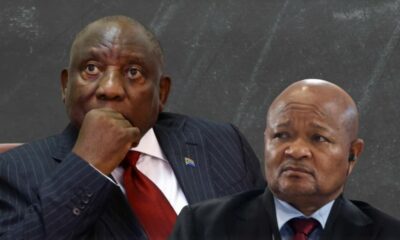
“What I want to know is why the government that my father died forthe ANC government, the NPA, President Ramaphosahas failed to do what the TRC said must be done. Why are the killers not in jail? Why have we waited 41 years?”
He accused the National Prosecuting Authority of “systemic failure” and suggested that political interference had blocked justice for decades.
“The NPA had the dockets. They had the evidence. They had the TRC recommendations. And they did nothing. That is not incompetence. That is a choice.”
The Commission’s Mandate
President Ramaphosa established the commission in 2025, following years of pressure from the families of apartheid-era victims. Its mandate is to investigate whether political interference prevented the investigation and prosecution of crimes recommended by the TRC.
The families of the Cradock Four are among 23 families that sued Ramaphosa for R167 million over the delays.
Calata’s testimony is the latest in a series of hearings that have exposed the gap between TRC promises and post-apartheid delivery.
‘Betrayed Twice’
In his testimony last week, Calata framed the family’s experience as a double betrayal:
“My father was betrayed by his own state, the apartheid state, and then the ANC came into power, and then the ANC betrayed them again. So, two times.”
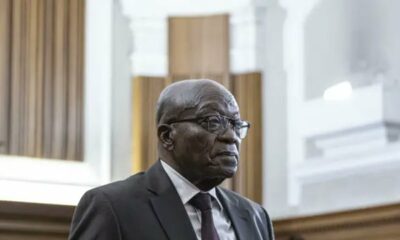
He extended that indictment to former presidents Thabo Mbeki and Jacob Zuma, both of whom have mounted legal challenges to the commission’s proceedings.
“The TRC handed over its reports. It handed those reports over to former President Thabo Mbeki, not to anyone else. It handed it over to him, as the president of this republic. What did he do about it?”
The Human Cost
For Calata, the legal and political failures are not abstractions. They are lived reality.
He was a child when his father was murdered. He has spent most of his life waiting for a justice that has not come.
“I don’t know what justice looks like anymore,” he told the commission. “I know what it should have looked like. In 2004, there should have been a trial. There should have been a conviction. There should have been a sentence. My family should have been able to close this chapter.
“Instead, we are still here. Still waiting. Still asking. Still being told to be patient.”
What Comes Next
The commission continues its hearings, with more testimony expected from victims’ families and former TRC officials. Its findings, when delivered, could have significant implicationsnot only for the few remaining apartheid-era perpetrators, but for the institutions that failed to bring them to justice.
For Lukhanyo Calata, the outcome is uncertain. But his testimony has ensured that the question will not be buried: why, 41 years after four men were murdered for their beliefs, has no one been held accountable?
The answer, he suggests, lies not in the past, but in the failures of the present.