
Business
Why just 3% of taxpayers are carrying South Africa’s income tax system
When payday lands, and deductions hit, most working South Africans feel it. But the reality behind the country’s income tax numbers is far more concentrated than many realise.
A remarkably small slice of taxpayers is carrying a disproportionate share of the national bill. And as the government looks ahead to the 2026 Budget, that imbalance is becoming harder to ignore.
A narrow base funding a wide system
Personal Income Tax remains South Africa’s largest revenue stream. It accounts for close to 40% of the money flowing into the fiscus each year.
On paper, around 26 million individuals are registered for tax. In practice, far fewer actually pay income tax because many earn below the threshold. Only about 7 million people are assessed annually.
Within that group, the bulk of collections comes from those earning at the top.
Roughly 12.5% of taxpayers earning more than R750,000 per year contribute nearly 60% of all personal income tax. That translates to about 980,000 individuals out of the 26 million registered.
Zoom in further, and the concentration tightens even more. Those earning R1.5 million or more per year account for 32.7% of personal income tax payable. Yet they represent just 2.9% of assessed taxpayers.
Put simply, a tiny minority funds a massive share of public spending.
It is a statistic that often sparks heated debate online. Some argue it shows how progressive the system already is. Others worry it signals fragility.
Two big warning signs
Economists and tax analysts have raised concerns about how dependent South Africa has become on high earners.
The first issue is demographic. Many taxpayers in these upper-income brackets are ageing. At the same time, youth unemployment remains stubbornly high. With overall unemployment sitting at 31.9% and youth unemployment around 40%, fewer young people are entering the formal job market and, by extension, the PAYE system.
If fewer young professionals move into higher-earning brackets over time, the tax base does not naturally expand.
The second concern is mobility.
Between the 2017 and 2024 tax years, more than 51,500 individuals formally declared that they had ceased to be South African tax residents. Over the past four years, 61% of those who severed tax ties were between 18 and 44 years old.
That is a highly productive segment of the population. When they leave, the tax base shrinks.
In coffee shops across Joburg and on social media feeds alike, conversations about emigration are no longer rare. For the government, every formal exit has fiscal consequences.
SARS under pressure in 2026
The 2025 Budget, along with President Cyril Ramaphosa’s latest State of the Nation Address, made one thing clear. Expanding the tax base is a priority.
Ramaphosa has acknowledged that revenue collection is becoming more challenging, both locally and globally. Slower economic growth and rising living costs are squeezing taxpayers and limiting the natural expansion of the base.
For SARS, that has translated into more aggressive enforcement.
The tax authority has widened its collection net through third-party data partnerships. It has intensified scrutiny on trusts and their beneficiaries. It has also been targeted previously in under-monitored areas, such as crypto trading.
SARS has confirmed that it plans to systematically identify and register individuals and businesses operating outside the formal tax system during the current financial year.
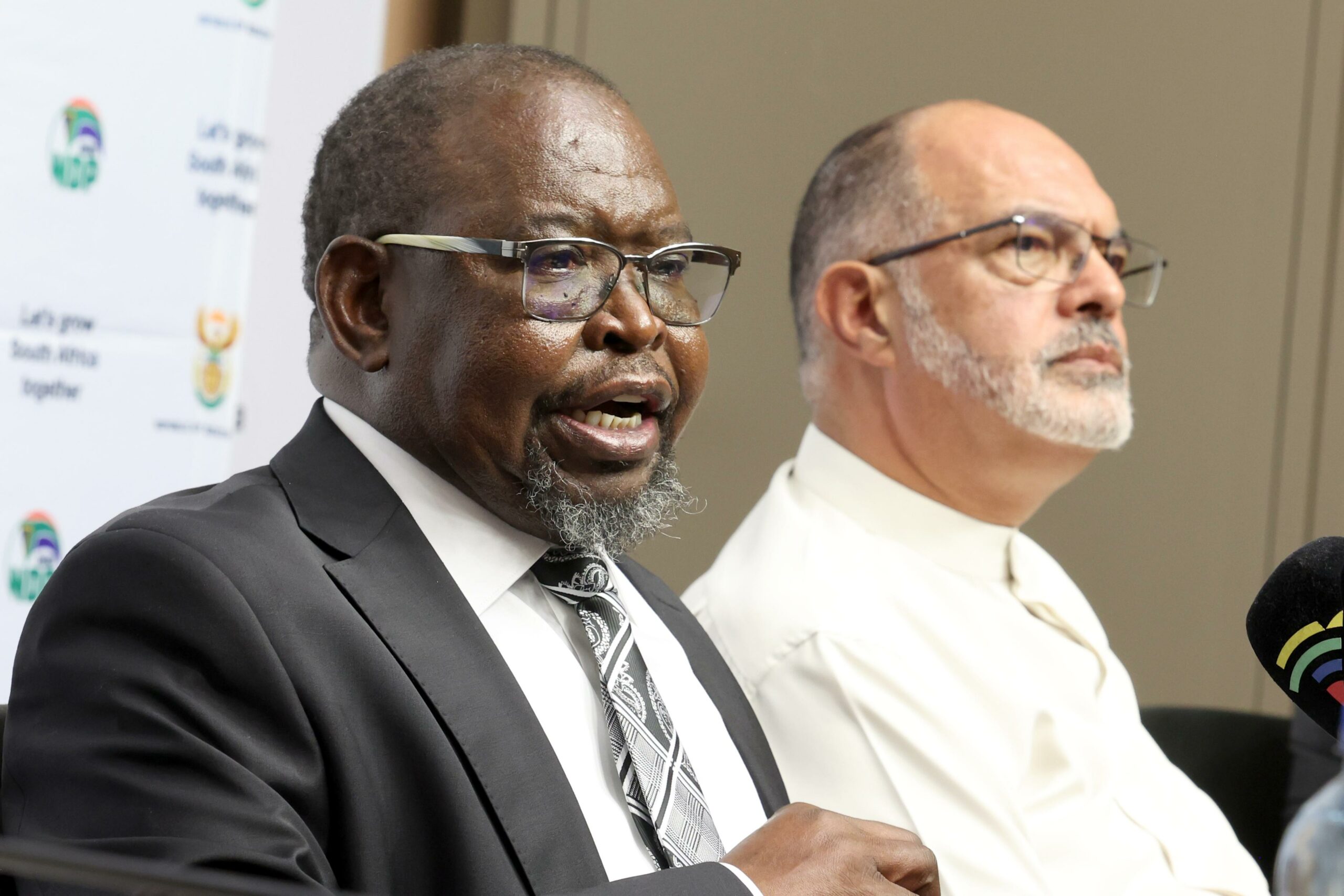
The National Treasury has allocated billions of rands to strengthen SARS’ administrative capacity. Finance Minister Enoch Godongwana has repeatedly said that broadening the tax base and improving efficiency will allow the burden to be spread more evenly over time.
With net revenue estimated at roughly R2 trillion for the current financial year, the stakes are high.
A delicate balancing act
South Africa’s tax story is not just about numbers. It is about sustainability.
Rely too heavily on a small group, and the system becomes vulnerable. Failing to collect effectively, public services suffer. Tighten enforcement too much, and you risk accelerating emigration.
As the 2026 Budget approaches, taxpayers at every level will be watching closely. For now, the headline remains stark. A small percentage of South Africans is carrying a large share of the country’s income tax load.
Whether those changes will depend on economic growth, job creation, and how successfully the government can bring more people into the formal tax net.
Follow Joburg ETC on Facebook, Twitter, TikT
For more News in Johannesburg, visit joburgetc.com
Source: Business Tech
Featured Image: X (formerly known Twitter)/@GovernmentZA


