News
A Ramadan under shadow: Gaza and the West Bank brace for another holy month of grief
A Ramadan under shadow: Gaza and the West Bank brace for another holy month of grief
Ramadan usually arrives with lanterns, crowded markets and the smell of fresh bread drifting through narrow streets just before sunset.
This year, in Gaza and across the West Bank, it arrives quietly.
For many Palestinians, this is not just another Ramadan. It is, as some describe it, another “sad Ramadan” unfolding against a backdrop of violence, uncertainty and deepening humanitarian strain.
In Gaza, a ceasefire that doesn’t feel like peace
Although a ceasefire has technically been in place in Gaza since 10 October 2025, the word “ceasefire” feels fragile on the ground.
At the weekend alone, 11 Palestinians were killed across the enclave, according to medical officials and local authorities, who described the incidents as violations of the truce. Gaza’s health authorities report that 603 Palestinians have been killed and 1,618 wounded since the ceasefire began. Since October 2023, the overall toll has climbed to more than 72,000 dead and over 171,000 wounded.
Those numbers hang heavily over the start of the holy month.
In Gaza City’s Old City, Zawiya market, once a Ramadan heartbeat, sits unusually still. Shelves remain stocked, but buyers are scarce. Decorations that once stretched between stalls are absent.
Sameh al-Bitar, a 40-year-old spice shop owner, remembers a different atmosphere.
“We used to decorate our homes, streets and markets,” he says. “Now everything in Gaza is sad.”
Al-Bitar lost two sons in an airstrike. For him, the ceasefire has not translated into safety. “The war has not ended,” he says. “Every day there are violations, deaths and injuries.”
He expects this Ramadan to revolve around the basics: prayer, fasting and survival. The large family gatherings and bustling communal iftars that once defined the month feel out of reach.
On social media, videos circulating from Gaza show subdued preparations, small lanterns hung inside damaged homes, children lighting candles instead of string lights. The tone online is noticeably different from previous years: fewer festive posts, more prayers for protection.
Faith under pressure in the West Bank
In the West Bank and East Jerusalem, Ramadan arrives with a different kind of tension.
Residents fear that heightened security measures could define the month. Israeli forces have continued raids and arrests across cities and refugee camps. Military checkpoints have been reinforced at town entrances, disrupting daily life just as families prepare for fasting and nightly prayers.
Cities such as Nablus, Jenin and Tulkarm have experienced sporadic confrontations between Palestinian youths and Israeli forces. Residents report frequent night-time raids, arrests, settlement expansion and land confiscations, a constant pressure that leaves little room for the spiritual calm Ramadan is meant to bring.
Tensions are particularly acute around religious sites.
Sacred spaces, restricted access
In Hebron, access to the Ibrahimi Mosque is already restricted due to heavy Israeli military presence and its proximity to Jewish settlement enclaves. Checkpoints around the mosque typically tighten during Ramadan, sometimes including age-based restrictions on entry.
Saeed al-Awiwi, 50, who lives nearby, believes all signs point to a difficult month. He fears increased settler attacks under army protection and further limitations on worship.
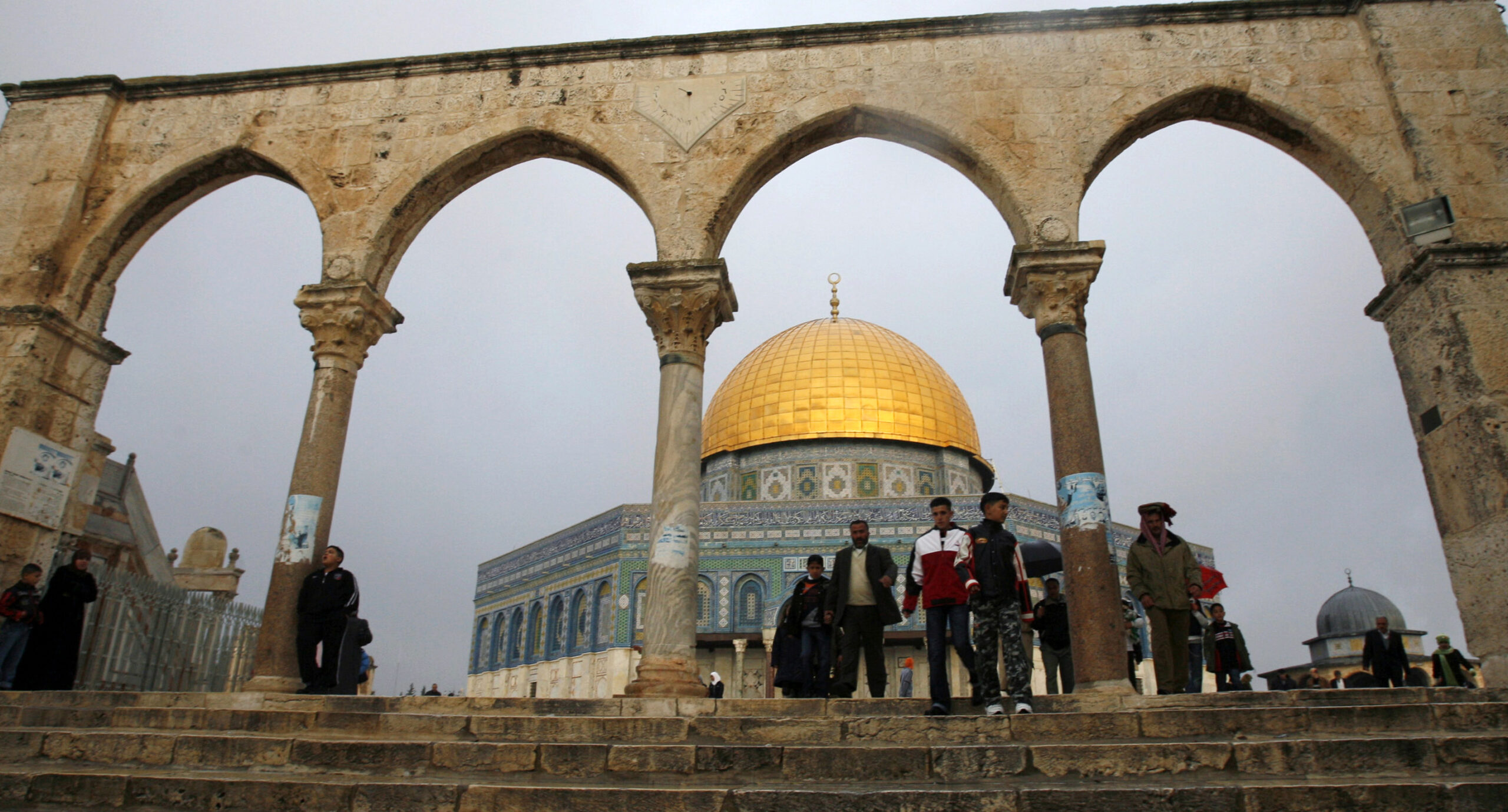
In Jerusalem’s Old City, concerns centre on Al-Aqsa Mosque. Twenty-two-year-old Abdul Rahmaan al-Alami says many young people worry they may be barred from entering the compound for prayers.
“Only a few days remain, and people our age may be prevented from entering,” he says near Damascus Gate, where security measures often intensify during Ramadan. Barriers, electronic gates and searches have become a familiar part of the experience in recent years.
For many young Palestinians, the possibility of being excluded from one of Islam’s holiest sites during its most sacred month feels especially painful.
A month meant for unity, marked by uncertainty
Ramadan is traditionally a time of community, shared meals, late-night prayers, family visits and generosity toward the poor. In Gaza and the West Bank, that communal spirit persists, but under strain.
Families still plan modest iftars. Mosques still prepare for nightly prayers. But every preparation is shaped by uncertainty: Will there be electricity? Will checkpoints close early? Will violence escalate?
The contrast between the spiritual meaning of Ramadan and the political reality on the ground has not gone unnoticed globally. Online, many users have expressed solidarity, while others debate the fragile ceasefire and the broader conflict. The phrase “sad Ramadan” has surfaced repeatedly in posts from Palestinians and supporters alike.
Between resilience and exhaustion
If there is one thread that runs through both Gaza and the West Bank, it is resilience, but it is resilience tinged with exhaustion.
For shopkeepers like al-Bitar, for families navigating checkpoints, for young worshippers uncertain about access to holy sites, Ramadan this year is less about festivity and more about endurance.
The crescent moon will still be sighted. The call to prayer will still echo through cities and camps. People will still fast from dawn to sunset.
But in homes where loved ones are missing, in markets that once buzzed with laughter, and at gates where entry is uncertain, this Ramadan carries a different weight.
It is a month of faith, observed in the shadow of loss.
{Source: IOL}
Follow Joburg ETC on Facebook, Twitter , TikTok and Instagram
For more News in Johannesburg, visit joburgetc.com