Three decades after the end of apartheid, the racial composition of South Africa’s middle and upper income brackets is shiftingsignificantly and measurably.
A new study by the University of Cape Town’s Liberty Institute of Strategic Marketing reveals that rising earnings among Black South Africans have fundamentally altered the country’s wealth demographics since 2012.
The Numbers Tell a Story
In 2024, approximately 41% of Black households earned more than R75,000 per montha dramatic increase from 29% in 2012. Over the same period, the proportion of White households in this income bracket fell from 61% to 41%.
The data, drawn from Statistics South Africa’s general household survey, illustrates how economic disparities can narrow over time, even in societies shaped by deep, institutionalised inequality.
A Growing Middle Class
The study, titled Social Class in South Africa, shows that Black households now constitute a larger share of the working and middle classes than White households.
The number of Black South Africans earning more than R22,000 per montha threshold for middle- and upper-income statushas quadrupled since 2012, reaching over 7 million in 2024.
Overall, households in these income brackets increased to more than 11 million from roughly 4 million over the same period.
The Persistence of Inequality
Yet the headline numbers mask a more complex reality. South Africa, Africa’s richest country by GDP and home to the continent’s largest number of high-net-worth individuals, remains one of the world’s most unequal countries.
The 2026 World Inequality Report paints a stark picture: the top 10% of South Africans earn 66% of total income, while the bottom half receives just 6%.
Poverty and unemployment continue to fall disproportionately along racial lines. Although discriminatory laws have been abolished, the structural legacy of colonialism and apartheid continues to shape the economy.
The Lower End Tells a Different Story
Despite gains at the top, Black South Africans continue to dominate the ranks of the poor and working poor. The proportion in these groups continues to rise, even as the middle and upper classes diversify.
The study illustrates a fundamental truth about post-apartheid South Africa: progress is real, but it is uneven. A growing Black middle class sits alongside persistent, racialised poverty.
What the Future Holds
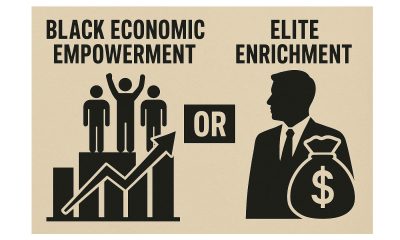
The shift in wealth demographics is significant. It represents the tangible outcomes of policies aimed at redressing historical exclusioneducation access, employment equity, and black economic empowerment.
But the numbers also warn against complacency. A society where the top 10% earn two-thirds of all income is not a society at ease. It is a society where the gains of some coexist with the stagnation of many.
For South Africa, the challenge remains what it has always been: not just to create wealth, but to distribute it. The study shows that distribution is happeningslowly, unevenly, but measurably. Whether that pace can accelerate, and whether the benefits can reach those still trapped at the bottom, will determine the country’s trajectory for the next three decades.