News
No parties in Cabinet: Ramaphosa pushes back as GNU tensions spill into SONA debate
No parties in Cabinet: Ramaphosa pushes back as GNU tensions spill into SONA debate
“Our successes are collective”
If there was one line President Cyril Ramaphosa wanted South Africans to hear this week, it was this: Cabinet is not a campaign stage.
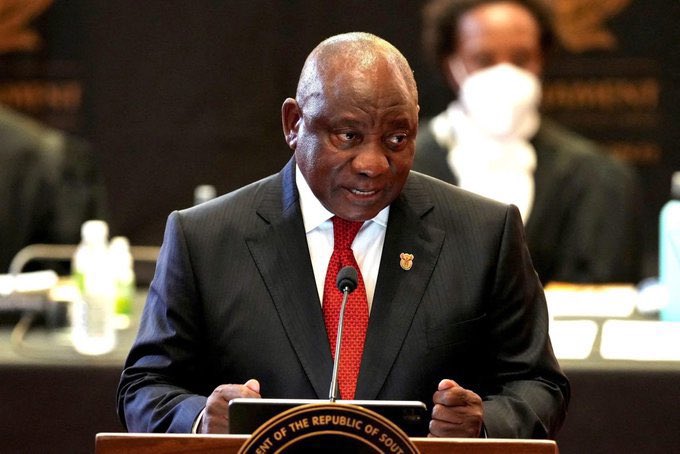
Replying to the State of the Nation Address (SONA) debate in Parliament, Ramaphosa reminded MPs that inside government, there are no party colours, only shared responsibility.
“There are no ANC or DA or IFP ministries,” he said firmly. “Our successes are the achievements of the collective. And we are collectively responsible for our mistakes.”
The message was directed not just at opposition benches, but at partners within the Government of National Unity (GNU), where political credit-taking has started to surface.
Coalition credit wars
The tension flared earlier in the debate when John Steenhuisen, leader of the Democratic Alliance and Minister of Agriculture, suggested that improving economic indicators were the result of the DA’s participation in government.
It was a pointed claim, one that highlighted the delicate balance within the GNU, formed after the African National Congress lost its outright majority in 2024.
Ramaphosa’s response was measured but unmistakable: no minister or deputy minister should brand Cabinet work as a party victory.
He noted that many of the gains being cited today were built on foundations laid years ago, often by previous administrations and that progress is always cumulative.
In a coalition government still learning how to co-exist, it was a reminder that public squabbles can quickly erode fragile trust.
“The country is burning”
Opposition criticism during the debate was sharp.
Nhlamulo Ndhlela of the MK Party argued that Ramaphosa was speaking of economic progress while millions remain unemployed. It’s a sentiment that resonates in communities where joblessness is not an abstract statistic but a daily reality.
The president acknowledged that progress has been “modest” but insisted momentum is building.
He cited reduced unemployment, improved public finances and lower inflation as promising signs. Borrowing costs have eased, public debt pressures are being managed, and inflation remains relatively contained.
Yet the numbers tell a sobering story: more than 10 million South Africans live below the food poverty line, and over 11 million people are unemployed.
For many households, recovery feels distant.
“Better late than never”
Ramaphosa struck a reflective tone when addressing social inequality, saying government is working to improve early childhood development, literacy and numeracy in the foundation phase, alongside expanding support like the child support grant and free primary healthcare.
“As they say in the classics: better late than never,” he said.
It was a rare colloquial moment in an otherwise policy-heavy address and perhaps an acknowledgment that many South Africans feel reforms should have happened sooner.
On social media, reactions were divided. Some users welcomed the emphasis on stability and collective governance. Others accused political leaders of recycling promises while service delivery remains inconsistent in many areas.
Water, crime and structural reform
Beyond economic indicators, Ramaphosa addressed crises that affect everyday life.
Water shortages have crippled municipalities across the country, prompting the establishment of a National Water Crisis Committee. The president admitted the problems stretch back many years much like the electricity and logistics crises and said reform of the water sector is underway, alongside investment in infrastructure and institutional support for struggling municipalities.
Crime also featured prominently. Ramaphosa acknowledged that insecurity remains a major obstacle to growth and pledged intensified action against organised crime, gang violence and gender-based violence (GBV).
However, GBV activists have criticised government’s response, arguing that despite its classification as a national disaster, the urgency and accountability have not matched the scale of the crisis. They say success should be measured by lives saved, not speeches delivered.
Ramaphosa countered that the national disaster declaration enables faster coordination, clearer command structures and stronger accountability across spheres of government.
A balancing act for the GNU
The SONA reply wasn’t just about defending policy, it was about managing perception.
In a coalition government where ideological differences are real, the line between collaboration and competition can blur quickly. Ramaphosa’s insistence on collective responsibility is as much about political stability as it is about principle.
South Africa’s democratic culture has long been shaped by strong party identities. The GNU demands a different kind of political maturity, one where ministers must govern together while still campaigning separately.
The real question is whether collective accountability will translate into collective delivery.
Economic indicators may be improving. Inflation may be lower. Debt may be stabilising.
But until communities see reliable water, safer streets and meaningful job creation, the debate in Parliament will remain just that, debate.
Ramaphosa says the country is turning a corner.
For millions of South Africans, the test is simple: does that corner lead somewhere better?
{Source: The Citizen}
Follow Joburg ETC on Facebook, Twitter , TikTok and Instagram
For more News in Johannesburg, visit joburgetc.com