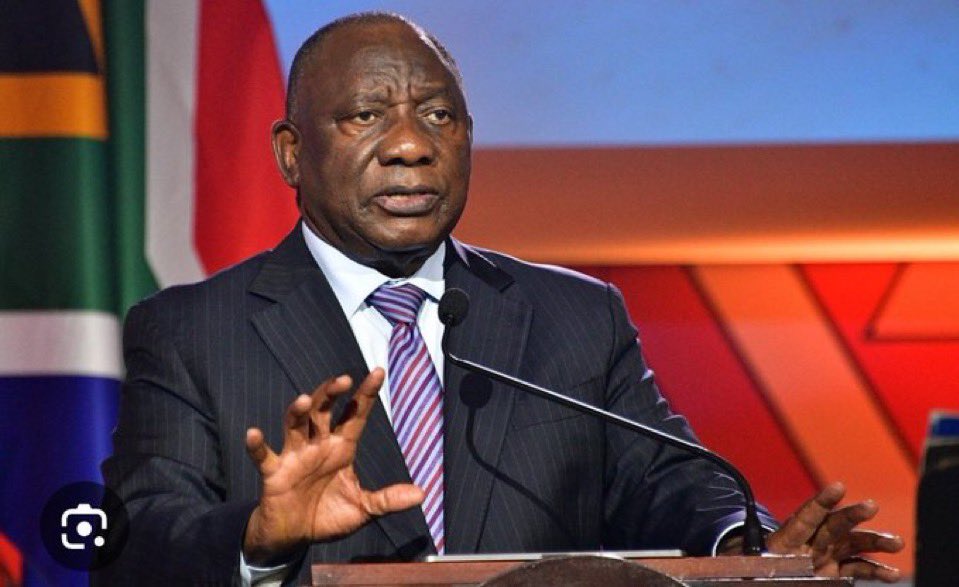
President Cyril Ramaphosa has deployed the South African National Defence Force (SANDF) to support police in tackling gang violence and illegal mining in Gauteng and the Western Capea move that carries profound historical weight for a military once used to suppress the very communities it is now being sent to protect.
Writing in his weekly newsletter on Monday, Ramaphosa acknowledged the sensitivity of the decision. “Given our history, where the apartheid state sent the army into townships to violently suppress opposition, it is important that we do not deploy the SANDF inside the country to deal with domestic threats without good reason.”
The reason, he said, is now clear: “a surge in violent organised crime that threatens the safety of our people and the authority of the state.”
A Tactical Shift
Ramaphosa announced the deployment during his State of the Nation Address last week, directing the ministers of police and defence to develop a tactical plan within days. The focus will be on gang violence in the Western Cape and illegal mining operations in Gautengtwo fronts in what he called a fight for state authority.
“To strengthen our fight against gang violence, I am deploying the SANDF to support the police, as we did to great effect with illegal mining,” he said.
The Historical Context
The SANDF was formed in 1994 through the integration of apartheid-era forces with liberation armies. “When the SANDF was formed in 1994, it marked a decisive break from the use of the defence force to perpetuate apartheid oppression,” Ramaphosa wrote.
“Today, our armed forces are loyal to our democratic Constitution, are subject to civilian oversight and reflect the diversity of our nation.”
That transformation, however, does not erase the memory of troops in townships. Every domestic deployment carries that echo.
Not the First Time
The SANDF has been deployed internally beforemost recently to assist with flood relief in Limpopo and Mpumalanga, where soldiers evacuated residents, repaired infrastructure, and erected temporary structures. Those missions were welcomed.
Crime-fighting deployments, however, are different. They place soldiers in confrontational roles, alongside police, in communities where trust in state institutions is often fragile.
Morale Concerns
Stellenbosch University professor Lindy Heinecken warned that the deployment could further erode morale in the force. Soldiers, she said, react positively to disaster relief missions but view internal crime-fighting deployments as a form of punishment.
For a military already under strain from budget cuts and operational demands, the psychological impact matters. Soldiers trained for external defence are now being asked to police their own citizensa task for which they are not primarily equipped, and one that carries inherent risks.
The Balance
Ramaphosa’s framing is careful: this is not a return to the past, but a necessary response to a present threat. The state’s authority is being challenged by organised crime networks that operate with impunity in parts of the country. The police alone, he argues, cannot contain them.
The SANDF has an important role inside the country, he said, “in an era defined by increased geopolitical tensions” and domestic instability.
What Comes Next
The tactical plan is now being developed. Troop numbers, deployment areas, and rules of engagement will be clarified in the coming days. Communities in gang hotspots and mining areas will soon see soldiers on their streets.
For the SANDF, it is a test of adaptability. For the government, a test of legitimacy. And for South Africans, a reminder that the line between protector and occupier is thinand must be constantly, carefully navigated.