Business
SIU uncovers R500 visa bribes inside Home Affairs corruption probe
For years, many South Africans have grumbled about long queues, missing files, and the feeling that something inside the Department of Home Affairs simply was not working as it should. Now, the Special Investigating Unit has laid bare what whistleblowers long suspected: parts of South Africa’s immigration system were allegedly operating like a shopfront.
According to interim findings released by the SIU, permits and visas were being sold for as little as R500.
A system for sale
The investigation, authorised by President Cyril Ramaphosa under Proclamation 154 of 2024, focused on corruption linked to visa and permit processing at Home Affairs. An interim report has already been submitted to the President.
The SIU describes a system where officials entrusted with safeguarding immigration controls allegedly turned their roles into profit schemes. Instead of properly assessing applications, some officials worked with external actors who supplied fake documents and exploited weaknesses in the process to secure residence permits fraudulently.
The investigation was sparked by whistleblowers who alleged that foreign nationals were entering South Africa to obtain asylum seeker permits without merit. These permits, once issued, can allow applicants to remain in the country even if their claims are rejected, provided they exhaust appeal processes up to the Constitutional Court.
The SIU says certain officials colluded with syndicates to issue permits without properly assessing asylum claims. In effect, the country’s borders were being auctioned off one approval at a time.
Inside the alleged bribery network
To gather evidence, the SIU secured a Special Tribunal order and, with the help of the Directorate for Priority Crime Investigation, searched five Refugee Reception Offices. Laptops, cell phones, external drives, and physical files were seized.
Cell phone analysis revealed direct communication between officials and foreign nationals. Payments allegedly ranged from R500 to R3,000 and were made through a mix of methods designed to avoid detection.
Cash was hidden inside application forms with the office doors closed to avoid surveillance cameras. E-Wallet deposits were sent using numbers that were either not RICA-registered or fraudulently registered. In some cases, asylum seekers sent e-wallet payments to themselves and then handed over one-time pins to officials. There were also in-kind payments, including the covering of private rent and services for officials.
Dummy phones were allegedly used to conceal communication and transactions.
The SIU says the pattern was simple. Applications were sent via WhatsApp for fast-tracked approval. Once approved, payments followed almost immediately. In one instance, a permit was approved on 20 December, and R3,000 was deposited into a spouse’s account the next day. In another case, R6,000 was transferred days after two permits were approved.
Payments were often funnelled through spouses’ bank accounts, with transaction references such as “Permit,” “Visa Process,” or “Building Material” used to disguise their purpose.
Millions on modest salaries
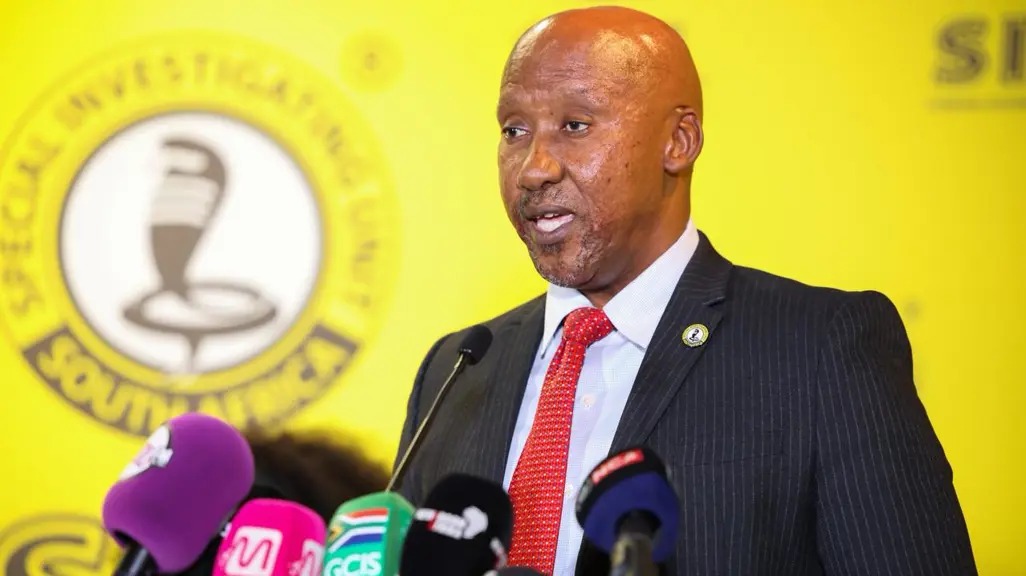
Acting SIU head Leonard Lekgetho revealed that four officials, each earning less than R25,000 per month, received a combined R16.3 million in direct deposits.
The investigation indicates that some officials acquired assets far beyond what their salaries could reasonably support. This includes the cash purchase of multiple properties and the construction of high-value homes. In one case, an official reportedly built a mansion and even paved a road leading to her property.
Analysis of a construction company registered in the name of one official’s husband showed deposits totalling R8.9 million between 2020 and 2023.
Beyond individual enrichment, the SIU traced financial gains exceeding R181 million linked to beneficiaries of fraudulent visa applications supported by fake documentation.
Government response and next steps
Home Affairs Minister Leon Schreiber has welcomed the SIU’s findings, saying they confirm widespread visa maladministration over the 20-year period from 2004 to 2024.
He noted that under the post-May 2024 administration within the Government of National Unity, there has been a renewed focus on accountability and digital transformation to close systemic loopholes.
So far, there have been 275 criminal referrals linked to visa corruption. Of these, 111 investigations have been finalised. More than 2,000 fraudulent visas are under review for possible revocation, and 41 officials have been dismissed.
A turning point for public trust?
On social media, the revelations have sparked a mix of anger and weary resignation. For many South Africans, the idea that access to citizenship and residency could allegedly be bought for R500 feels like more than corruption. It feels like betrayal.
The immigration system is meant to protect national security, manage migration fairly, and uphold the rule of law. When officials are accused of selling approvals, the damage is not just administrative. It strikes at public confidence in the state itself.
The real test now will be whether prosecutions follow and whether digital reforms genuinely close the gaps that made this possible. South Africans have heard promises before. This time, with millions traced and names referred for criminal action, the expectation is clear.
Clean up the system. Restore integrity. And prove that South Africa is not for sale.
Follow Joburg ETC on Facebook, Twitter, TikT
For more News in Johannesburg, visit joburgetc.com
Source: Business Tech
Featured Image: EWN