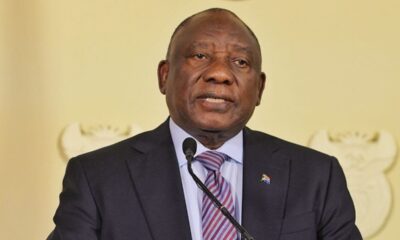
Just before Christmas, Martina Biene, chairperson and managing director of Volkswagen Group Africa (VWGA), sat down and wrote a letter to President Cyril Ramaphosa. It was not a social nicety. It was a plea for clarityand an attempt to inject urgency into a process she says has been dragging on for too long, with very real consequences.
“I mainly outlined that for us as VWGA, this year is crucial for getting an investment decision from VW head office for the next project that’s on the way,” Biene said at the annual VW Media Indaba at the company’s plant in Kariega (formerly Uitenhage).
The letter asked for two things: clarity on whether South Africa’s policy environment is moving in the right direction, and assurance that future projects would be economically viable.
Head office, she explained, looks at both the business case and the country context. “You might have a business case, but there are better business cases elsewhere because we don’t know whether that is a sustainable way to spend money.”
Her conclusion was stark: “This year for us is make or break.”
The Silence
Despite the gravity of the message, Biene says Ramaphosa did not respond directly. “The unfortunate thing is that the President didn’t reply to me,” she confirmed.
She added a caveat: “A lot of action was happening now on the Automotive Business Council (Naamsa) side with his staff.” Possibly, she speculated, the letter triggered some behind-the-scenes activity.
But asked whether she was satisfied, she admitted: “I don’t know.”
An Industrial Graveyard
Professor Adrian Saville, economist and strategy specialist at GIBS, was unequivocal when asked whether a major manufacturer could realistically leave South Africa.
“Could a specific business leave? Absolutely. Capital can go anywhere. There are 200 markets that you can choose to allocate capital to. There’s nothing special about South Africa.”
Saville pointed to the country’s industrial history. “South Africa is an industrial graveyard, no company is too big, too established or too important to walk away if conditions deteriorate.”
His warning was blunt: the list of once-significant manufacturers that have disappeared is long, and Volkswagen could join it.
Policy UncertaintyOr Bad Policy?
Saville argued that policy certainty alone is not enough if the policy itself is flawed. “Policy certainty over a policy that doesn’t work is a death blow. We’ve got a knife at a gunfight.”
Both Biene and Saville acknowledge that South Africa has, at times, got policy right. They point to the Automotive Production and Development Programme and the South African Automotive Masterplan as evidence that decisive action can work.
The problem, Biene says, is speed. “We don’t have the luxury of two or three years of debating and deliberating. The requirement is urgent.”
What’s at Stake
Volkswagen’s Kariega plant is a significant employer and a cornerstone of the Eastern Cape economy. An investment decision from head office would secure its future. A negative decisionor continued uncertaintycould trigger a slow decline.
The letter to Ramaphosa was meant to underline exactly that urgency. Whether the message is heard is not only important for Volkswagen, but for the entire vehicle manufacturing industry in South Africa.
For now, the silence from the presidency speaks louder than any policy document. And the clock is ticking.