Bird flu fears grow as calls for poultry vaccination intensify in South Africa
There’s a quiet anxiety building in South Africa’s farming sectorand it’s not just about the weather.
As bird flu continues to spread aggressively across parts of Europe and the United States, local industry leaders are warning that it may only be a matter of time before South Africa feels the full impact again.
Now, a growing number of experts say the country needs to rethink its approachand fast.
Why the world is changing its strategy on bird flu
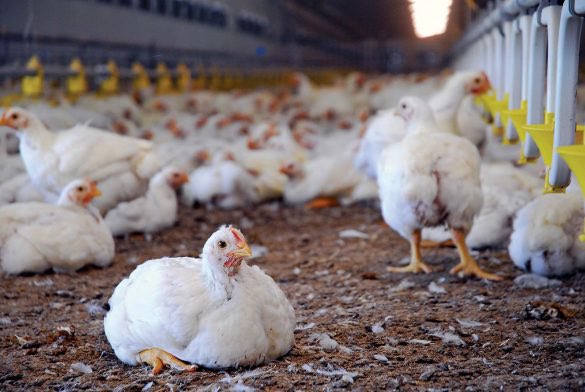
Globally, avian influenza is no longer treated as a once-off outbreak. It’s becoming a recurring, disruptive force in food production.
For years, the default response has been simple but brutal: cull infected birds to stop the spread.
But experts are increasingly questioning whether that approach still makes sense.
Professor Sjaak de Wit has described the situation as a kind of “war,” arguing that vaccination should now sit at the centre of disease controlnot as a last resort, but as a standard tool.
Veterinary specialist Leslie Sims agrees, pointing out that millions of birds are still being destroyed each year despite vaccines being available.
In her view, relying only on culling is outdatedan old solution to a modern problem.
What this means for South Africa
For South Africa, the concern is deeply tied to geography and migration patterns.
According to Izaak Breitenbach, outbreaks in Europe are often a warning sign.
Wild birds migrating south can carry the virus across continents, meaning local farmers are rarely insulated from what’s happening overseas.
And with more than 4,000 reported cases in Europe, the risk heading into the local winter season is raising alarm bells.
A painful reminder: the 2023 outbreak
The industry doesn’t have to imagine worst-case scenariosit’s lived through one recently.
In 2023, South Africa’s poultry sector was hit hard:
- More than 30% of long-living birds were lost
- In Gauteng, losses reached a staggering 90% in some areas
- The financial damage exceeded R10 billion
Unlike in some other countries, local producers often don’t receive compensation for culled birds. That means the losses hit directlyand in some cases, farms never recover.
Vaccination: solution or new problem?
Vaccination may sound like the obvious answer, but it’s not without complications.
Research analyst Anthony Clark points out that while some countriesincluding France and the United Kingdomhave already started vaccinating breeder flocks, the cost is significant.
At roughly R1.50 per shot, and with repeated doses required, the numbers add up quicklyespecially in a country with up to 200 million chickens in circulation at any given time.
That cost doesn’t just disappear. Eventually, it lands on consumers.
In other words, vaccination could help stabilise supplybut it may also push chicken prices higher.
Social media reaction: food security fears resurface
Online, conversations about bird flu are starting to pick up again, especially as memories of egg shortages and price spikes are still fresh.
Some South Africans are calling for proactive measures to avoid another crisis, while others worry about affordability.
“We can’t go through another egg shortage,” one user posted.
“But if prices go up again, how do people cope?” another asked.
It’s a familiar tension: protecting supply without making basic food unaffordable.
The bigger picture: a fragile food system
Chicken remains one of South Africa’s most affordable and widely consumed proteins.
That means any disruptionwhether from disease, cost pressures, or supply chain issueshas a direct impact on household budgets.
The current debate around vaccination isn’t just about farming. It’s about food security, economic resilience, and long-term planning.
South Africa’s dependence on reactive measures has been exposed before. The question now is whether the country can shift toward a more preventative approach.
A race against time before winter
With colder months approaching, a period when avian influenza risks typically risethe pressure is on policymakers and industry leaders to act decisively.
Vaccination is no longer a fringe idea. It’s becoming part of a global shift in how countries manage the disease.
For South Africa, the choice may come down to this:
Act early and absorb the cost nowor risk another devastating outbreak later.
Either way, the stakes are high, and the impact will be felt far beyond the farm.