Business
SAEx cable licence transfer signals change for South Africa’s internet future
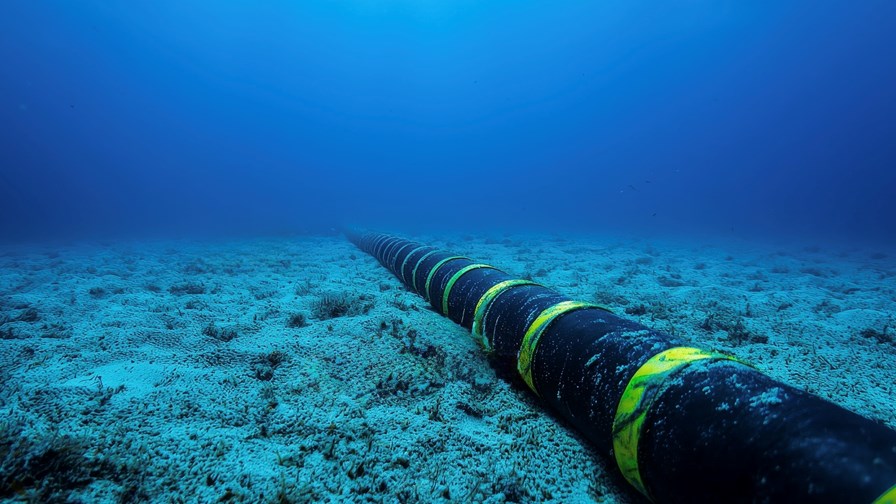
South Africa’s digital future quietly shifted this week, and most people would have missed it.
Behind the scenes, one of the country’s most ambitious undersea cable projects, South Atlantic Express or SAEx, has applied to transfer control of its telecommunications licences. The move was published in the Government Gazette by ICASA on 7 April 2026, immediately triggering speculation across the tech space.
The twist is simple. No one knows who is taking over.
A transfer without a name
SAEx has confirmed that it is applying to transfer control of its electronic communications network and service licences. These licences are essential. Without them, the company cannot operate its network in South Africa.
Yet when asked directly, SAEx declined to name the entity that will take control. According to its leadership, the change is an internal transfer to a majority shareholder. Beyond that, details remain tightly guarded.
For industry watchers, that silence is where the intrigue lies. In a sector where infrastructure deals often signal long-term shifts in power and investment, the lack of transparency has fuelled talk of a new dominant backer entering the project.
Why this cable matters more than most
To understand why this matters, you have to zoom out.
South Africa’s internet connectivity has long relied on routes that pass through Europe, especially when connecting to North America. That extra distance creates delays, something users feel when streaming, gaming, or running global businesses.
SAEx aims to change that completely.
The project is designed to create a direct, low-latency route linking South Africa to Singapore, while also opening a faster pathway to the Americas. In simple terms, it is about cutting out the middleman and putting South Africa closer to the digital centre of global traffic.
For a country pushing to position itself as a tech and data hub on the continent, that is a big deal.
From stalled dream to serious investment
This is not a new idea. The SAEx project was first introduced back in 2011, and like many large infrastructure plans, it spent years stuck in the slow lane.
Momentum picked up in 2018 when Alcatel Submarine Networks came on board to begin surveys and planning. Then in 2025, the Industrial Development Corporation stepped in with funding for a detailed feasibility study.
That move changed the tone entirely. What started as a niche private venture began to look like a serious public-private partnership with long-term national impact.
Building a new digital map
The cable itself is being built in stages.
The first phase, known as SAEx East, will stretch across the Indian Ocean, linking Cape Town to Singapore. Along the way, it will connect through points like Amanzimtoti, Mauritius, and Réunion, creating multiple access routes for regional networks.
The numbers give a sense of the ambition. The system is expected to deliver latency as low as 117 milliseconds between Cape Town and Singapore, with even faster speeds to Durban and Mauritius.
Phase two, SAEx West, takes things further. This section will run across the Atlantic from Cape Town to Brazil and up to the United States. It promises a direct connection to the Americas, bypassing Europe entirely.
For South African users, that could mean quicker response times, stronger redundancy, and more stable connections across global platforms.
The bigger picture for Joburg and beyond
In Johannesburg, where fintech startups, remote workers, and digital businesses are growing fast, these kinds of infrastructure shifts are not abstract. They shape how quickly transactions move, how smoothly platforms run, and how competitive local companies can be on a global stage.
Online, reactions have been mixed. Some see the licence transfer as a sign that the project is finally gaining serious momentum. Others are wary of the secrecy, questioning who ultimately controls such a critical piece of infrastructure.
Both perspectives are valid. South Africa has seen its share of delayed mega projects, but it has also learned that who funds and controls infrastructure often matters just as much as the infrastructure itself.
A quiet move with loud implications
Right now, the licence transfer is just an application. ICASA still needs to approve it.
But even at this stage, it signals something important. The SAEx project is no longer just an idea on paper. It is moving, evolving, and attracting attention at a level that suggests real progress.
For everyday users, the impact will not be immediate. You will not wake up tomorrow with faster WiFi.
Yet decisions like this are the groundwork. They shape the networks that will define how South Africa connects to the world over the next decade.
And for a country trying to hold its own in a rapidly shifting digital economy, that connection matters more than ever.
Also read: Standard Bank data breach sparks concern across South Africa
Follow Joburg ETC on Facebook, Twitter, TikT
For more News in Johannesburg, visit joburgetc.com
Source: MyBroadband
Featured Image: TelecomTV