News
Turbulence Ahead: Why Jet Fuel Shortages Could Keep Airfares High For Months
If you’ve been eyeing a mid-year getaway or even just a quick domestic hop, brace yourself. The global aviation system has taken a hit, and the ripple effects are heading straight for your wallet.
The head of the International Air Transport Association (IATA) has warned that jet fuel supplies will not bounce back overnight after weeks of disruption in one of the world’s most critical oil routes. Even with ships moving again, the damage has already been done.
A Bottleneck At The World’s Oil Lifeline
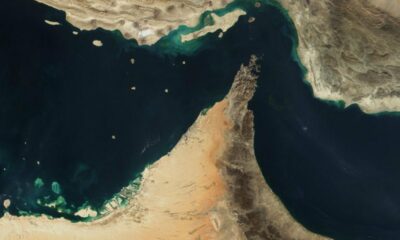
Strait of Hormuz is not just another waterway. It is one of the most important arteries for global energy, with roughly a fifth of the world’s oil and gas flowing through it.
For weeks, that flow slowed to a near standstill due to conflict involving Iran and the United States. The result was immediate. Oil prices spiked, supply chains strained, and jet fuel became harder to come by.
A temporary two-week ceasefire has now reopened the route, offering a moment of relief. But according to IATA director general Willie Walsh, the recovery will not be quick.
Why The Crisis Won’t End With The Ceasefire
Even though crude oil shipments are starting to move again, the real issue lies deeper. Refining capacity in the Middle East took a knock during the disruption, and that is where jet fuel is actually produced.
Walsh made it clear that restarting supply chains is not as simple as reopening a shipping lane. Refineries need time to ramp up production again, and that lag could stretch for months.
In simple terms, planes may be ready to fly, but the fuel supply is still catching up.
What This Means For Airline Tickets
Airlines operate on tight margins, and fuel is one of their biggest costs. When oil prices rise, ticket prices usually follow. It is a pattern the industry knows well.
According to IATA, higher airfares are almost unavoidable in the coming months. Airlines will likely pass on at least some of these increased costs to passengers.
For South Africans, this could hit in more ways than one. International travel is already sensitive to exchange rates, and a weaker rand combined with rising fuel costs could make overseas trips even pricier. Even local flights between cities like Johannesburg, Cape Town and Durban may not be spared.
Gulf Airlines And Global Flight Routes
The disruption has also reshaped flight patterns. Some airlines outside the Middle East have temporarily picked up traffic that would normally pass through Gulf hubs.
But this shift is not expected to last. Walsh believes the region’s major aviation hubs will recover quickly once stability returns, although replacing their scale in the short term is nearly impossible.
A Reminder Of How Fragile Travel Can Be
If there is one takeaway from this latest disruption, it is how interconnected global travel really is. A conflict thousands of kilometres away can quietly influence the price of your next holiday or business trip.
For now, travellers may need to plan with a bit more flexibility and, unfortunately, a slightly bigger budget.
Because even though the skies remain open, the cost of staying in the air is still climbing.
{Source:EWN}
Follow Joburg ETC on Facebook, Twitter , TikTok and Instagram
For more News in Johannesburg, visit joburgetc.com