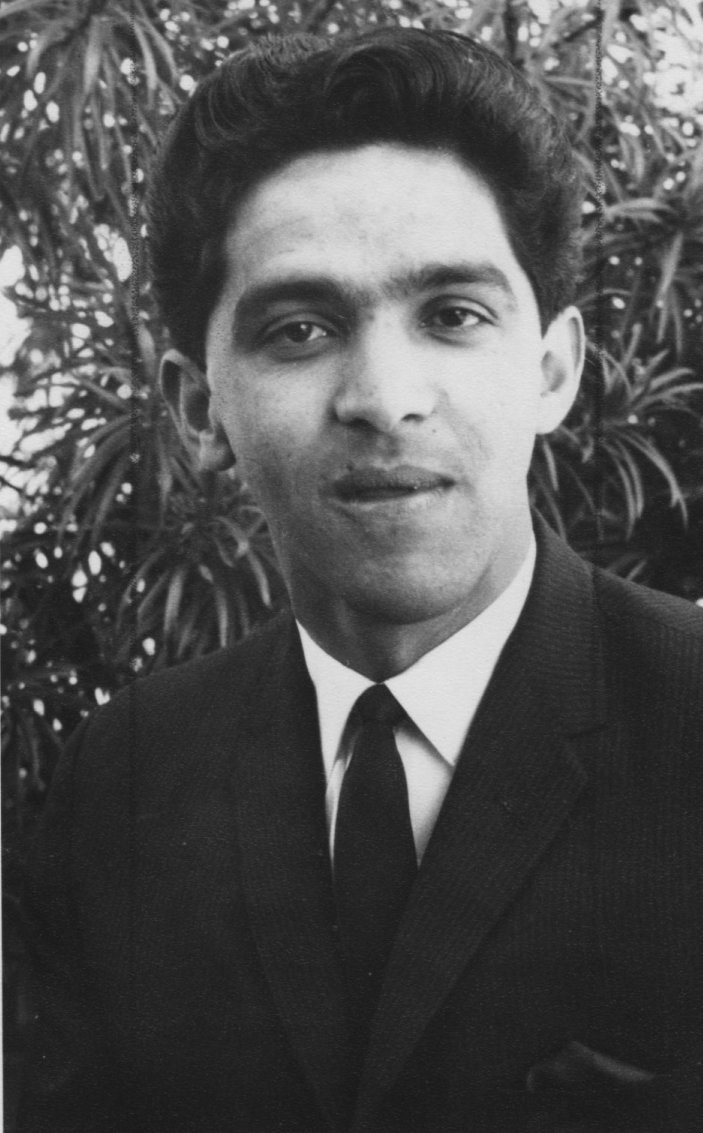
For 54 years, the ghost of Ahmed Timol has haunted the halls of South African justice.
Now, a scathing affidavit by his nephew, Imtiaz Cajee , has laid bare not only the absurdity of the apartheid-era “suicide” narrative, but a modern-day “systemic suppression” that has allegedly shielded killers from the dock for decades.
The document, submitted to the Judicial Commission of Inquiry into the non-prosecution of TRC cases , headed by Justice Sisi Khampepe, serves as a primary exhibit in what is becoming a historic reckoning for the National Prosecuting Authority (NPA).
The ‘Tea-Time Lie’
Cajee’s affidavit meticulously dismantles the findings of the original 1972 inquest, which concluded that Timol jumped to his death from the 10th floor of John Vorster Square “whilst having a cup of tea with his interrogators.”
The magistrate’s reasoning was based on the improbable claim that the Security Branch would never harm a high-profile captive, calling Timol a “big fish” of “inestimable value.”
“This version was maintained although Timol’s co-accused, Saleem Essop, was being tortured into a coma in the same building during that very weekend,” Cajee notes. “The state narrative was not just a lie; it was an insult to the intelligence of the oppressed.”
The 2017 Inquest
After decades of private investigation, the Gauteng High Court reopened the inquest in 2017. Justice Billy Mothle’s ruling was definitive: Timol did not commit suicide. He was pushed from the window or the roof after being brutally tortured.
Mothle recommended the immediate prosecution of Joao Rodrigues , the former Security Branch clerk who was the last person seen with Timol.
The New War
However, Cajee’s affidavit reveals that the 2017 victory was merely the start of a new war against a democratic state that seemed “reluctant” to follow its own court orders.
“The 2017 inquest confirmed what we knew since 1971,” Cajee writes. “But instead of justice, we met a familiar pattern of conduct characterised by reluctance and deliberate stalling by the NPA and the DPCI (Hawks).”
Institutional Failure
Cajee alleges that the failure to prosecute the Timol case was not an administrative error, but a deliberate “institutional failure.”
He cites a 2006 “premature closure” of his uncle’s file and the state’s failure to act on a 1997 recommendation by a TRC investigator to subpoena Rodrigues.
“My personal journey demonstrates how victims’ families have been forced to act as investigators, filling the void left by state institutions that failed to uphold their constitutional duties.”
The Perpetrator’s Defence
Rodrigues, who died in 2021 before he could stand trial, had sought a permanent stay of prosecution, arguing that the “long delay” by the state violated his rights.
While the Supreme Court of Appeal and the Constitutional Court ultimately dismissed Rodrigues’ bid, Cajee argues the state’s initial 15-year silence gave the perpetrator the ammunition to challenge the law.
“The state’s own lethargy became the perpetrator’s best defence.”
The Bureaucratic Lie
As the Khampepe Commission continues its work, Cajee is demanding that the commission admit his documented years of struggle as evidence of the failure of investigating and prosecuting TRC cases.
He argues that the “tea-time lie” of 1972 has been replaced by a “bureaucratic lie” in the democratic eraone that pretends the state is pursuing justice while it waits for both witnesses and perpetrators to die of old age.
“Justice delayed is indeed justice denied. We are not just asking for a day in court; we are asking for an explanation as to why the doors to that court were padlocked for 20 years by the very people who were supposed to hold the keys.”
The NPA’s Response
The NPA has recently stated it is “committed” to the TRC cases, pointing to a newly established unit to handle these matters.
The Bottom Line
The tea-time lie is dead. But the bureaucratic lie lives on.
Ahmed Timol was murdered in 1971. His killer never stood trial. His family is still waiting.
The Khampepe Commission is investigating. The question is whether it will finally break the pattern of “systemic suppression.”