
News
Astronauts witness rare meteor strikes during historic moon flyby
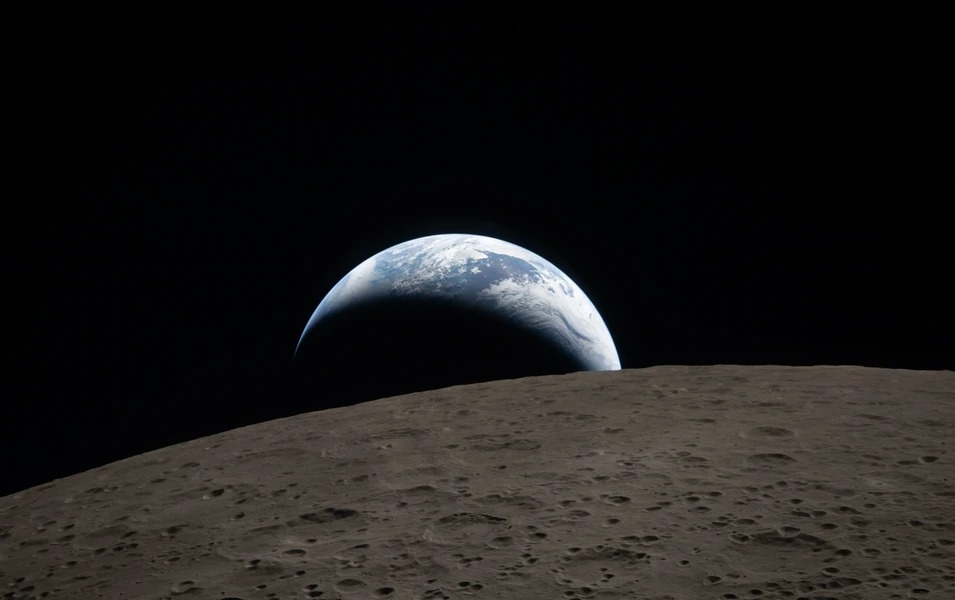
For a moment, it was just a flicker. Then another. And another.
Somewhere more than 400,000 kilometres from Earth, a crew of astronauts orbiting the moon watched tiny bursts of light blink across its surface. What they were seeing was not a glitch or a reflection. It was something far rarer. Meteorites slamming into the moon in real time.
During the landmark Artemis II mission by NASA, astronauts became the first humans in over half a century to travel around the moon. But beyond the historic milestone, it was these unexpected flashes that stole the attention of scientists back on Earth.
A front-row seat to lunar impacts
Mission commander Reid Wiseman was among the first to call it out. From the spacecraft, he confirmed what the team suspected: impact flashes on the lunar surface. Canadian astronaut Jeremy Hansen spotted additional strikes moments later.
Back on Earth, the reaction was immediate and emotional. Scientists monitoring the mission reportedly broke into audible excitement as the crew described what they were seeing. Even seasoned lunar researchers admitted they had not expected such clear observations.
Over a roughly seven-hour window, the astronauts reported spotting multiple impacts. Each one appeared as a quick, pinprick flash. Bright, brief, and gone in less than a second. The colour, according to the crew, ranged from white to a slightly bluish hue.
It was not just one or two, either. By NASA’s count, six separate meteorite impacts were recorded during the flyby.
Why this matters more than you think
On Earth, we are largely shielded from this kind of cosmic activity. Our atmosphere burns up smaller space debris before it ever reaches the ground. The moon, however, has no such protection. Every rock, no matter how small, hits the surface directly.
That is what makes this moment so important. These observations offer rare, human-confirmed insight into how frequently the moon is being struck. Scientists can now begin comparing what the astronauts saw with satellite data already orbiting the moon, helping build a clearer picture of how often these impacts happen and how powerful they are.
There is also a bigger question at play. As plans for a long-term human presence on the moon move forward, understanding this constant bombardment becomes critical. Researchers are already pointing out that monitoring daily meteor activity will be essential before any permanent lunar base is established.
A rare moment even for space experts
Even experts in planetary science have admitted surprise at how many impacts were visible in such a short time. The fact that several occurred during a solar eclipse, when lighting conditions made the flashes easier to detect, only adds another layer of intrigue.
From a scientific perspective, each flash tells a story. It reveals clues about the size of the object, the speed of impact, and the frequency of these events. Not massive boulders, but not dust either. Somewhere in between.
Why people are talking about it
Beyond the science, there is something deeply human about the moment.
Social media has been buzzing with reactions to the idea that astronauts could simply look out a window and watch the moon being struck in real time. It feels cinematic, almost unreal, yet it is a reminder of how dynamic and unpredictable space really is.
For many in South Africa and around the world, it has also reignited curiosity about space exploration. The Artemis programme is not just about returning to the moon. It is about understanding it in ways we never have before.
A glimpse into the moon’s reality
What the Artemis II crew witnessed was brief, almost blink-and-you-miss-it. But its significance lingers.
Those tiny flashes are a constant reality on the moon, a silent reminder that space is not empty or still. It is active, ever-changing, and sometimes violent in ways we are only beginning to fully grasp.
And for the first time in decades, humans were close enough to see it happen with their own eyes.
Follow Joburg ETC on Facebook, Twitter, TikT
For more News in Johannesburg, visit joburgetc.com
Source: IOL
Featured Image: MSN


