featured
Tswaing: The meteorite crater hiding in the bushveld outside Pretoria
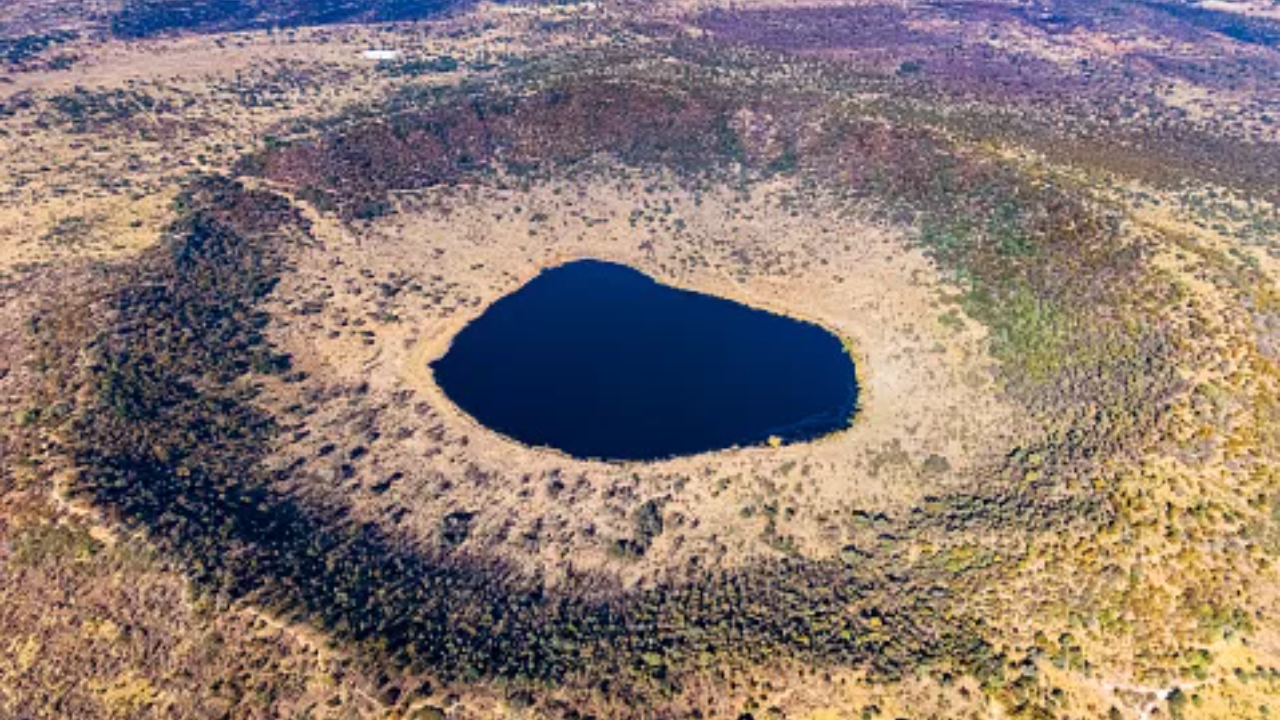
An ancient cosmic collision left a remarkable scar in the Gauteng landscape. Today, visitors can walk into the crater, explore its saline lake and discover a place where geological history, wildlife and South African heritage meet.
About 40 km northwest of Pretoria, beyond the familiar bustle of South Africa’s administrative capital, the bushveld opens around an extraordinary geological landmark. At first glance, Tswaing might appear to be little more than a large hollow in the landscape. Yet this vast, bowl-shaped depression was created by a meteorite impact approximately 220,000 years ago, leaving behind one of the best-preserved impact craters in the world.
Measuring roughly 1.1km across, the crater offers a rare opportunity to explore the physical evidence of a collision between Earth and an object from space. Its story, however, extends well beyond the impact itself. A saline lake, a rich natural environment and the remains of an early industrial enterprise make Tswaing a destination where visitors can discover several layers of South African history in a single outing.
A crater with a cosmic origin
The day a meteorite struck Gauteng
The impact that created Tswaing happened long before the modern landscape of roads, settlements and cultivated land took shape. According to geological research, a stony meteorite struck the granite bedrock at the site, excavating a vast depression and transforming the surrounding terrain.
Researchers estimate the crater’s age at approximately 220,000 years, although scientific dating carries a margin of uncertainty. Studies of material recovered from beneath the crater, including rocks containing features associated with intense impact pressures, helped establish its extraterrestrial origin.
The resulting crater is about 1.13km in diameter according to scientific measurements. DITSONG Museums of South Africa, which manages the site, describes it as roughly 1.4km across. The difference reflects the measurements used in different sources, but either figure conveys the remarkable scale of the formation.
Unlike many ancient impact structures that have been heavily eroded or obscured by later geological processes, Tswaing retains a clearly recognisable bowl-shaped form. Its preservation makes it valuable not only as a visitor attraction but also as a place to study how extraterrestrial impacts shape planetary surfaces.
Walking into the crater
A landscape best explored on foot
The most compelling way to experience Tswaing is to move beyond the lookout point and follow the trail down into the crater. From above, the circular formation is easier to appreciate as a whole. On foot, its scale becomes more tangible as the surrounding slopes and vegetation gradually enclose the route.
The trail leads towards the crater floor and the saline lake, following an old ox-wagon route. This is a landscape to explore at a measured pace, allowing time to notice changes in the vegetation, the contours of the terrain and the different views that emerge along the way.
For hikers, the established Tswaing Crater Trail is approximately 7.2km long. The walk offers a different experience from a conventional bushveld hike: the destination is not simply a viewpoint or a waterfall, but the interior of a geological formation created by a collision from space.
Visitors should allow enough time for the walk, wear comfortable closed walking shoes and carry drinking water. Gauteng’s heat can be demanding, particularly during warmer months, so an early start is sensible. Check current trail access and conditions with the site before setting out.
The lake that gave Tswaing its name
Why salt matters here
At the bottom of the crater lies the feature that gives the destination its name. Tswaing means “place of salt” in Setswana, a reference to the saline lake occupying the crater floor.
The lake is more than a striking feature in the landscape. It is part of a hydrological system shaped by the crater’s depth, groundwater and evaporation. Research into the Pretoria Saltpan, as Tswaing is also known, has examined how water moves into and out of the basin, as well as how its chemistry reflects the interaction between the lake and the surrounding environment.
The lake and its sediments also hold clues to environmental changes over long periods. Scientific studies of sediment cores have helped researchers investigate past vegetation and climatic conditions in the region, giving the crater significance well beyond its dramatic origin.
For visitors, the contrast is striking: a landscape created in a violent instant has since become a place where water, sediment and vegetation record much slower processes unfolding across millennia.
A surprising pocket of biodiversity
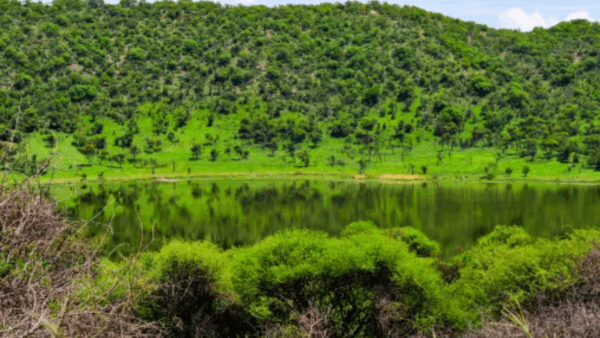
More than rocks and geological history
Tswaing’s appeal extends beyond its crater. The surrounding conservation area encompasses bushveld vegetation, wetlands and habitats that support a variety of wildlife.
DITSONG identifies the area’s extensive wetland system, Sourish-Mixed Bushveld vegetation and birdlife among its principal attractions. More than 200 bird species have been recorded at the site, with some official sources putting the figure at approximately 240.
For birdwatchers, this adds another reason to visit. The varied habitats offer opportunities to look for different species while exploring the wider landscape. Plant enthusiasts and nature lovers can also appreciate the ecological diversity surrounding the crater.
The experience is a reminder that geological events do not determine a landscape’s entire future. Over time, erosion, water, vegetation and wildlife have shaped the environment around Tswaing into an ecosystem quite different from the barren scene that might be imagined after a meteorite collision.
The human history beneath the landscape
From salt production to conservation
Tswaing’s story includes a chapter of industrial activity. Between 1912 and 1950, a commercial operation at the crater extracted salt and produced soda ash, leaving behind ruins that remain part of the site’s heritage.
The industry made use of the saline resources concentrated within the crater. Today, the remnants of this enterprise provide a tangible connection to a period when the landscape was valued for its mineral resources rather than primarily for its geological and ecological significance.
Tswaing’s heritage extends further back, too. The surrounding area contains archaeological evidence of human activity, adding another dimension to a place whose history spans both geological time and human experience. The Department of Sport, Arts and Culture identifies archaeological material associated with earlier communities among the site’s heritage resources.
Now managed as a conservation and heritage destination, Tswaing brings these strands together through its trails, museum displays and educational activities. The result is a place where visitors can consider the relationship between natural resources, human settlement and the changing ways people understand and use the landscape.
Planning a visit to Tswaing
What to know before you go
Tswaing Meteorite Crater is managed by DITSONG Museums of South Africa and is situated near Soshanguve, north-west of Pretoria. It is suitable for visitors interested in geology, walking, birdwatching and South African heritage.
Before travelling, keep the following practical details in mind:
-
Location: Onderstepoort Road (M35), Soshanguve, north-west of Pretoria.
-
Walking: The established crater trail is approximately 7.2km. Confirm current access and route conditions before visiting.
-
Opening hours: DITSONG lists admission hours of 07:30–16:00 on weekdays and 06:00–14:00 on weekends, excluding Christmas Day and Good Friday. Check directly before departure, as official listings may differ.
-
Facilities: The site advertises picnic facilities, basic camping facilities and group accommodation. Confirm availability and booking arrangements in advance.
-
What to bring: Drinking water, sun protection, a hat and comfortable walking shoes. Binoculars are useful for birdwatching.
-
Admission: Consult the official DITSONG 2026/2027 admission fees page for current pricing.
For enquiries, visit the official Tswaing Meteorite Crater page or contact DITSONG using the details listed there.
A reminder of Earth’s extraordinary past
Tswaing is a destination that rewards curiosity. Its defining feature was created by an event that lasted only a moment in geological terms, yet the consequences remain visible hundreds of thousands of years later.
Walking into the crater brings that immense timescale into focus. The slopes, saline lake and surrounding bushveld tell a story that moves from a cosmic collision to the slow accumulation of sediments, the development of habitats and the arrival of people who made use of the area’s resources.
For travellers exploring Gauteng, Tswaing offers something different from the province’s better-known urban attractions. It is an opportunity to step into an ancient landscape, encounter a remarkable piece of geological history and leave with a renewed appreciation of the forces that have shaped the ground beneath our feet.
Be the first to know – Join our WhatsApp Channel for content worth tapping into! Click here to join!
Follow Joburg ETC on Facebook, Twitter, TikTok and Instagram
For more News in Johannesburg, visit joburgetc.com
Source: Lee-Ann Steyn / Getaway Magazine
Picture: COSMOS-120/iStock